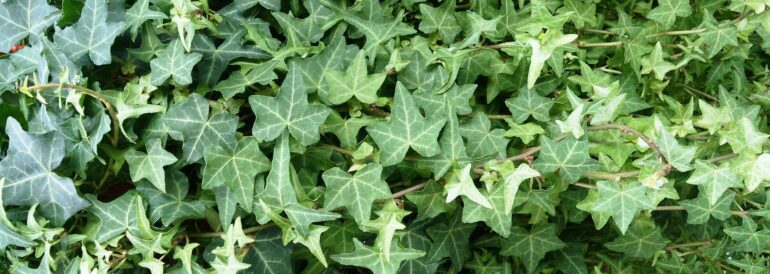
Yes. English ivy weakens trees over several years and can kill them. The safest fix is a survival ring: cut every vine at chest height, then clear ivy from a 5-foot radius around the trunk.
Here in Seattle, ivy climbing older trees is a common sight. It can look like an English garden, but this invasive vine competes with your tree for light and adds weight the tree was never built to carry. At Blooma Tree Experts, managing invasive vines is a regular part of our tree health care program, and we encourage homeowners to deal with ivy before it reaches the canopy.
Does English ivy kill trees?
English Ivy does not typically kill trees, it rather weakens and suffocates them over a number of years until they die. Not a parasite; does not extract nourishment directly from the bark of the tree. Rather, it utilizes the tree as a handy climbing ramp to get to the light. The actual threat is the physical stress, moisture retention and light competition that gradually robs the tree of its vitality and the tree’s integrity.
How does ivy harm a tree?
The major drawback of the ivy is its ability to place a tremendous amount of weight on the canopy and trunk of the tree, causing the tree to become dangerously top-heavy. King County’s noxious weed bulletins state that trees with dense ivy growth are much more likely to fall during our very windy Pacific Northwest winter storms.
This is because the thick cover of ivy foliage also prevents sunlight from reaching the tree and from it doing its job, the activity of photosynthesis. In addition, the thick vines retain moisture on the bark all year long. This damp setting encourages the growth of wood rot and provides an ideal cover for fungal disease to invade and insect infestation to take hold without being detected in the trunk.
How do you remove ivy from a tree trunk?
You remove ivy from a tree trunk by cutting a “survival ring,” which involves severing the vines around the trunk and clearing the ground around the base. This tree-safe approach is greatly recommended by the Green Seattle Partnership to help thwart the ivy in its tracks.
- Prepare: Wear firm gloves and long sleeves since the sap of the ivy may irritate skin. Sharp lopping tools, hand pruners and flat pry bar or good flathead screwdriver.
- Make cuts at chest level: Make cuts carefully at the trunk, at roughly chest level, for all the separate ivy vines that are wrapped around the trunk. Gently pry vines away from bark to cut them; avoid nicking or slicing into the trees bark.
- Remove to the ground: Remove lower vines, which are severed from the trunk, and pull them down and away from the trunk until the lower half of the tree is devoid of vines.
- Form a 5 foot ring: Dig out at least 5 feet around the base of the tree, pulling up and out the ivy roots. This provides a secure space, which will help to stop the ivy taking over the wall quickly.
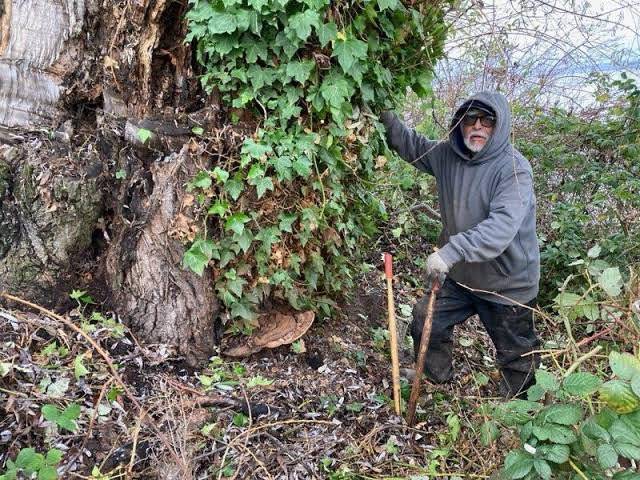
A survival ring cuts off the ivy’s nutrient supply, saving the tree without the need to pull high vines.
Should you pull English ivy out of the canopy?
No, you should never yank or pull ivy vines out of the upper canopy of a tree yourself. Once you cut the survival ring at chest height, the ivy above that cut is completely disconnected from its root system.
Within a few weeks, those upper vines will die, turn brown, and eventually rot and fall out of the tree naturally. When live or dead vines are firmly attached, to the upper trunk, it is easy to rip off large strips of the protective bark, resulting in severe damage.
Don’t interfere with the high canopy; the use of ladders is a serious safety risk when working on vines that are difficult to reach. Our arborists will be able to safely access the canopy with proper climbing equipment to remove dead vines if they are a risk or to remove them immediately for aesthetic reasons.
What kills English ivy but not trees?
The only completely safe method for killing English ivy without endangering the tree is to cut it off. It is strongly recommended that herbicides not be sprayed directly onto actively climbing ivy on a tree trunk.
Tree bark is porous and chemical weed killers can be taken up directly into the tree’s vascular system and cause unrecognized, undue harm to the very tree that is being protected.
Manual removal (specifically, the survival ring) is the recommended and best course of action for ivy on trees, as stressed by King County guidance.
How do you keep ivy from coming back?
If you want to prevent the return of ivy, you need to inspect around the base of your tree at least once a year and remove any new sprouts before they can begin to climb the tree.
Ivy is very vigorous and will try to grow new roots towards the trunk in a few seasons if roots are left in the ground.
On steep hillside areas, the King County ivy control program suggests that the ground ivy be removed in small areas, over time, to minimise soil erosion.
After the ground is cleared, consider planting native trees for Seattle and native deep rooting groundcovers that will naturally shade and compete with resprouting ivy.
Is English ivy illegal in Washington?
English ivy is illegal to buy or sell in Washington state due to a recent 2025 state quarantine action, but homeowners are not legally forced to remove it from their private yards. In King County, it is classified as a Class C noxious weed.
No, Washington homeowners are not required to remove English ivy, but it can no longer be bought or sold in the state. The Washington State Department of Agriculture added English ivy (Hedera helix) and Atlantic ivy (Hedera hibernica) to its noxious weed quarantine in July 2025, and the ban took effect August 9, 2025. In King County, ivy is a non-regulated Class C noxious weed: control is encouraged but not required.
When should an Arborist look at the tree?
If the dying ivy drops off, exposing large cracks, holes or extensive rot in the trunk of the tree, call an arborist. Thick ivies can be a source of big problems.
A survival ring is a popular choice for homeowners, but they may find months later that the tree they’ve saved is hollow or is structurally unsound. However, when the trunk is finally exposed, if you notice anything that makes you think that the tree has become a hazard, you can get a certified arborist to determine if it is safe to retain.
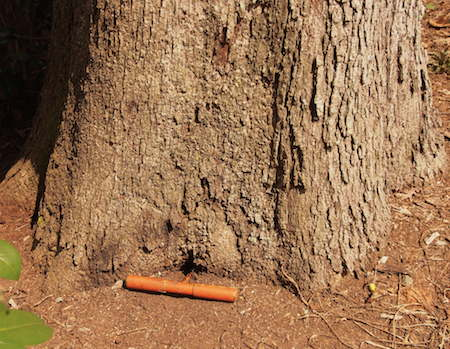
Thick ivy can conceal dangerous structural defects and severe rot in a tree’s trunk.
English ivy FAQs:
How do I remove ivy from trees on a slope?
Cut a survival ring on each tree first, because that protects the trees right away. Then clear the ground ivy in small sections, not all at once, and replant each section with native groundcovers or shrubs before moving to the next. Bare soil on a slope can wash out in winter rain.
Is ivy worse for certain trees like oaks or pines?
Ivy can harm any tree, but it is hardest on deciduous trees. In winter, when maples, oaks and alders are bare, the evergreen ivy is the only foliage in the crown, so it catches the full force of the wind. Research has found maples and elms especially prone to weakening, and English ivy can host bacterial leaf scorch, a disease of maples, oaks and elms. Conifers like Douglas fir are not immune: ivy still adds weight and hides rot at the base, which is why Green Seattle Partnership puts survival rings on existing conifers in Seattle’s parks.
Can I just mow over ivy in my yard to keep it away from my trees?
No. Mowing cuts the leaves but leaves the roots and stems, which regrow, and the vines will reach your trees again the first time you skip a mow. Pull the ivy and its roots out of a 5-foot ring around each tree instead. Keep mowers and string trimmers away from the trunk, since bark wounds let decay in.
Is English ivy the same as poison ivy?
No. Poison ivy is a native plant with leaves in groups of three, and its oil causes an itchy rash. English ivy is an evergreen vine with lobed, waxy leaves. Its sap can still irritate sensitive skin, so wear gloves and long sleeves when you remove it.
How long does it take ivy to die after you cut it?
The leaves above your cut wilt and turn brown within a few weeks. The dead vines can stay attached to the trunk much longer before they break down and fall. Leave them in place; they are no longer harming the tree.
Is English ivy poisonous to people or pets?
Eating large amounts of English ivy leaves or berries can be toxic to people and livestock, according to Washington weed officials. Keep children and pets from chewing it, and wear gloves when handling it, because the sap can cause a rash.
What is Atlantic ivy?
Atlantic ivy (Hedera hibernica) is a close relative of English ivy and looks almost the same, though its leaves often have 5 to 7 lobes instead of 3 to 5. It damages trees in the same way, and Washington banned its sale along with English ivy in 2025.
When is the best time to remove ivy from trees?
You can cut a survival ring any time of year. Pulling ground ivy is easier when the soil is moist, so fall through spring is ideal in Seattle. In spring and summer, check for active bird nests before you cut.