
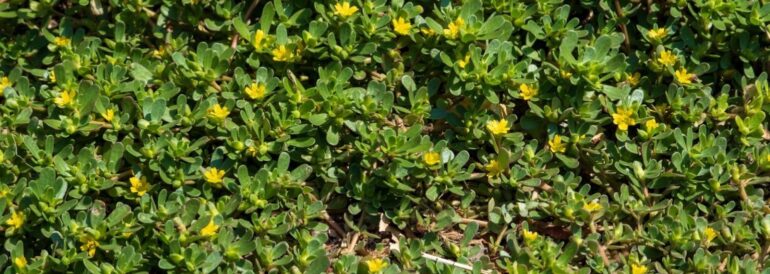
Homeowners of the Pacific Northwest are fond of gardens and dislike the chemicals present in a lot of commercial weed killers. The rainy climate, green grass, and sustainability of our culture make the natural and homemade solutions attractive.
Weeds will not obey our plans and, therefore, we should not overlook their strength. Killer can work, but it takes the knowledge of its limits. The majority of DIY techniques are contact killers – they kill only the parts that are touched. They work well on young and crack weeds, but are not able to combat hard perennials having extensive roots or those residing as runners in the ground.
This manual indicates what techniques should be effective in the Pacific Northwest and what ones fail. It has five time-tested recipes, timing tips as well as suggestions on how rain plays a part. Cautions and environmental concerns are also stated; nothing is natural, that is, it is safe to the skin, pets or the watershed.
You will also know when you need professional assistance, like in the case of invasive and aggressive weeds, which can take over the gardens or destroy the trees. It is not aimed at immediate extermination, but prudent choices that can conserve soil, attractive vegetation and the environment whilst remaining feasible.
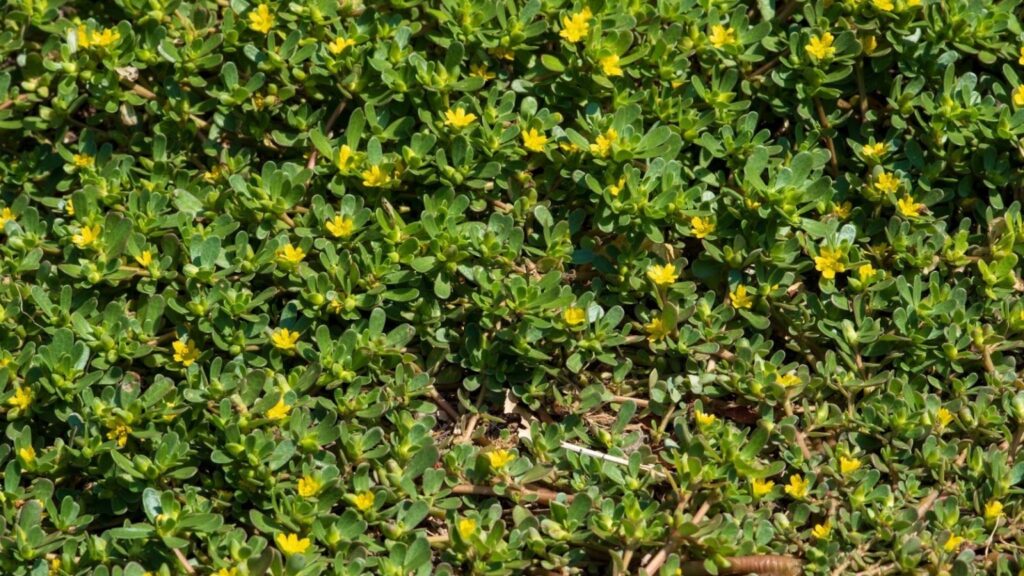
A dense mat of aggressive weeds spreads across the ground, competing with desirable plants for space and nutrients.
Understanding Homemade Weed Killers
Contact vs. Systemic Action
The majority of homebuilt weed killers are contact killers. They cause harm to the leaves and stems they come in contact with.
- An example is vinegar solutions and boiling water. This is to note since a significant number of weeds accumulate energy in the ground. A weed with deep roots, bulbs or rhizomes may be cut off at the top of the weed and still grow below.
Herbicides are transported by the plant and end up killing the roots and rhizomes and this makes them more efficient on well-established perennial plants. The DIY approaches do not usually behave in this way. Thus, DIY methods work mostly on young weeds but are not effective on deep-rooted perennials.
Annual vs. Perennial Weeds
Annual weeds do not last long and take one season to finish their life cycle. Homemade solutions will minimize the problem next year by killing them before they seed. Perennial weeds are multi-year weeds, which frequently multiply from root or runners.
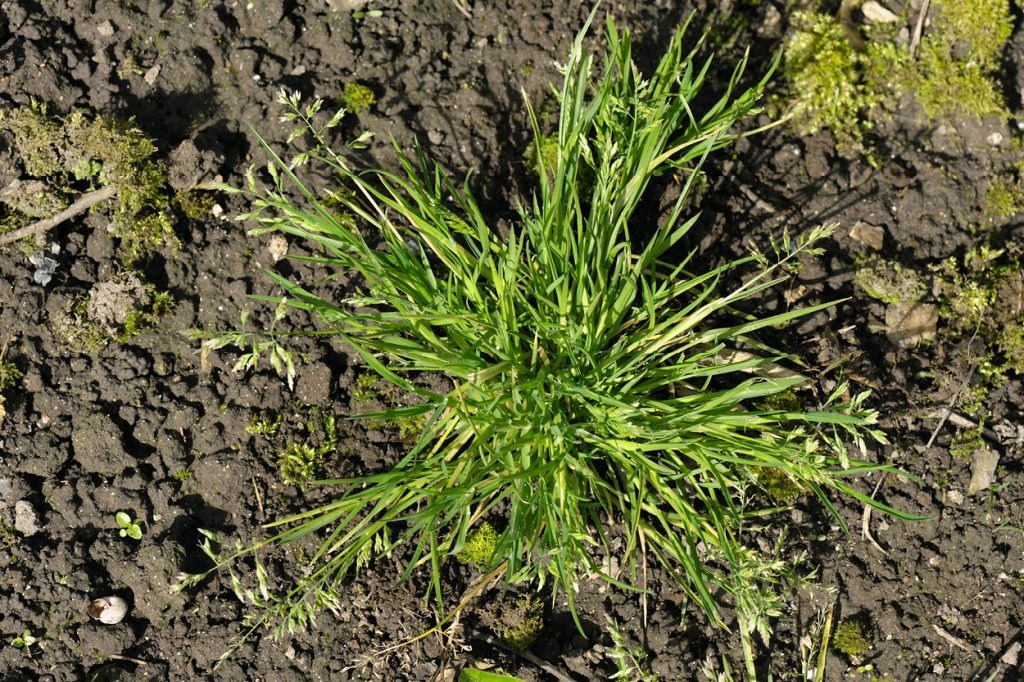
A clump of winter grass emerges from soil, competing with surrounding plants for nutrients and space.
Common Pacific Northwest Weeds
Easy to Control with DIY Methods
Easy DIY targets would be annual bluegrass (Poa annua), chickweed, and hairy bittercress. They grow superficially and grow well when caught at an early stage, before the seeds are set.
Moderate Difficulty (Multiple Treatments Needed)
Persistence is needed in Dandelions, clover and plantain. Expect to re‑treat. You must burn off the leaves and these weeds will go back.
Difficult (Consider Professional Treatment)
Some Northwest weeds are tough. Horsetail (tail of a mare) grows with rhizomes as deep as 6 ft; the burning of the top can hardly ever resolve it. Creeping buttercup grows like a weed. The runners of blackberry root along canes. English ivy is an aggressive climber and in most cases requires a combined approach particularly around trees and natural landscapes.
Homemade Weed Killer Recipes
Each of the following methods will consist of the recipe or setup, how it functions, application, restrictions, safety concerns, and Pacific Northwest timing.
Method 1: Horticultural Vinegar (20% Acetic Acid)
Take 20 percent horticultural vinegar not household 5 percent. Home vinegar is ineffective. 20 Percent horticultural vinegar is far more effective.
Recipe
- Use 20% horticultural vinegar (sold at garden centers and farm stores). Add 1 tablespoon dish soap per gallon to help it stick and spread. Optional: add 1 cup salt per gallon to increase effectiveness, but understand the soil impact.
How it works
- Acetic acid destroys the cell membrane and dries the plant on the outside.
Best for
- Young annual weeds, weeds in cracks, driveways, and gravel, and spot treatment. Do not use in lawns because it kills grass too.
Application tips
- Apply on a sunny, dry day. Vinegar is better when it is sunny and hot. Spray should not be made when there is a likelihood of rain within 24 hours. Foliage of weed on all parts, underside. Browning occurs in a few hours; complete dieback requires 121 days.
Critical safety warnings
- Vinegar that is 20% acidic. Use gloves and eye protection. It kills any plant that it comes into contact with, grass, flowers, and vegetables, and can destroy concrete. Leave the kids and pets off until it is dry. It fails to kill deep roots hence the perennials can re-grow.
PNW timing
- Use between April and September when it is drier and warmer. During October and March, it may be washed away by rain, making it ineffective.
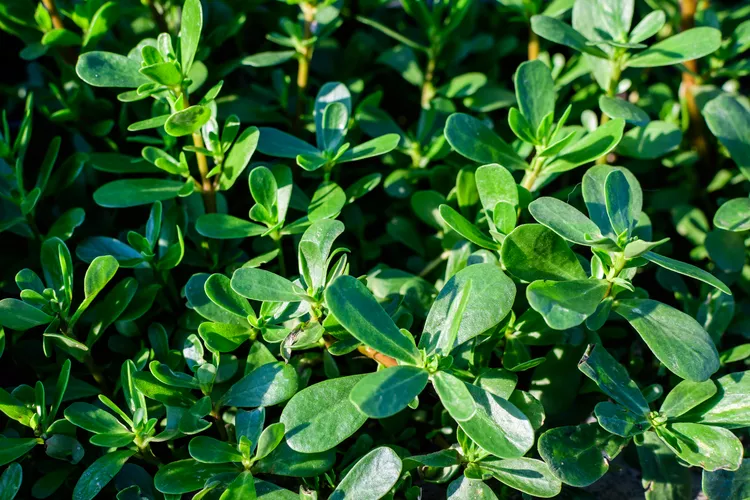
A dense patch of purslane spreads rapidly, crowding out other plants and competing for water and nutrients.
Method 2: Boiling Water
This is simple and environmentally friendly, but it has a narrow use case.
How it works
- Boiling water literally cooks plant cells and destroys cell structure instantly.
Best for
- Weeds in sidewalk cracks and pavers, small annual weeds, and isolated weeds that are away from desirable plants.
Application
- Put a full kettle or pot of water on the boil. It can be poured directly on the weed crown the meeting place of the leaves and the soil. In case of the recalcitrants, it might require 2-3 applications.
Safety warnings
- This is a serious burn hazard. Use with extreme caution. Keep children and pets out of the field during application, as the boiling water will be lethal to the plants that are in proximity to the water splash and runoffs.
Limitations
- The process is man-intensive on a large scale. It normally kills the components that are above the ground, and not the deep roots. It cannot be used on the lawns or garden beds.
Method 3: Salt (USE WITH EXTREME CAUTION)
- Salt is the “nuclear option” for soil. Treat it like that.
Critical warning
- Salt causes permanent soil damage. Use it only where you never want anything to grow.
How it works
- Salt dehydrates plants through osmotic pressure and remains in the soil, preventing future plant growth.
Only use for
- Driveway cracks you want permanently weed-free, and areas where nothing should grow, far from gardens and trees.
Never use
- Never use close to gardens, flower beds and lawns. Always keep away from trees, as the root zones go well out of the canopy. Always avoid the use of runoff in areas where it may lead to environmental damage due to runoff like storm drains. In no place where you may wish to plant in the future.
Environmental impact
- Salt runoff can harm aquatic life in streams. Soil contamination can last years. Salt can leach into groundwater.
Blooma Tree’s Recommendation
- We do not recommend salt-based weed control due to permanent environmental damage. Better alternatives exist.
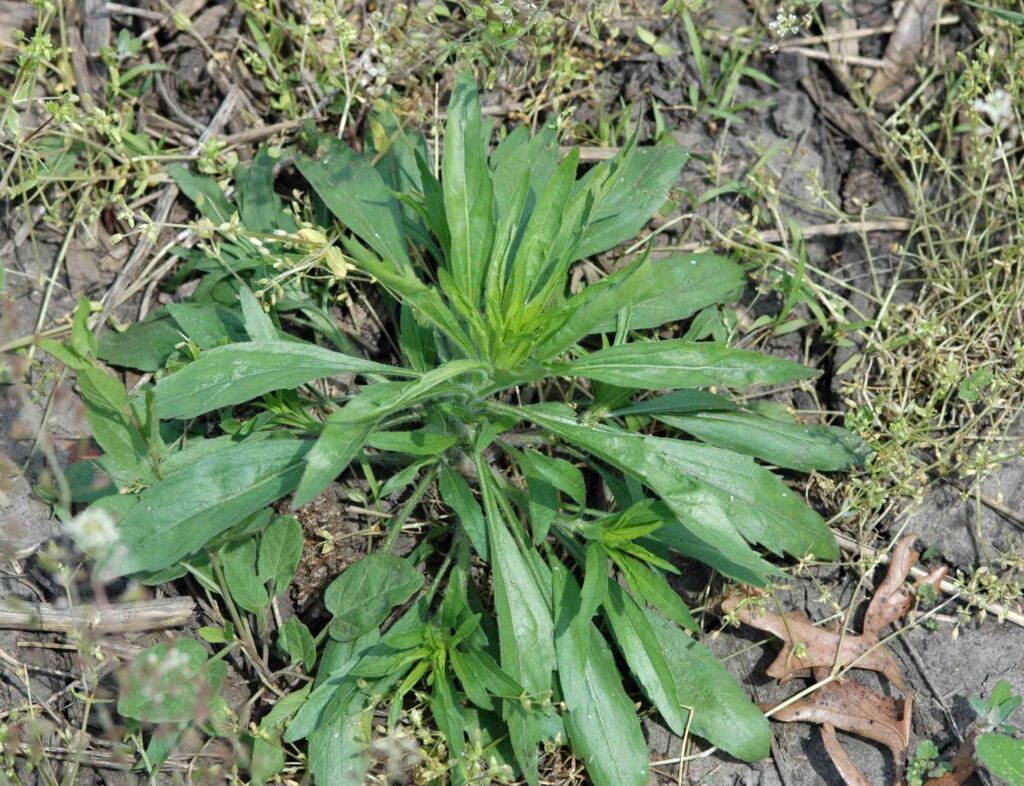
A young horseweed plant emerges from bare soil, an aggressive weed that spreads quickly if left unmanaged.
Method 4: Flame Weeding (Propane Torch)
This is an effective method many competitors skip, but it must be used responsibly.
How it works
- A propane flame bursts plant cell walls. You do not need to burn the weed completely. The goal is to wilt it so the cells collapse and the plant fails.
Best for
- Gravel driveways and paths, larger areas with annual weeds, and pre emergent treatment that targets tiny seedlings before they establish.
Safety
- This is a fire hazard. Use extreme caution. It is not safe during summer dry periods in the Pacific Northwest. Check local fire regulations before use.
Method 5: Corn Gluten Meal (Pre-emergent)
This is a natural pre-emergent herbicide that prevents weed seeds from germinating.
How it works
- It inhibits root formation in germinating seeds. It also acts as an organic fertilizer, roughly 9 0 0 NPK, meaning it adds nitrogen.
Best for
- Preventing annual weeds in lawns and in garden beds where you want to prevent annual seedling weeds such as crabgrass-type invaders.
PNW timing
- Apply in early spring, around March, before weed seeds germinate. Apply a second time in late summer, around August, to reduce fall weeds.
Important limitation
- It prevents new weeds only and does not kill existing weeds. You also cannot overseed a lawn for 6 weeks after application, because it can block desirable seed germination too.
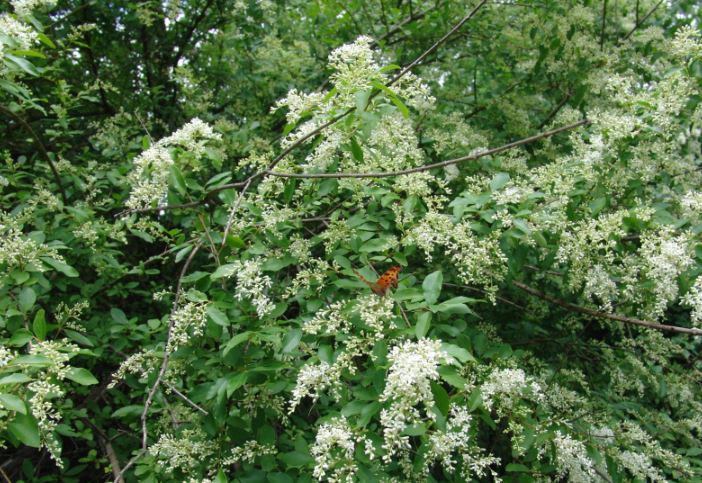
An invasive flowering shrub spreads dense white clusters, crowding out native plants and altering local habitats.
Effectiveness Comparison Matrix
Use this as a quick “match the method to the problem” guide. Contact methods shine on small annual weeds and hardscape cracks. Perennial weeds usually require repeat treatments or professional support.
| Method | Young annual weeds | Established perennials | Cracks and pavers | Lawns | Near desirable plants |
| 20% horticultural vinegar | High | Low to moderate with repeats | High | Not recommended | Risky, drift kills |
| Boiling water | Moderate to high | Low to moderate with repeats | High | Not practical | Risky, splash kills |
| Salt | High but destructive | High but destructive | High, long-term | Never | Never |
| Flame weeding | High | Low to moderate with repeats | High | Not recommended | Risky, heat damage |
| Corn gluten meal | Prevents only | Prevents only | Limited | Good for prevention | Good when applied correctly |
Think of corn gluten meal as prevention, not rescue. Think of vinegar, boiling water, and flame as targeted tools. Think of salt as a last resort you almost never need.
Application Best Practices
The success of the Pacific Northwest is determined by weather, timing and technique. The vinegar and flame weeding should be done in a dry window.
An objective of no less than 24 hours of dry conditions following application is desired, as moisture dilutes the vinegar, and if there is wet foliage, it is not going to be effective.
On hot and dry days, the time of day when vinegar is most appropriate is midday, as heat is faster at desiccating. In the case of boiling water, weather is less important, but footing and safety are more important, particularly on the slippery pavers.
Attack the weeds at an early stage. Weeds that are young annually have less stored energy and root systems and the root systems are small, and contact kill approaches work much better. In the case of moderate-difficulty weeds such as dandelions, clover and plantain, strategize on several applications. This aims at repeatedly subjecting the plant to stress such that the plant is not able to recover with equal force.
Use precision. Do not blanket spray when spot treating, but in order to conserve the environment, it is recommended to spot treat and not blanket all the plants.
Apply vinegar, spray low, and near the target in order to minimize the drift. When using boiling water, pour gradually on the crown to ensure that the heat gets where it is required. It is a steady motion at flame weeding, and the object is speedy wilting, otherwise a bonfire.
Finally, do not ignore safety. Apply horticultural vinegar on glasses and gloves. Keep kids and pets out of the use until treated areas are safe and are completely cool or dry. Store materials securely. Homemade is not innocuous.
Prevention Strategies
It is more difficult to kill weeds than to prevent them, particularly in a climate where the growth is more of a garden of plants.
- Begin with a dense, nutritious grass. Thick grasses will shade over the seedlings of the weeds and crowd space. In flower beds, spread the mulch 2 to 3 inches thick to prevent the sun and consequently germination. Weeds that are small should be pulled by hand, and a small root is extracted easily and does not have an opportunity to develop and grow.
Use pre‑emergent strategies. Annual weeds can be reduced with the help of corn gluten meal, to be applied at proper timings in March and August. Professional pre-emergent products are also useful, particularly in problem areas that are chronic but the trick here is the timing prior to germination.
Also watch the edges of soil and disturbed soil. Weeds are fond of barren areas, cracks and sparse turf. Eliminate the cause of the situation, be it reseeding bare spots on thin lawns, replenishing mulch, or sealing cracks in hardscapes where wind-borne seeds can collect.
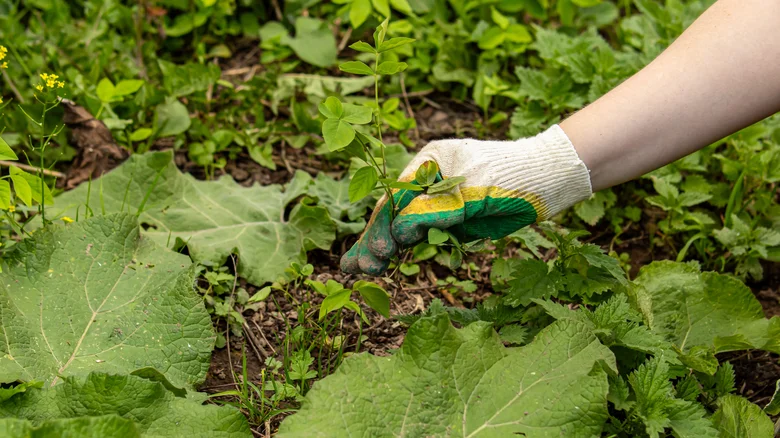
A gloved hand removes a young weed at the root, preventing it from spreading among surrounding plants.
When to Call Professionals
Professional help should be invited in case of severe infestation, which spans a wide area since self-help will be laborious and uneven. Introduce assistance with perennial weeds such as horsetail, blackberry and creeping buttercup particularly when you want long-term control rather than a short-term burn back.
Contact the professionals also in case weeds cause a threat to the health of trees. Weeds and vines may become aggressive and will compete with water and nutrients, pose moisture issues at the trunks, or make it difficult to maintain trees. When several attempts with DIY techniques fail, it is a good indication that the conditions of the biology of weeds or the site require a more integrated approach.
The method of weed management used by Blooma Tree in the management of tree-related weed problems is integrated by emphasizing on practical management of the weed to protect the surrounding plants and in selecting the most suitable method to use depending on the site, season and environmental responsibility.
Conclusion From Allen Tate
Home-made weed killers are definitely welcome in the Pacific Northwest landscape, provided that they are applied only in the areas where they really perform. Young annual weeds, which may include vinegar, boiling water and flame weeding, can be effective in cracks, gravel and spots where treatment is necessary. Corn gluten meal is useful in preventing new weeds when spread at the correct time. Salt would even kill weeds, but permanent soil and environmental destruction are always associated with salt, hence it should not be used in nearly any case.
Realistic expectations and intelligent matching is the winning strategy: work small weeds with contact methods, repeat with moderate weeds, and think in advance so that you do not have to fight with the same battle every season. An integrated strategy is usually the quickest and most accountable way to go when the area gets overrun by invasive perennials, is too large, or is affected by weeds, and the health of the trees is put into danger.