
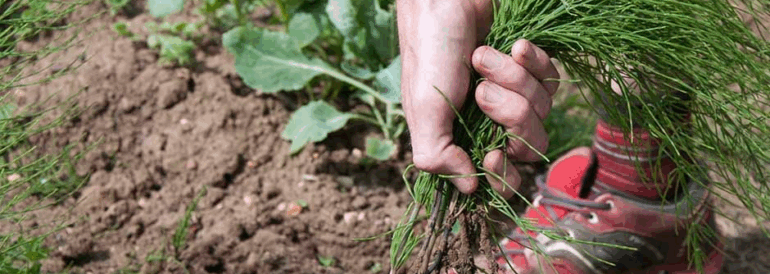
You have encountered your unwanted visitor, wild onion grass, when you have been mowing your lawn and you have unexpectedly smelled onions. It is also considered to be among the most difficult weeds on the lawn as it gets buried in the ground in small bulbs which continue to reappear each year. But need not fear you may dispose of it without desolating your lawn.
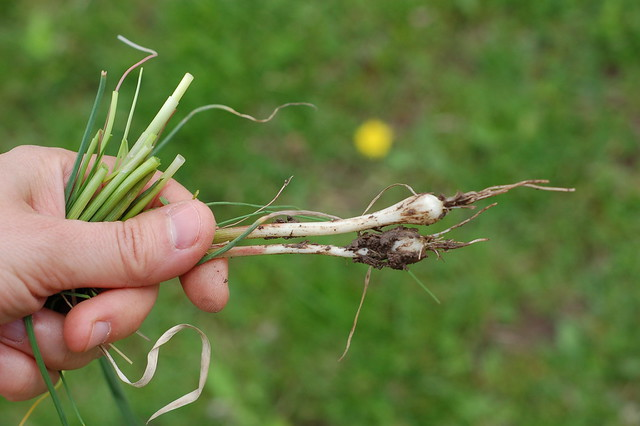
Freshly pulled wild onion grass showing its underground bulbs and roots; the hidden source of yearly regrowth in lawns.
This book takes you step by step through the identification of wild onion grass, the most efficient ways to kill it without being caught, the natural and artificial ways, and the ways of preventing its rebirth. All these tips are meant to be used by homeowners who prefer to have the answers easily rather than guess.
Understanding Wild Onion Grass
Wild onion grass does not seem dangerous. It is that dark green slim plant that grows quicker than the other stuff in your lawn, and that frequently grows in nice little bunches. As soon as you squash or graze it, the onion smell cannot be underestimated.
The Allium canadense is a wild onion and a close relative to wild garlic that grows successfully when your grass is resting. They begin to grow during the cool seasons; from fall to spring when your turf is thin and not that competitive. That is why, you usually can find them standing erect in winter or in the early spring when all other things are still asleep.
These plants reproduce in insidious modes: in bulbs underground, in smaller bulblets, in minute aerial bulblets, which descend to the ground, and reproduce others. Once they are established, it becomes hard to make them move unless one is equipped and time is on their side.
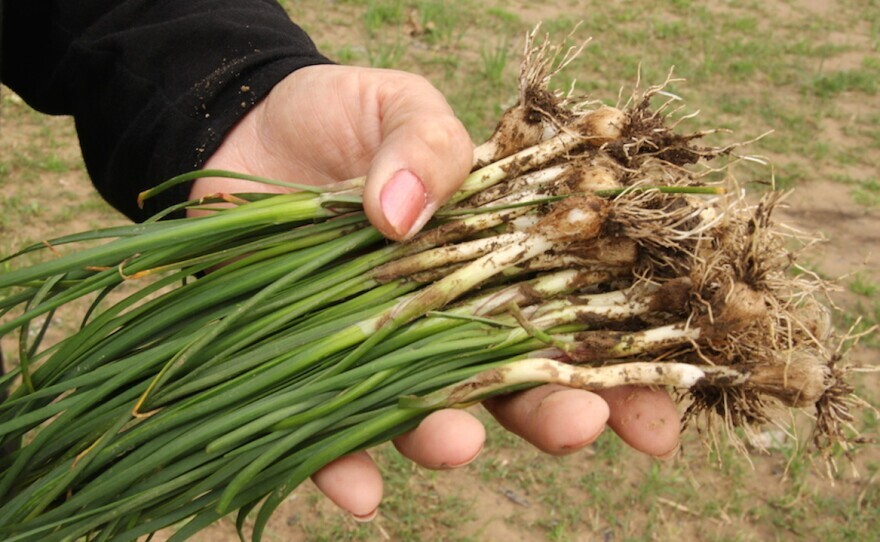
Freshly uprooted wild onion grass, showing the long green shoots and clustered bulbs that allow the weed to regrow each season.
Step One: Identify Wild Onion Grass Correctly
Always ensure that you are fighting the enemy when reaching out to any product. The wild onion grass may be similar to other weeds and confusing it may cost time and money.
What It Looks Like
The leaves of wild onion are flat and are not hollow and have a waxy cover which is shiny when in the sunlight. They commonly tend to grow in close groups where they are higher and darker green than the lawn grass.
The leaves have a very strong smell of onion when smashed. Every sign that you have is that smell. In case you do not smell of onion or garlic at all, it may be something different, maybe an onion-like plant which may even be poisonous.
When It Appears
Onion grass is wild and it grows between late fall and early spring. It remains green even when your normal grass turns brown or goes dormant thus it is easy to see. It then flowers in late spring and has small white or pink flowers, then aerial bulbs that fall and proliferate.
Common Mistakes in Identification
- Wild garlic has round and hollow leaves and wild onion has flat and solid leaves.
- Nutsedge is like this, except that the stems are triangular, and have no odour.
- When it is green in winter and when it is crushed it smells like an onion, then it is sure that it is wild onion grass.
How to Kill Wild Onions Without Killing Grass
This is what most people are seeking to know:
The use of selective post-emerging herbicides available in the market as a lawn mower can be used safely to kill wild onion grass. These go against the onion weed and spare your grass. You’ll usually need two to three treatments spaced across fall and spring to get full control.
Fast Facts
- Average cost: $15-$45 per 1,000 square feet per treatment
- Best timing: Fall and early spring
- Visible results: Within two to four weeks
- Full control timeline: 1-2 years
Quick Reference Control Methods Comparison
| Control Method | Effectiveness | Grass Safety | Typical Cost | Timeline | Effort Level |
| 2,4-D Herbicide | 50-80% on first treatment | High (selective) | $15-$45 per 1,000 sq ft | 2-3 weeks visible | Low |
| Imazaquin (Fall use) | 60-75% on first treatment | High (selective) | $20-$50 per 1,000 sq ft | 3-4 weeks | Low |
| Fahrenheit (Warm-season) | 55-70% on first treatment | High (selective) | $25-$55 per 1,000 sq ft | 2-3 weeks | Low |
| Manual Digging (6 in + deep) | 95% + complete removal | 100% safe | $0-$50 (DIY) or $100-$300 labor | Immediate | High |
| Glyphosate (Non-selective) | 100% effective but kills turf | Kills grass | $10-$30 per 1,000 sq ft | 1-2 weeks | Medium |
| Vinegar Solution | 40-50% (top growth only) | Safe if applied carefully | $5-$15 | 5-7 days | Medium |
| Boiling Water | ~90% of the visible plant | Kills grass on contact | $0-$5 | Immediate | Medium |
Best Method #1 – Selective Herbicides (Lawn-Safe Weed Killers)
This has been the best and common method of treating moderate or huge infestations.
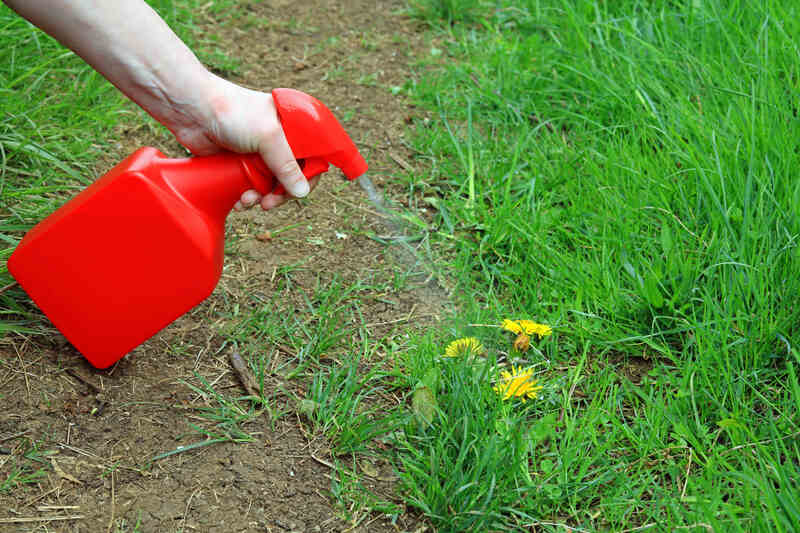
Applying a selective herbicide spray; targeting weeds without harming surrounding grass for safer, precise lawn weed control.
How They Work
Discriminating herbicides have active substances such as 2,4-D, dicamba or imazaquin which will attack the broadleaf weeds and onion species and leave most of the turf grass unharmed. They decompose in the tissue of the weed and go down to the bulbs underground, and thus starve the plant.
How to Apply
- Cut the grass either a day or two before spraying. Leaves are shorter to allow greater penetration.
- Add a surfactant. This prevents the spray stick from rolling off the waxy leaves of the onion.
- Spray liberally on the affected parts in case of mild dry weather.
- Avoid mowing or watering for at least 48 hours afterward.
- Follow up on the progress of checks in 2-3 weeks and re-treat survivors.
Product Options by Grass Type
- Cool-season grasses (like fescue, bluegrass, rye): use a 2,4-D-based herbicide.
- Warm-season grasses (such as Bermuda, Zoysia, St. Augustine): a mixture of formulas like Fahrenheit or Celsius herbicide is used.
- Universal choice: Imazaquin works for both, especially when applied in the fall.
Expected Results
After two weeks, the yellowing and wilting will be noticed, and die-back will occur. As a rule, the first application kills 50-80 percent of the visible weeds. The rest of your bulbs will then shoot up again later so you will run over with the next round.
Best Method #2 – Manual Digging (The Chemical-Free Option)
When you have a small patch of weeds, you can do without the use of herbicides and can just dig the weeds. It is primitive, yet very powerful when applied in a correct manner.
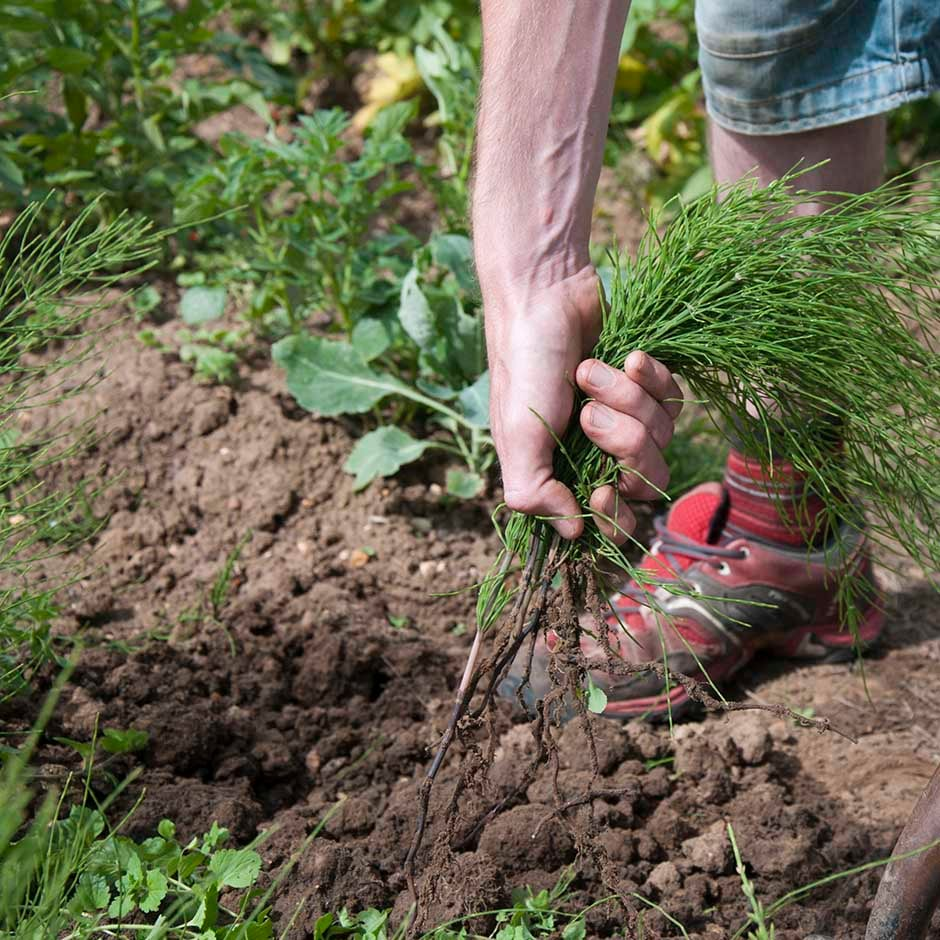
Manual removal of wild onion grass; pulling deeply to extract bulbs and roots for lasting control.
Why It Works
Every plant sprouts out of a bulb that is planted six inches in the ground, and encircled by little bulblets. Nothing is accomplished by drawing away only the leaves, leaving the bulbs unharmed, to sprout again. However, when you excavate and take out all the bulbs, then this plant is dead forever.
How to Do It
- Spray or wait until the rainfall comes so that the soils are soft.
- Dig a hole of an approximate depth of 6-8 inches with the clump of the spade or garden fork.
- Turn the earth with the fingers and pull out all the visible bulbs and little offshoots.
- Fill in the hole and resow where necessary.
This takes time but offers instant, complete results. A small yard can be cleared in a weekend by a homeowner and a professional gardener may charge 500-1,000 square feet at an approximate cost of $100-300.
Best Method #3 – Non-Selective Herbicides (Last Resort)
When there are more than half covered odds on your lawn, then it is time to start anew. The non-selective herbicides like glyphosates kill all that they touch including your lawn.
They can only be employed under the condition that you are going to reseed or re-sod afterwards. This method wipes the slate clean, but it’s a nuclear option. Expect to spend $300-$1,000 total if you include reseeding.
Natural Alternatives (Safer but Weaker)
Other residents of the house also want to have pets, children, and soil biology to stay unharmed with the help of natural options. The methods are not so powerful and suitable for small patches or gardens.
Vinegar Spray
Vinegar containing 5-10% acetic acid or stronger than kitchen vinegar should be used. Apply it to the leaves on sunny days when it is wet. The vinegar scalds the foliage, but most times does not touch the bulbs, thus it is likely to regenerate. It can also damage nearby grass if oversprayed

Homemade vinegar weed killer; mix vinegar with a small amount of dish soap in a spray bottle to target weeds naturally without harsh chemicals.
Boiling Water
Add the boiling water to the clumps. The heat burns off leaves and upper bulbs but frequently does not go down to the ones deeper than a couple of inches.
- Like vinegar, this works best for cracks in driveways or isolated weeds, not your main lawn.
Both methods can give temporary relief, but for long-term control, chemical or manual removal wins every time.
Money-Saving Strategies – How to Reduce Costs
You can trim hundreds off your final bill with smart timing and planning.
Seasonal Savings (10-20%)
Winter is the off-season for lawn care. Crews are slower, and many companies offer discounts. Homeowners can save anywhere from $50-$300 per tree-sized area just by scheduling in colder months when demand is low.
Bundle Services (15-25%)
Buy all your weed removal together with other businesses such as stump removal, core aeration or annual fertilizer application. Multitasking discounts are commonly given by the companies, as they are already there, and you even have a healthier turf at that.
Multiple-Area Discounts (15-25%)
If you’ve got onion grass in several zones of your yard, have them treated together. A professional crew can do everything in one visit, saving you on setup costs and labour time.
DIY Preparation
Clear leaves and debris, mark sprinkler heads, and identify the weedy spots before your appointment. This saves the crew time and reduces billable hours. You can also do the cleanup of debris by yourself rather than paying an additional amount of money to clean up.
Negotiation
Never leave out three quotes always. There are a lot of good companies, that will accept a lower, just competitor price. Inquire regarding low season or referral rates. Such minor strategies may save the final cost by 10-15%.
Preventing Wild Onion from Returning
It is not just the execution of the infestation at hand. In order to prevent its reoccurrence, you must ensure that your lawn becomes unfriendly to the establishment of wild onions.
Why Prevention Works
Wild onions prefer weak lawns with open soil and thin turf. A thick, healthy lawn chokes them out by blocking light and crowding their seedlings. It’s the same principle farmers use out-compete the weeds before they take root.
Strengthen Your Lawn
- Fertilize regularly: Use a balanced manure two to four times in a year.
- Mow high: Keep the grass around three inches tall. Taller blades shade out weeds.
- Overseed in fall: New grass fills thin spots where onions could sneak in.
- Water seriously though very little: Soil Watering. The shallow and frequent watering of the soil promotes the growth of weeds.
- Aerate every few years: This keeps roots strong and prevents compacted soil.
Monitor Each Fall
Wild onions begin to grow at the end of the fall and the other plants become dormant. Look over your lawn very fast in October or November. If you see fresh green shoots while everything else is brown, you’ve caught them early, spray immediately and you’ll stay ahead of the problem.
When to Treat – The Seasonal Calendar
Wild onion grass is time-dependent. Strong medicines strike at the wrong time, and you will hardly have an impression.
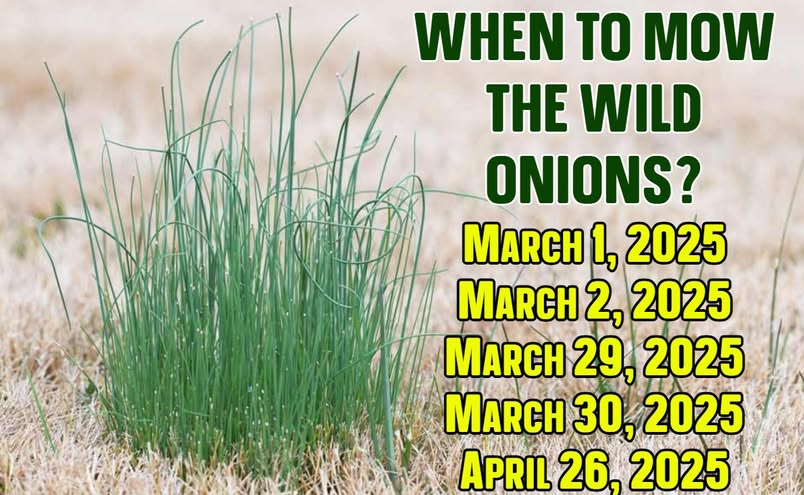
Wild onion mowing guide; ideal cutting dates in spring 2025 to weaken regrowth and prevent bulb spread.
Fall (September-November)
This is the prime window. The plant is actively drawing the nutrients into its bulbs hence the herbicides are transported deep into the plant where they can cause maximum damage. The success of one treatment is expected to be 80 percent.
Winter (December-January)
The growth is retarded and the sprays can hardly pass through the plant. Do not think of weeding the soil now, but make some plan to have the soil tested, or to do the lawn.
Early Spring (February-March)
New shoots are developed as the weather warms. It is the second-best time to spray down any survivors or upstart bulbs. It should have approximately half the effectiveness of fall.
Late Spring (April-May)
At this stage, the plant starts flowering and developing new bulblets. The effect of herbicides is reduced significantly. It is preferable to rake visible clumps to avoid them reseeding again.
Summer (June-August)
Plants become idle and disappear in the earth. Spraying is useless, you need to concentrate on watering, mowing and ensuring that your grass is thick so as to avoid falls during the fall.
Expected Results Over Two Years
The wild onion grass will not disappear in a day. Most homeowners attain full control in regular, seasonal employment.
| Infestation Level | Treatment Plan | Expected Control After 1 Year | After 2 Years |
| Light (<10 plants per 1,000 sq ft) | 1 herbicide treatment in the fall | 80-90% | 95-100% |
| Moderate (10-30 plants per 1,000 sq ft) | 2-3 herbicide rounds + some digging | 70-85% | 90-95% |
| Heavy (30+ plants per 1,000 sq ft) | Full plan: fall & spring sprays, manual work, overseeding | 60-70% | 85-90% |
Common Mistakes to Avoid
Avoiding a few missteps can save you months of frustration.
Pulling by Hand
It feels satisfying, but it doesn’t work. The bulbs snap off underground and regrow quickly.
Skipping the Surfactant
Sprays do not stick on because of that waxy layer on the leaves of the wild onion. A teaspoon of a herbicide is better adhered and absorbed by adding a surfactant to a gallon of mix or by adding a teaspoon of dish soap.
Treating Only in Spring
By spring, the energy of the plant is not flowing down to the bulb but upwards to it. You will burn the leaves and the bulbs you will leave. Treatments of falls should always be prioritized.
Over-Spraying or Using the Wrong Product
Herbicides such as glyphosate are non-selective thus killing your grass as well. Only use selective formulas, not in the case of a renovation.
Ignoring Lawn Health
The turf is so thick that you may clear all you see but then you leave a way back to the onions. Plant, cut, and sow to create a thick layer of grass that has no space for criminals.
Lawn Health and Cost Perspective
Wild onion grass is not as expensive to treat as it would be to replace your lawn so you still need a budget and time.
- Selective herbicide treatment: $15-45 per 1000 square feet.
- Manual removal (DIY): free but time-intensive
- Professional manual removal: $100-$300 for small patches
- Lawn renovation (worst case): $300-$1,000+
The positive aspect: after you have fixed your lawn, the maintenance would be much cheaper, with primary expenditure on fertilizer and spot applications.
Frequently Asked Questions
Q: How long does it take to get rid of wild onion grass completely?
One to two years is the norm, though, again, depending on the quantity of bulbs placed on the ground and the regularity of treatment.
Q: Can I mow right after spraying?
No. Wait at least two days after spraying so that the herbicide can be absorbed into the plant before it is cut off.
Q: Is wild onion edible?
Technically so, but do not eat anything on your lawn unless you are 100 percent certain that it is not confused with look-alikes or that it was not sprayed with chemicals.
Q: Why does wild onion grow in my yard but not my neighbor’s?
It usually occurs where lawns are scant, hampered or poorly fertilized. Improving soil and turf density makes your yard less inviting.
Q: Will my pets be safe after treatment?
The majority of the contemporary selective herbicides become pet-safe on drying. Water the lawn: Do not allow pets on the lawn until it is dry, it may take 24 hours.
Q: Can I use pre-emergent herbicides to prevent wild onions?
Not effectively. Pre-emergents target seed-based weeds, but wild onions grow from unaffected bulbs. Focus on lawn strength and fall monitoring instead.
Final Thoughts From Allen Tate
The wild onion grass is tenacious yet it is not invincible. The trick is to be ready, to wait and stay the course. One should apply a lawn-safe herbicide during fall, follow up during early spring, and have a healthy, rich lawn. In small patches, excavation is fast and impregnable. In the case of massive infestations, a two-year strategy is profitable.
When you finally snap the chain and pull out the bulbs, suffocating the weeds with thick grass and make sure you keep tallying every fall you are going to realize something outstanding: the odor of onions is gone and your lawn is again even, healthy and green.