Safe Methods to Remove Tree Sap Without Damaging Paint
You walk out to your car and see it: sticky, stubborn tree sap covering your hood. You try wiping it off, but it just smears. Sound familiar? Sap is a microscopic problem until it gets hard and glues itself to paint, glass, cloth, and plastic, like the superglue nature uses. What makes it even worse is that the fact that the first thought that comes to mind when you see something is to use the quick wipe, which will most of the time make it appear messier and once you wipe it off, you can just end up ruining the surface underneath.
This detailed manual takes care of wiping down cars, clothes, outdoor furniture, etc, and prevention measures so that you do not need to address it again. You will know how to decide how to remove sap out of paint, and out of windshields, and windows, plastic trim and chrome, and you will learn how to do it in two steps, and in three steps, and in four steps, and in five steps, and in sixty along with a hundred and ten that you are working on.
You will also know how to deal with sap on clothes without getting the stain spread, how to remove sap on concrete, decking, tools and equipment and what to do in case sap is found on your skin or on your hair.
At last will be discussed intelligent parking decisions, protective finishes and simple tree management tricks since the best sap removal strategy is the one that you do not even have to implement.
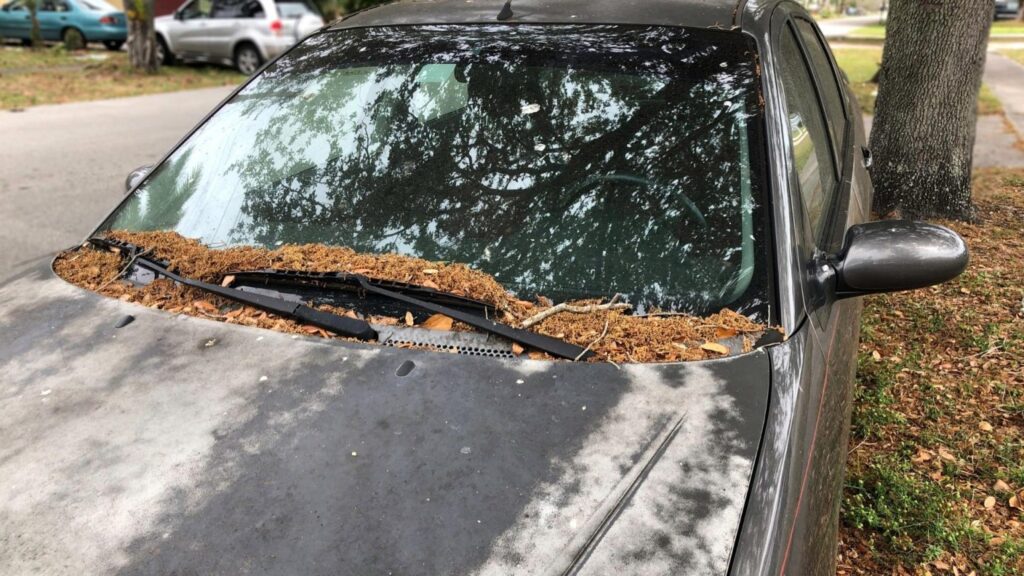
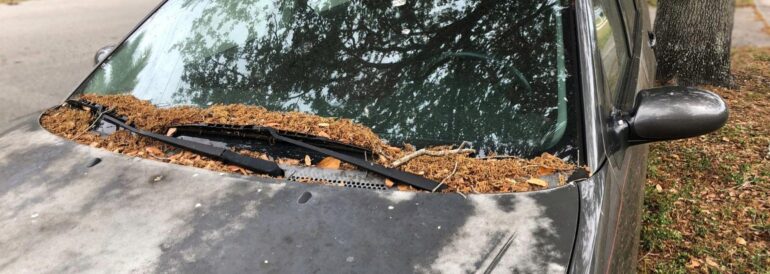
Tree debris and sap collecting along a parked car’s windshield beneath overhanging branches.
Understanding Tree Sap
What Tree Sap Is
Tree sap is a viscous fluid that is transported to a tree through a vascular system to provide growth and stress responses by transporting water, nutrients and hormones.
It is glue-like, as it has sugars and resins and terpenes, which are sticky and stick to surfaces and become hard with time, particularly during sunny and hot seasons.
Why Trees Produce Excess Sap
- One might also see higher sap release by trees during spring and early summer. Sticky drip too, can be enhanced by the presence of insects, as aphids and scale insects suck on the fluids in the plants, and may cause a heavy deposit beneath the canopy.
The loss of physical material, e.g., pruning cuts or storm damage, may result in a tree bleeding as it heals. The disease may also play a role in it as certain infections and internal problems cause abnormal sap flow.
Trees Known for Heavy Sap Production
The most guilty ones are pine trees (sticky resin), maple trees (sugar maple in particular), birch trees, elm trees and spruce and fir trees. Oaks, ash and most fruit trees tend not to be an issue in terms of dripping sap that causes problems on cars and the outdoor surfaces.
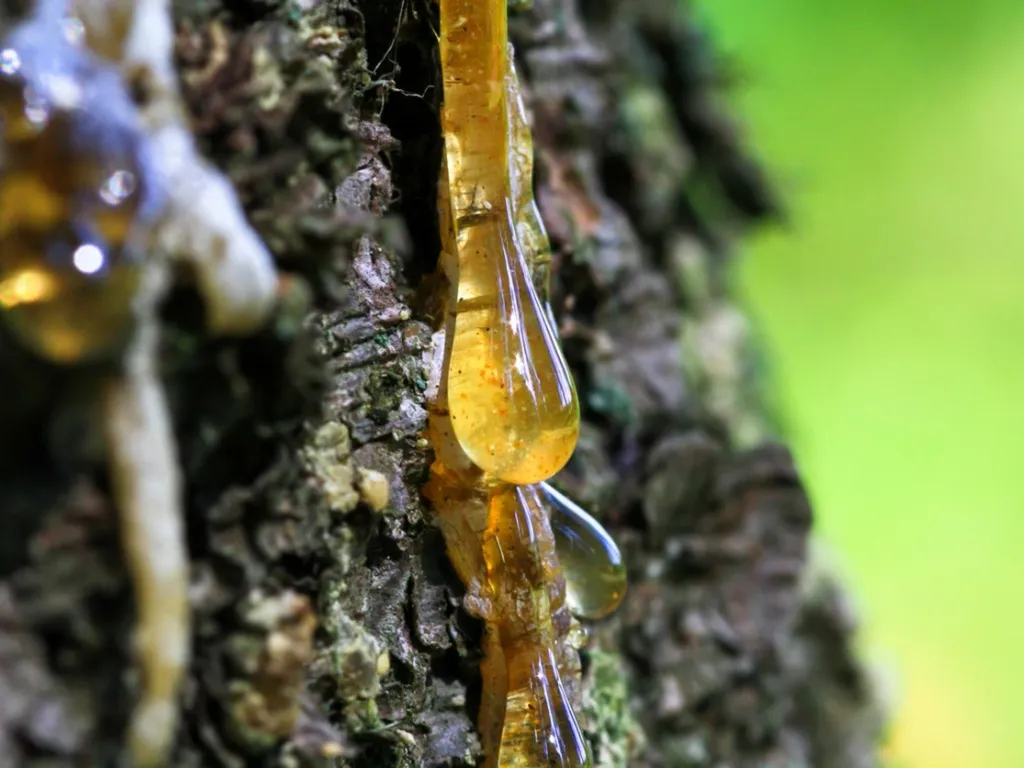
Stictree sap oozing from bark, forming clear amber droplets.
Sap vs. Honeydew (Important Distinction)
Not everything that can be called sticky is actual sap, and the way of removing it may vary. The sap of trees is the sap of the trees, and it is generally very sticky and is amber or clear. Honeydew is an insect excretion, usually of aphids; it is sticky, more water-soluble, and it attracts ants and wasps and may result in black sooty mold. The difference is to be detected by examining the above and observing the presence of sooty mold on leaves and branches.
Removing Sap from Cars
General Car Sap Removal Principles
Haste, or you have time to cut a lot of sap before it is scarred. Scraping sap should never be done on a dry surface since it may scratch paint and clear coat. Protest cleaners are always on a small spot to make certain that they will not haze or discolor the finish. Work in the shade to avoid drying of products by evaporation.
Method 1: Isopropyl Alcohol (Rubbing Alcohol)
Mostly suitable with fresh sap to moderately dry sap. It is cheap, easy to obtain and not harmful to the majority of car finishes, though difficult areas might require repeated applications.
- First, remove the grit by washing it with car soap and water.
- Wet a microfiber towel with 70 to 91 percent isopropyl alcohol and rub it on the sap for 30 to 60 seconds, then rub in small circles until the sap dissolves.
- Wipe under running water and dry them thoroughly using a clean microfiber towel in order to avoid spots.
Method 2: Commercial Bug and Tar Remover
Best for stubborn, dried sap. These removers are specifically designed and very efficient though they obey orders. They are Turtle Wax Bug and Tar Remover, Goo Gone Automotive, and 3M Adhesive Remover.
Wipe with a microfiber cloth. Wash it first, apply the product to the sap, wait 2 to 3 minutes until it is no longer wet before wiping it. Re-wash with car soap, run under water and dry.
Method 3: Detailing Clay Bar (Professional Method)
Good old, hard sap, which will never be dissolved. A clay bar without lubrication and light pressure will not scratch the surface when removing bonded contaminants.
Wipe and dry the car, spray clay lubricant on the surface, press the pad of clay on it and rub it over the sap. Wipe off, check and then repeat as necessary. In case the clay becomes dirty then fold and knead the clay in order to have a clean area.
Sap on Windshield and Windows
Apply alcohol or a glass cleaner that contains ammonia. Apply, allow to soften and wipe with a microfiber cloth. When necessary, use a razor blade scraper with caution, but scrape at 45 degrees, rest the scraper firmly against you with the blade, hold the glass wet, and scrape, ceasing at the point where one feels the grit.
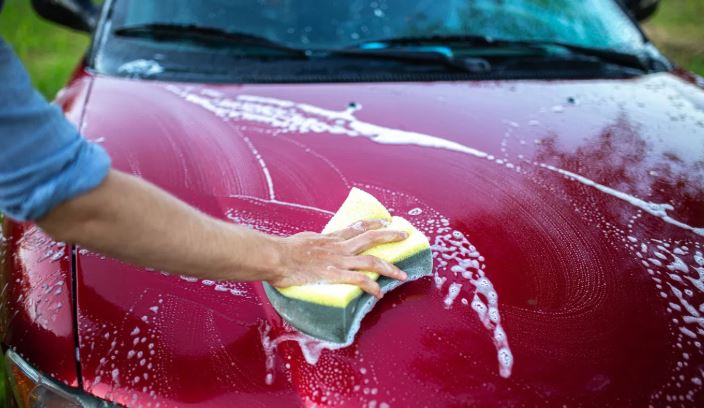
Washing a car hood with a sponge to remove dirt and residue.
Sap on Plastic Trim and Chrome
Certain solvents may cause damage to plastic; therefore, strong chemicals are not to be used, and neither WD-40 nor harsh solvents, unless it is proven to be plastic-safe. Begin with warm, soapy water and a soft brush.
Should there be sap left, mineral spirits or a commercial remover that is plastic safe should be used and tried first in a concealed place (door jamb or under bumper).
Chrome is stronger and the testing also helps to avoid dulling or staining.
Post-Removal Car Care
Wax or sealant can be removed by sap. Should the haze still be present, a fine polish (not heavy cutting compound) is used and afterward re-waxed, or a sealant is applied to the paint.
To have better long-term protection, a layer of ceramic coating or high-quality paint sealant should be applied in order to form a coating that will make it easier to get the sap out in the future.
Removing Sap from Clothing and Fabric
Method 1: Freezing (Best for Delicate Fabrics)
Freezing is a safe method of beginning on the sensitive materials since it hardens sap and renders it brittle.
Put the garment in a plastic bag and leave it in the freezer for 2-3 hours. After it becomes hard, scrape it with a butter knife or credit card. Once the bulk is removed, do the rest with rubbing alcohol.
Method 2: Rubbing Alcohol
Put the paper towels under the stained region so whereby the sap can find a medium to transfer. Use rubbing alcohol on the sap stain and dry it up with a dry clean cloth.
Nothing has to be rubbed, as it can make the stain bigger and sap can be forced further into fibers. Keep on and on till all the sap is used, and then cleanse in the usual way. In case there is a shadow left behind, use stain remover before washing.
Method 3: Peanut Butter or Oil
Sticky resins are dissolvable in oils and thus it is unsurprising that peanut butter or cooking oil can be very useful.
Put a little on the sap, and leave it 10 or 15 minutes, and wipe it off with a dull knife. Then apply dish soap to loosen up the oil and then do laundry as usual.
Other Common Surfaces
Outdoor Furniture (Wood, Metal, Plastic)
In the case of wood furniture, however, mineral spirits or denatured alcohol may be used to clean up the sap, but a little light sanding may be done in any case and then refinishing done to give back the protection.
In the case of metal, a commercial remover or rubbing alcohol can normally be used and it may be good to re-oil or protect the surface after that. In the case of plastic, warm soapy water is good to start and finally, white vinegar is a mild measure that can be applied in case of any leftover.
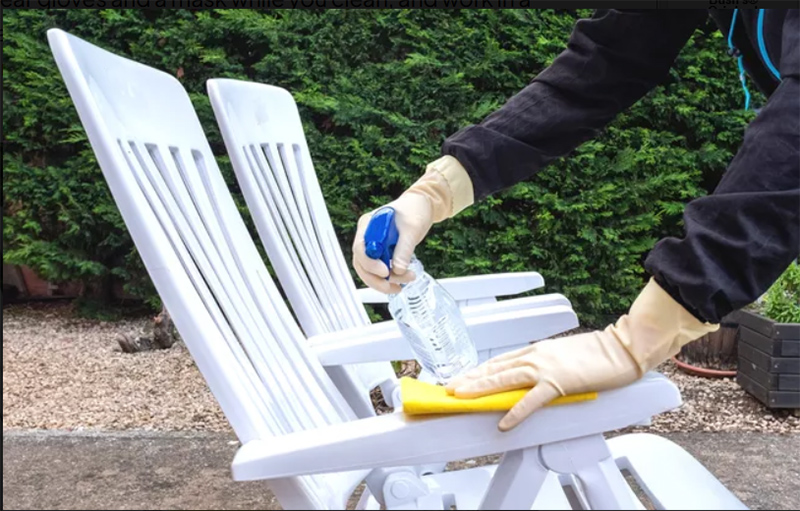
Cleaning outdoor patio furniture with a spray and cloth.
Concrete Driveways and Patios
Wipe thick sap with a putty knife. Use a cat litter or sawdust to absorb the oils over a period of 30 minutes and clean with dish soap and hard brushes.
In the case of tough stains, a concrete degreaser or pressure washer is to be used once the sap has been softened and scrubbed.
Decking (Wood and Composite)
- Wood: Apply the mineral spirits and make sure you scrub across the grain so as to prevent roughening. Where necessary, slightly sand, and repair or re-seal or refinish the section.
- Composite: The normal warm soapy water with a soft brush often suffices and even in the case of the supposedly safe solvents, it is always best to test it first.
Garden Tools and Equipment
WD-40 or mineral spirits cut sticky residue quickly. Clean blades and cutting tools immediately to prevent sap from gumming up moving parts or reducing cutting performance.
Skin and Hair
- Skin: Use baby oil, mineral oil, or cooking oil, then wash with soap and warm water.
- Hair: Work peanut butter or mayonnaise through sticky areas, then shampoo multiple times until oils and sap are removed.
Preventing Sap Problems
Parking Strategies
The most important consideration is where to park. Parking should not be done below pine, maple, birch, elm, spruce, etc. trees, which usually drip sap or resin.
Also be extra vigilant at the time of heavy sap flow in the spring and early summer. When you are in no position to avoid it, a car cover will help in avoiding bonding sap to paint and glass.
Protective Measures
The use of wax and sealants is beneficial since it produces a slick coating. Sap is easier to clean before it attaches with the help of regular car wax or a paint sealant.
Ceramic coating is a superior choice which gives great protection to sap and in most cases, cleaning is substantially quicker.
In the case of patios and outdoor areas, furniture covers can be used without the need to repeat the sap clean-up process when the furniture is placed in areas of tree cover.
Tree Management
In case the sticky issue continues to occur, then the tree itself might require some consideration. Check the pests such as the aphids and the scale insects since they may lead to excessive honeydew drop.
Effective pruning may minimize the amount of the trees overhead at the position of parking and seating points. In case a tree is too sap-prolific, it may indicate a health problem in a tree, and that is one of the reasons to invite an ISA-certified arborist to examine it.
Bright green maple leaves in full summer growth.
Troubleshooting Difficult Sap
Old, Hardened Sap
In the case of old sap, warm kinship can serve. After heating the sap with a low-power hair dryer, wipe it off and apply a solvent process.
Painting should not be overheated as excessive heat may ruin the clear coating.
When the sap continues to fail to lift, it may be necessary to use the clay bar technique which is usually the most useful and can be frequently found with professional detailers.
Sun-Baked Sap
Sap that has been dried in the sun is usually required to be treated with a combination method:
Heating to loosen, solvent to dissolve and clay bar to remove a bonded residue. In case the sap has been incorporated into the surface or it has hazed heavily, it might require expert detailing.
When DIY Fails
The average price of professional auto detailing is about $50-150, based on the level of severity and the intensity of work.
Detailers possess industrial removers and two-action polishers, and have experience in removing bonded sap and re-painting safely.
Conclusion From Allen
Tree sap is a pain but it can be removed from almost any surface with the appropriate technique.
Its principal principles are as follows: be fast, never scrape dry sap, the solvent must correspond to the material, and the test should always be done in an inconspicuous place.
Cars generally react with rubbing alcohol, bug and tar removers and clay bars on older sap whereas fabrics might require freezing, alcohol or oils.
The most intelligent immediate solution is prevention: improved parking options, protective coatings or wax, and the covering of outdoor objects. In case sticky drip is associated with the pest, or some strange bleeding of trees, an ISA-certified arborist can assist in diagnosing the problem with the tree and minimizing future clutter.