
It is a late spring evening and you look out the window and see that your oak tree has not leafed out yet, and all the trees in your neighbor’s backyard are green. Anxiety strikes; is it that you have killed your tree
It is a typical fear of house owners. Loss of a tree is a stressful thought, particularly in cases where there are safety issues and high costs of removal. And the good news is this: many of the trees that seem to be dead are merely sleeping. It is a natural thing that trees go to sleep in the winter, and there are doable methods to estimate whether your tree is dead, or it is just in the rest, or it is on its last available gasp.
The trick is to differentiate between a dead, dormant, or death-stricken tree. This is a guide on simple DIY tests to learn about the health of your tree. It will also include species-specific signs and provide you with specific guidelines as to when you should seek a professional.
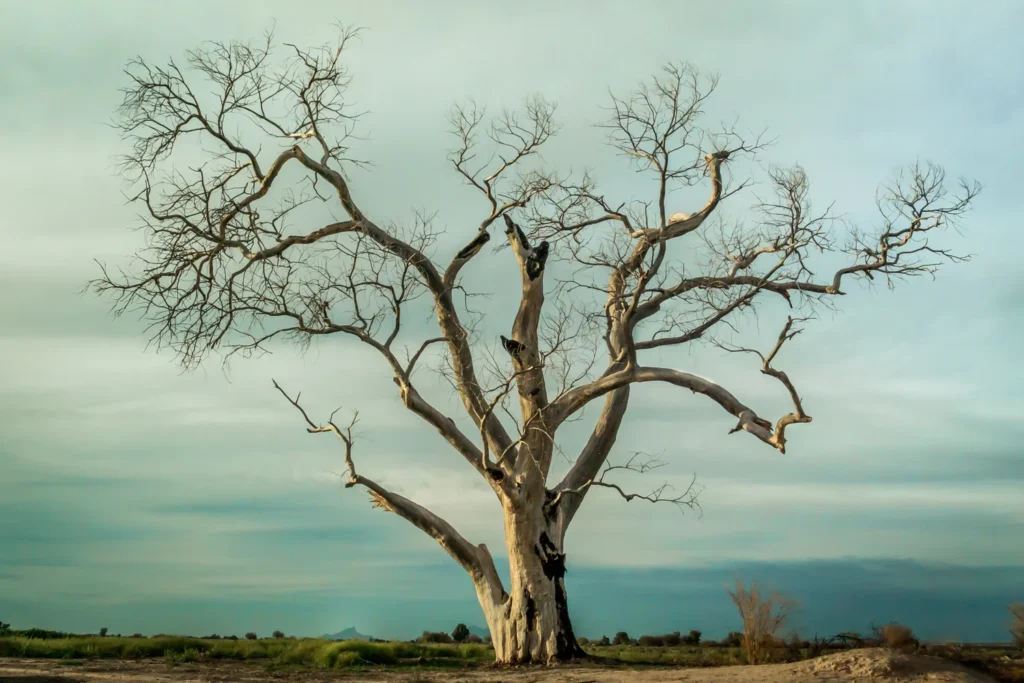
A lone, leafless tree stands as a stark reminder of nature’s resilience and decay.
Understanding the Difference: Dead vs. Dormant vs. Dying
Dead Trees
The dead trees are entirely unviable. There is no living tissue around and they are unable to regenerate. They are a big safety risk, particularly when they are leaning or with crumbling branches. These trees should be cleared off immediately in order to avoid property damage or harm.
Dormant Trees
The dormant trees are also alive; they are just not active during colder months. Specifically, in the winter season, trees save energy, losing their leaves and ceasing growth.
To determine whether a tree is in its dormant state or not, it is possible to examine the presence of a green layer of the cambium under the bark and the existence of healthy buds. Trees in the dormant state will produce leaves in the spring as the temperatures increase.
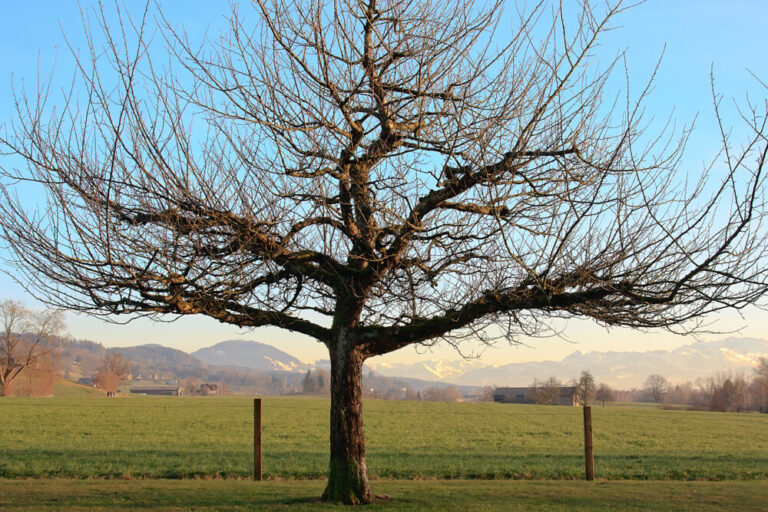
A lone, leafless tree stands as a stark reminder of nature’s resilience and decay.
Dying Trees
The trees that are dying are not dead, but they are experiencing degradation. You will see signs of stress, like dry/brown leaves or places where the tree has ceased growing.
Dying trees might still contain some part of living tissue, but they should be evaluated by professionals to decide whether the tree can be saved or removed.
Why the Confusion Happens
One can easily mistake dormancy and death in the winter season when the trees that are in the decay season are barren.
Then there is the stress due to droughts or transplanting and homeowners are inclined to think a tree that is in distress is a dead one.
When assessments are made is important, as winter and early spring are the worst periods to make decisions, whereas late spring and summer provide the best indications.
The 5 Essential Tests to Determine If Your Tree Is Dead
Test #1: The Scratch Test
A reliable method of evaluating whether your tree is alive is the scratch test, which involves checking the existence of a specific layer of the tree called the cambium.
It is the living tissue under the tree’s skin. To do the test, one needs to choose a few spots on the trunk and the branches, and scratch the bark with a fingernail or knife.
When the cambium is green and wet, then it is alive. When it is brown and dry, then that section of the tree is dead.
Test #2: The Bud Inspection
The bud check can be used to identify whether the tree can be used to grow or not. Look at the ends of the branches of the buds.
Healthy buds are thick, bulky and a little wet. In case they are shriveled, dry or missing, then the tree can be dead. The trees that are dead will still have healthy buds, and they will sprout in spring.
The existence of the buds in the tree means it is alive, whereas the absence of the buds may imply that it is dead.
Test #3: The Flexibility Test
This test measures the healthiness of branches. Bend a living branch, it will bend; if it’s dead, it will readily snap. Live branches are moist and hence flexible, whereas the dead branches do not have moisture and are fragile. This test is especially effective in trees with no leaves since it will indicate whether the branches of the tree are alive.
Test #4: The Trunk Inspection
The trunk examination is used to test the structural health of the tree. Search for such symptoms, such as a loose bark, vertical cracks or fungi. Hollowness in the trunk, which is sensed through tapping, is a sign of internal injury.
- When the trunk is soft or spongy or appears to be decaying, then it is an indication that the tree is in bad condition. The destruction of the trunk may affect the stability of the tree and such indications normally suggest a dead or dying tree.
Test #5: The Root and Base Examination
Stability is important to the root system. In order to examine the base of the tree, remove the mulch or the soil that hides the base of the root.
- Watch out for fungus, exposed roots, or soft, crumbly roots, which are an indication of decay. The presence of sawdust in the base may mean that there are pests.
When the tree is rocked and appears unstable, it is likely that its roots are impaired, hence there is a high risk of the tree falling.
Combining Tests for Accurate Assessment
Always use a combination of results through the combination of tests. When the scratch test is green with the presence of the cambium, the presence of the buds, and the flexibility of the branches, then the chances are that the tree is alive.
When there is brown cambium, no buds and brittle branches, then the tree is probably dead. Where mixed results are obtained, a professional assessment should be done by an arborist.
Visual Signs and Symptoms of a Dead or Dying Tree
Canopy and Foliage Signs
During the growing season, a dead tree will not bear any leaves. The branches will be brittle and lifeless, and no growth will take place in the spring, meaning that there will be no recovery of that tree.
However, a tree in its dying state can be found to have a sparse leaf cover with thin leaves and early fall, particularly before the fall.
The stress will be seen when the foliage becomes yellow or brown. With the weakening of the tree, the branches will become increasingly dead and it will be further indicative that the tree cannot recuperate.
Branch Characteristics
The dead branches have dry and brittle bark, which breaks so easily with no growth at the ends. On the contrary, a dying tree will continue to live with some branches, but others will wither away.
The canopy is becoming thinner as the healthy branches are dying and falling. This is a progressive dieback which is one of the major indications that the tree is not healthy.
Bark and Trunk Symptoms
The bark of a dead tree can also peel away in huge areas leaving behind the underlying wood. Vertical as well as fungal cracks on the bark are also prevalent, indicating internal decay.
- A canker may be sunken, dead spaces in the bark of a tree, and oozing sap, which is a sign of stress.
Another evident mark is woodpecker damage since these birds attack trees in their decaying or infested condition with insects, which are weak structures.
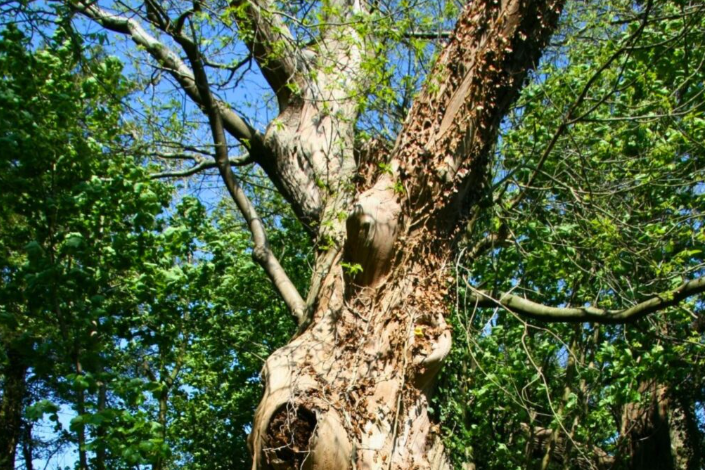
A tree stands strong, its bark weathered and marked by time, amid the surrounding greenery.
Species-Specific Signs: How to Tell If Different Types of Trees Are Dead
How to Know If a Palm Tree Is Dead
Palm trees are special since they do not have a layer of the cambium, hence difficult to determine their health. The dead palm will have a soft, rotting crown, the center of the growing of tree.
The leaves will brown, grow hard and soon drop. An additional instance that the palm is dead is the presence of fungal development on the trunk.
The palms, in contrast to the deciduous trees, are not able to regenerate after the demise of the crown. The palm is also probably dead in case no new fronds grow at the center.
How to Know If a Pine Tree (or Other Evergreen) Is Dead
Pine trees and other evergreens are not as much affected by life and death as are the deciduous trees. A pine that is dead will contain brown and dry needles all over the tree.
The dead branches of pines are easily snapped but the healthy ones are flexible. The pine tree when healthy, will lose its sap when wounded, and the dead will have no sap to lose. Another indication that the tree might be dead is the lack of or loss of the bark.
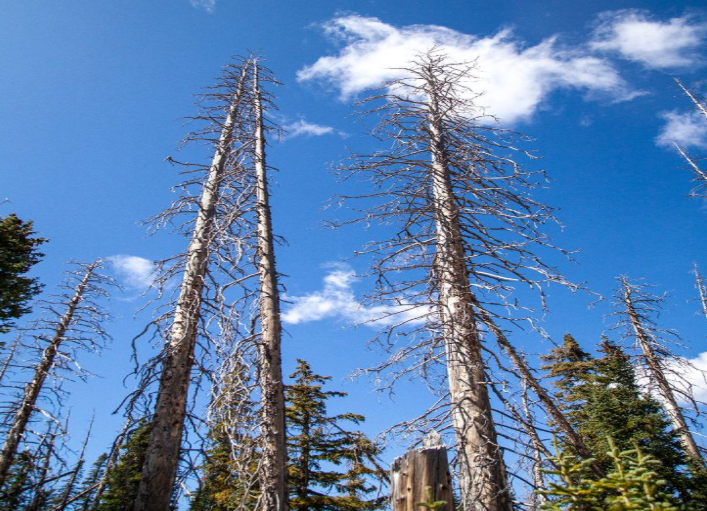
Severe bark stripping; exposing the tree’s vulnerable inner layers.
How to Know If a Deciduous Tree Is Dead
Late spring (May-June) is the most appropriate time to examine a deciduous tree. Assuming that the tree has not sprouted by then, it can be dead.
The health of the bark can be established by a scratch test on the bark. In case the layer of cambium beneath is brown and dry, the tree is dead.
Skulls such as the inability to leaf out in the growing season indicate death. It is possible to compare it to similar trees in the same species in the area to define whether it is dormant or dead.
When to Call a Professional Arborist
Call an Arborist Immediately If
In case you think that your tree is potentially dangerous, you should call an arborist. Trees that lean or have big and hanging, dead branches are dangerous and may fall and damage or injure them.
The visible cracks or evidence of collapse are also structural problems that should be addressed. An arborist will be in a position to estimate the stability of the tree and establish whether the tree should be removed to avoid future damage.
Professional Assessment Recommended For
In case your self-assessment is not all good, then visit an arborist. An example would be when certain sections of the tree are alive whereas others seem to be dead. Trees of high value, e.g. big, old and sentimental trees, should also receive specific treatment.
What Certified Arborists Provide
Arborists are certified people whose diagnostic findings cannot be wrong, as they can scientifically tell whether a tree is dead, dying, or dormant.
They also have advanced tools such as sonic tomography and Resistographs which they use to identify decay that is hidden and check the structural integrity of the tree. Arborists also provide such services as pruning, pest management, and root care to keep trees in good condition.
What to Do If Your Tree Is Dead: Next Steps
Why Dead Trees Must Be Removed
The presence of dead trees should be cleared because of the high level of safety hazards associated with them. When they rot they get loose and may drop at random times, mostly during storms or strong winds, resulting in destruction of properties or bruises. Liability is also a problem with dead trees. In case of a fall and damage or harm done, you may be proven guilty.
Urgency Assessment
The tree must be removed immediately in case it is close to buildings, garages, or power lines or even in busy areas like playgrounds or walkways. But open trees, which are not close to buildings, can be left after a certain period of time and are not necessarily considered a threat.
DIY vs. Professional Removal
The DIY removal can only be applicable to small, stable trees that are not near structures or dangerous areas. You can probably do it yourself with the correct safety gear and fall zones. Professional removal is provided in case of large and unsafe trees or those around a structure.
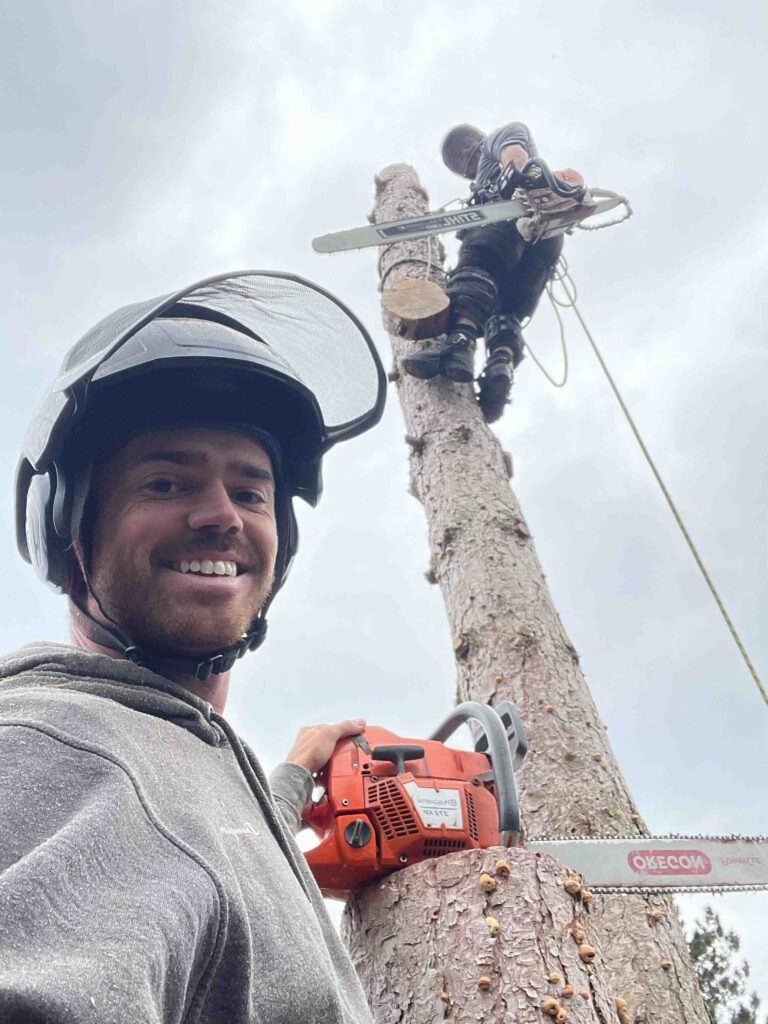
A Blooma Tree professional arborist safely climbs a tree, equipped with tools to trim and maintain its health.
Before Hiring for Removal
Check the credentials of an arborist before hiring them. Make sure that they are qualified and have proper insurance to cover wrongful accidents. Another useful thing to do is to receive several quotes and compare the prices and services and make sure that you hire a professional who is qualified. See whether they provide stump grinding and cleanup that might be required to remove them totally.
What to Do If Your Tree Is Dying (But Not Dead Yet)
Immediate Actions
If your tree is showing signs of death, pruning and fertilizing should be avoided because this may further stress the tree.
- Pruning eliminates necessary growth and fertilizing may increase the nutrient imbalances. Rather, emphasize supportive care.
Water a tree profoundly as well as during dry seasons in order that the roots receive enough water. Use of mulch to cover the base to enable the retention of moisture, and inhibit both hot and cold temperatures of the root zone. As well, guard the tree against physical damage, e.g. lawnmowers. Such measures will ensure that the tree has a good chance of survival.
Savability Factors
A tree with a good prognosis is one that has less than 50% damage on the crown and can recover after proper care.
Poor prognosis is given when a tree has been damaged by more than half of its crown or when it has serious problems such as root rot. In case the tree has internal decay or a weaker root system then it might not survive. Professional assessment is required in such instances to identify the future of the tree.
Common Treatable Issues
A lot of problems in trees are remediable if detected early. In the case of drought stress, one should water deeply and put on a mulch to conserve water. Should there be some pest, then specific treatment such as insecticides or organic means can be used to control pests. These problems can be resolved in order to avoid additional deterioration and make the tree healthier.
Preventing Tree Death: Keeping Trees Healthy
Essential Tree Health Practices
The first step to ensure tree health is through care. Deep watering should start with, particularly in dry seasons. Do not over-water, this may cause root rot. Moreover, the soil should be given a chance to dry up between watering so as to avoid waterlogging. Mulching is also important to the trees. Spray a layer of 2-4 inches to keep the soil moist, maintain soil temperature as well as minimize grass and weed competition. The mulch should not be touching the tree trunk as it can rot.
Another practice is pruning. Routine tree care should be done to prune dead, diseased or damaged branches to keep the tree healthy. Heavy pruning should be avoided especially during the growth period because this may put stress on the tree. The pruning period should be in the dormant season.
It is also necessary to perform regular monitoring. Examine trees at least once a season to observe stress, pests or disease. The sooner the problem is detected the sooner the intervention becomes possible.
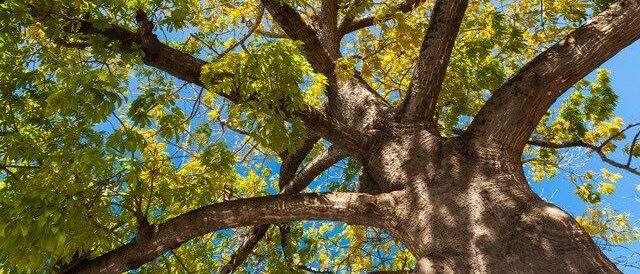
A healthy tree thrives under the clear blue sky, its branches reaching out in vibrant green.
Regular Monitoring and Professional Care
Regular checks assist in the detection of problems. Check trees all year round so that there are no issues. The services of a certified arborist, annual checkups, and soil tests can be regarded as the means of professional care with the purpose of guaranteeing long-term health. Arborists are able to identify possible troubles early before they get out of control, and provide superior care and preventive measures.
FAQ’s
Q. What is the way to know whether a tree is dead or not?
To tell whether a tree is dead or dormant, look under the bark and see whether the layer of cambium is green and moist. This will be present in dormant trees and dry brown cambium in dead trees.
Q. What is the appearance of a dead tree?
A dead tree is also usually bare during the growing season, the branches are often shriveled, and the bark is bare and without any evidence of life beneath. The trunk can also be cracked or be fungal.
Q. Can a dying tree be saved?
Yes, when the tree is not too far down into it, it could sometimes be spared. A dying tree can be restored by early intervention, watering, pruning and pest control, particularly when less than 50 percent of the crown is destroyed.
Q. What is the duration of the existence of a dead tree?
The time taken for a dead tree to fall may take months to years, depending on the kind of tree and the weather. Hardwoods are more durable as compared to softwoods. Nevertheless, dead trees do not help but get weaker with time and need to be cleared away.
Q. What is the most appropriate moment to determine whether a tree is dead or not?
Late spring (May-June) is the most appropriate period to check the health of a tree when the dissemination of the leaves is supposed to take place in the case of the deciduous trees. A tree that has not leafed by this time may be dead.
Q. Is a tree with no leaves dead?
Not necessarily. During winter, deciduous trees lose their leaves in the fall and are bare. Yet the tree might be dead in late spring or summer when it has no leaves.
Q. What is the way of knowing whether a palm tree is dead?
Examine the top of the palm for rot. When the fronds are old and dry and new growth is not growing in the center, then it means that the palm is dead. Another sign of deterioration is the presence of the growth of the fungus on the trunk.