
Although spotted lanternflies have not infiltrated the Pacific Northwest, trees and scenery in the Eastern half of the United States are being severely impacted by them. Knowing how to prevent trees against spotted lanternflies can now assist homeowners in all regions to understand the risks of the invasive species, know the signs of its presence, and act in the event of the latter arriving in the area.
Spotted lanternflies grow in massive quantities on trunks and branches. They consume masses of sap, hand down sticky honeydew on all beneath and leave behind them an ugly sooty mould that leaves a film on leaves, bark, cars, decks and furniture.
To PNW residents, this should be a wake-up call to the fact that invasive pests can be transmitted by people and awareness is the best defense mechanism. It is also easy to respond promptly when they are found in new areas since one would know the way spotted lanternfly can be controlled in areas where it has been previously identified.
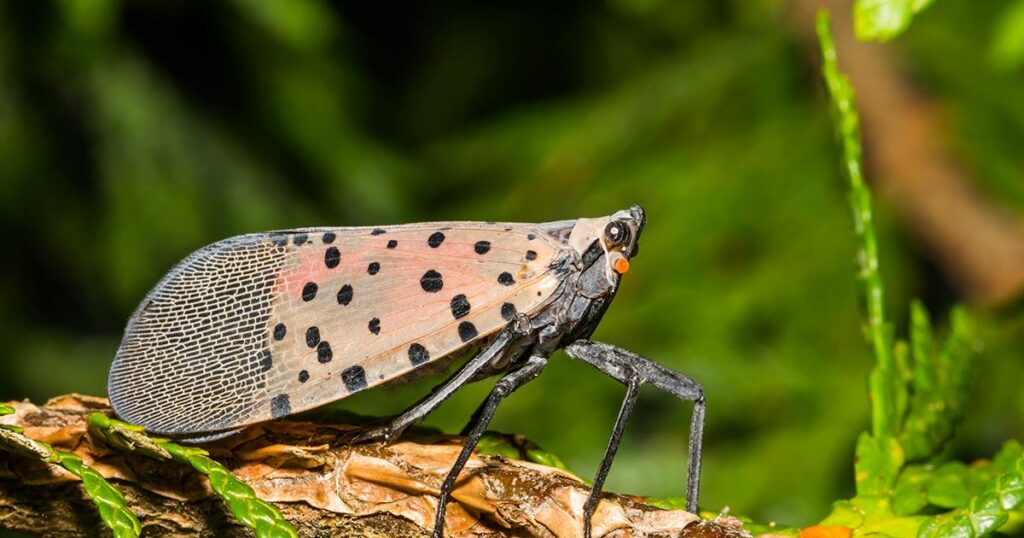
A spotted lanternfly rests on a branch, an invasive insect known for damaging trees and plants.
Why Spotted Lanternflies Are Dangerous
Spotted lanternflies are an Asian invasive pest that was initially identified in Pennsylvania in 2014. In North America, there are no wild predators that are powerful enough to regulate populations. They consume over seventy varieties of plants such as trees, vines and fruit crops, meaning they not only affect forests.
Human activity is one of the major factors that contributes to their quick expansion. Lanternflies are good hitchhikers as they deposit masses of eggs on cars, trailers, firewood, and outdoor equipment.
Further feeding undermines the trees over a period of time and honeydew together with sooty mold is an added burden. This combination can be lethal in both young and already stressed trees.
Identifying Spotted Lanternflies
Adult Appearance
The spotted adult lanternflies measure approximately 1 inch in length and 0.5 inches in width. They appear grayish tan with sprinkles of black and, with wings folded, are much better camouflaged on the bark and the rock than they appear.
- As they spread their wings there have been bright red underwings, with black spots upon them, making a very peculiar flash of color. The legs are pale and visible at a short distance and the head and legs are black.
- Adults are normally active during the months of July through December with September and October being the ones which are very active.
- These months are usually characterized by them gathering in huge numbers on tree trunks, branches and even fence posts and buildings outside.
- They make it easier to see when you are familiar with them because of their vivid coloration, as well as the tendency to accumulate on surfaces.
Nymph Stages (Immature)
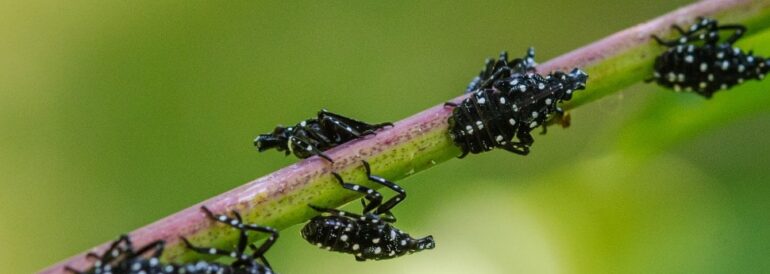
Spotted lanternflies go through a number of nymph stages before they reach the adult stage. Those instars are small, May-to-July, the body being covered with bold white spots, and are about 1/4 inch long. They are capable of moving rapidly in the form of ticks at this size on the bark or on the leaves.
Instar that come out later are found primarily during July and they are approximately 1/2 inch. Their bodies turn bright red yet they still have the white spots and they start to get black stripling. These red and black nymphs are frequently found on stems, young branches and leaves particularly on favorite host plants.
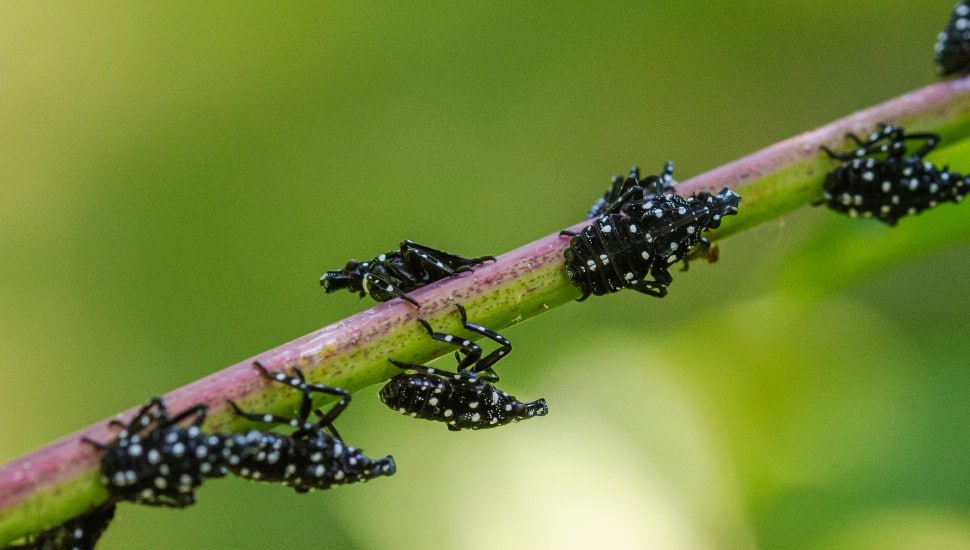
Black and white spotted lanternfly nymphs cluster on a plant stem, an early life stage of this destructive invasive pest.
Egg Masses (MOST IMPORTANT TO FIND!)
- The most important spotted lanternfly tree target is spotted lanternfly egg masses as they all have 30 to 50 eggs. New egg masses resemble a 1-inch-long brownish-gray smear of dried mud or putty. A waxy coating covers them which defends the eggs during the winter.
Laying of eggs occurs from September to November, and hatching occurs in April to May. They may be found on nearly any smooth outdoor surface: tree bark, stones, outdoor furniture, fences, sheds, trailers, campers, and vehicles, firewood, and walls of buildings.
The smooth coating of old egg masses becomes wrinkled and is no longer visible; this signifies that the egg masses of spotted lanternfly have already been hatching in the specified area.
Similar-Looking Insects to Avoid Confusing
The gray wings of some native moths are spotted, but they do not have the dark spots and the reddish-red hindwings. Their wing shape, as well as their resting position, is not the same.
The most notable one is the underwing of the spotted lanternfly which is red and can easily be noticed when the insect is in motion or flying. This pattern should be identified to be able to identify the spotted lanternfly and successfully control it.
How Spotted Lanternflies Damage Trees
Feeding Behavior
Spotted lanternflies pierce and suck using their sucking mouths to be satisfied with the phloem, which contains sugars in the tree. They suck trunks, branches and even stems in huge quantities of sap.
A single insect is not very harmful, however, they hardly ever feed on their own. Hundreds of them can cluster around one tree and feed at the same time, making the tree replenish the lost nutrients.

A black spotted lanternfly nymph feeds on a leaf stem, an early and highly mobile stage of this invasive pest.
Direct Damage
Trees become weak with this permanent sap loss over time. Growth reduces, new growth becomes smaller, and the general vigor becomes less. The trees that are subject to excessive pressure are prone to other pests, diseases, and environmental stress. The young trees or ones that have already suffered droughts or bad soils are particularly susceptible and may die after repeated seasons of being fed.
Secondary Damage: Honeydew & Sooty Mold
When they are feeding, the spotted lanternflies release volumes of honeydew. The sticky substance covers leaves, bark and all that is below the infested trees such as patios, cars, and outdoor furniture.
Honeydew promotes the development of black sooty mould fungi which develop a dark film on the leaves and bark. Sooty prevents photosynthesis because sooty blocks sunlight and contributes to the stress of the tree. It also leaves the outdoor areas messy and greasy.
High-Risk Trees
- The favorite host and frequently used center of congregation of lanternflies is the Tree of Heaven (Ailanthus altissima).
- Nevertheless, they also usually infest black walnut, willow, maple, birch, apple, peach, cherry and grapevines.
- Such a wide host range implies that any damage caused by invasive species trees is no longer limited to ornamental landscapes but orchards and vineyards as well.
- The control of the hot spots of the Tree of Heaven lanternfly is especially significant when the strategy of control is being designed.
Protection Methods – Ranked by Effectiveness
Method 1: Egg Mass Removal (MOST EFFECTIVE – #1 PRIORITY)
- The best and least expensive option for reducing future populations is the removal of the egg mass. Each kilo is made up of 30 to 50 eggs, and thus pulling out in the month of September to April is necessary.
Check trucks, branches, fence posts, outdoor furniture, grills, play equipment, vehicles, trailers, sheds, decks, and firewood.
Put the egg masses using a plastic card or putty knife without touching them onto a rubbing alcohol or hand sanitizer ziplock bag scrape. Close and put aside the bag to avoid hatching. Mashed eggs may do the same trick but bagging is more reliable and cleaner. Checks of egg mass persistently are the basis on the protection of spotted lanternfly trees.
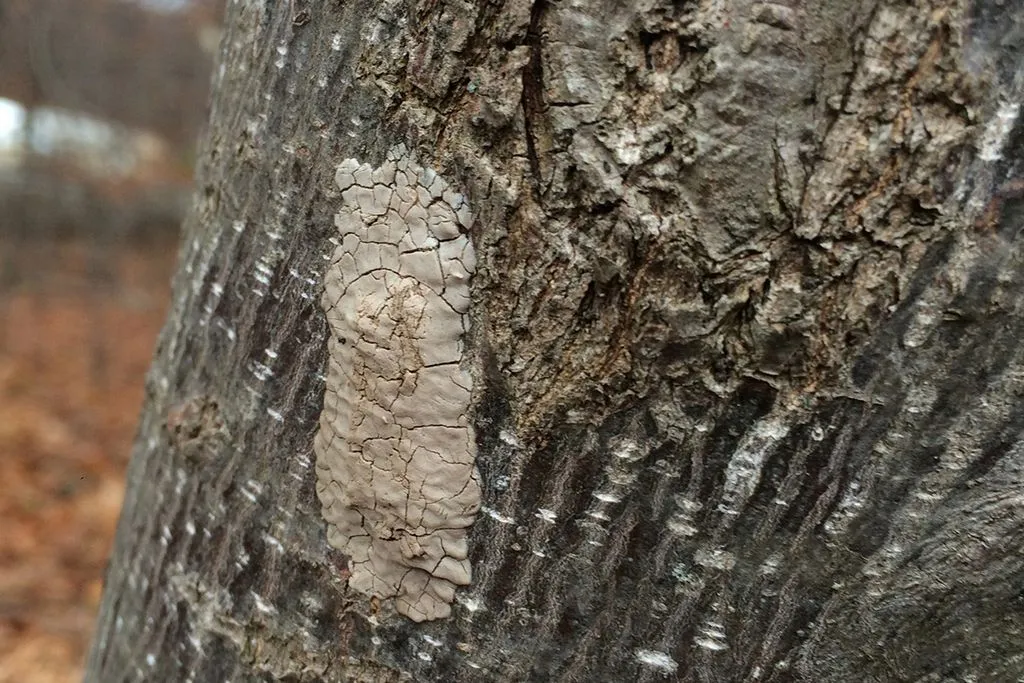
A spotted lanternfly egg mass attached to tree bark, a camouflaged overwintering stage that can hatch dozens of invasive insects in spring.
Method 2: Systemic Insecticides (Most Effective for Large Trees)
Systemic insecticides gave the greatest response to high-value trees that are treated by an ISA-certified arborist.
Imidacloprid or dinotefuran imidacloprid and dinotefuran injected into the tree trunk or into the soil where the trees are planted, move up through the tree and kill lanternflies where they feed.
One timely spring treatment provides protection throughout the season and complete canopy cover, even without the need to be sprayed every second.
Systemics are also used on tall trees that are out of reach by surface sprays. They should be applied at the onset of spring which is usually during April or May to allow the treatment to be administered before the onset of feeding.
Method 3: Sticky Bands & Circle Traps
Nymphs entering the canopy are stopped at the top by sticky bands and traps in the form of circles. The sticky surface should be covered with chicken wire or mesh to prevent the trapping of birds or small mammals, which is a very important step in the installation.
Place bands between the end of May and July when the nymphs are most active and emptying, replacing them as they become full. These traps perform particularly well on the Tree of Heaven and other dangerous hosts where lanternflies can be found.
Method 4: Physical Removal (Manual Control)
Manual control is effective for moderate populations. Squishing is a vigorous effort as lanternflies can endure less strong efforts.
A shop vacuum with soapy water in the tank can easily sweep away clusters on trunks and any other branches, especially patios and driveways where there is most activity.
Though infestations cannot be destroyed by manual removal, this technique will decrease the number of them and decrease the stress on the trees.
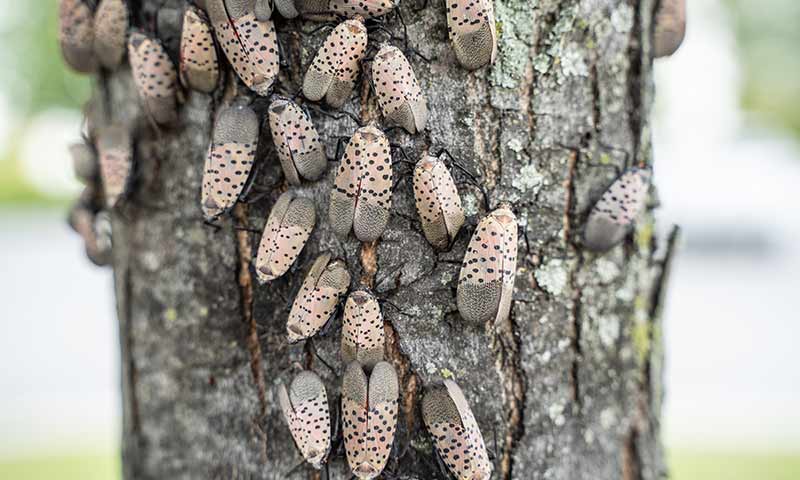
An adult spotted lanternfly infestation clustered on tree bark, feeding and reproducing in large numbers that can severely stress host trees.
Method 5: Contact Sprays (LIMITED EFFECTIVENESS)
Contact sprays can only be effective when sprayed on the insect and will not leave any residual effect, yet it can be used to control small populations.
White vinegar is lethal when in contact but may cause foliage destruction hence should not be sprayed on leaves.
An egg mixture of dish soap and water kills insects and may be applied to egg masses. Neem oil has a low residual effect and it should be used as it is indicated on the label and preferably in the evening to avoid pollinators. They are most effectively applied in the targeted spot management and not the property-wide management.
Tree Health Recovery
Once the population of lanternflies is reduced through control, it is necessary to promote tree health. Intensive, and rare watering in dry seasons helps trees to replenish the internal water and replace sap.
The soil moisture should be retained by a layer of 2 to 4 inches of mulch kept at a distance of the trunk which will moderate changes in temperature.
Sooty mold will fade slowly away as honeydew ceases, rinsing of leaves and surfaces will enhance appearance, and light penetration.
Pruning would have to be left till the dormant season, as this way would not be a stressor to remove any dead or diseased branches. Don’t over-fertilize. Instead, emphasize the regular, constant attention to the care of trees that will enable them to restore energy stocks.
Prevention & Spread Control
It is as significant to prevent new spots of the lanternflies as it is to treat the infestations. Vehicles, trailers, campers, and outdoor equipment are important to be checked prior to leaving the infested areas (where they hitchhike) particularly wheel wells, bumpers, undercarriages, and cargo racks.
Outdoor furniture, firewood and pallets cannot be moved without inspecting them to find egg masses.
Established populations commonly have quarantine zones by the states that limit the movement of high-risk materials; it is through such laws that the spread of these invasive species can be slowed down and invasive species trees minimized.
State agriculture or natural resource departments must be notified about new observations using clear photos and location information because the officials may need to make swift identifications.
Seasonal Control Calendar
An annual strategy maintains efficiency. During the months of September up to April, the emphasis is on searching and scraping egg masses on trees and external surfaces.
During April and May, when the nymphs are hatching, observe trunks, stems and other objects around carefully. Install sticky bands or circle traps on Tree of Heaven and other preferred hosts and keep replacing them on a regular basis.
The adult season is at its finest between July and December, where numbers and stress on trees are brought down by manual removal, vacuuming and concentrated contact sprays.
Early in spring, a professional should apply systemic insecticides, allowing the product to diffuse throughout the tree before the onset of feeding. The schedule is such that every stage in life is addressed at the best time.
Conclusion From Allen Tate
To defend trees against spotted lanternflies, it is necessary to take a concerted effort on all life stages: to find adults and nymphs, to remove egg masses, to use traps and systemic treatment when it is necessary and to provide tree health in the future.
In the areas where they already exist, these approaches are the pillars of real-time, on-the-ground management. In regions such as the Pacific Northwest, where the pest has not yet been introduced, preparedness is created through understanding of such strategies. Learning how to defend trees against spotted lanternflies will help homeowners, arborists, and communities respond to this invasive insect sooner and preserve forests, orchards, and community trees in the long term.