
Seattle’s reputation as a rainy city hides an important reality: between early July and mid-September, we receive just 1–2 inches of rainfall combined. That is a true drought to urban trees which grow out of compressed clay soil.
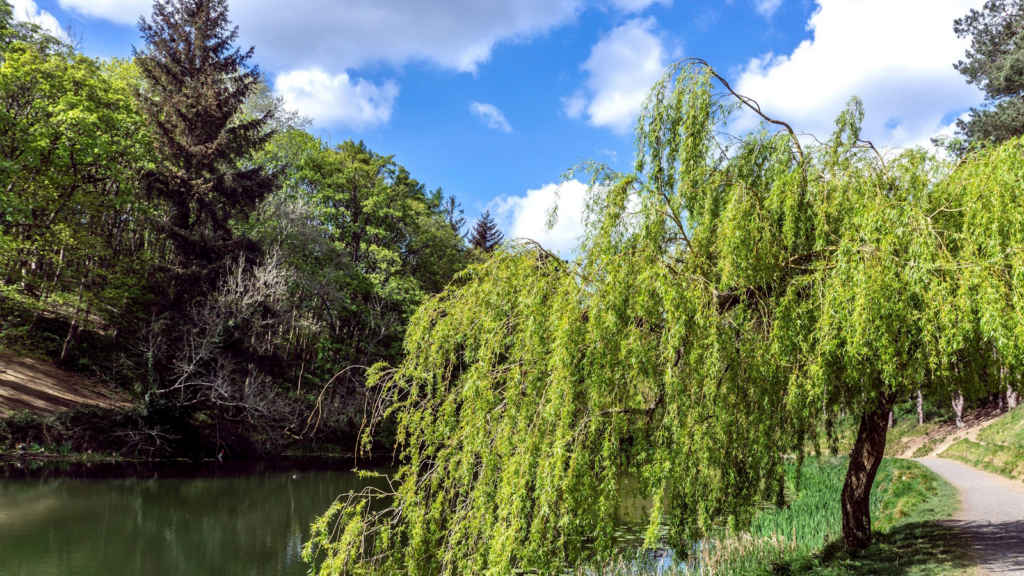
Healthy, well-hydrated trees maintain full foliage and structural strength even through extended dry summer conditions.
You are asking the right question right at the right time should you be searching as to how to water trees in Seattle summer. The most stressful months of the year are July and August when local trees are concerned. Drought stress trees Seattle homeowners notice in late summer often began quietly weeks earlier.
This guide explains exactly how to water correctly, which species need priority, and when professional support makes sense.
Why Seattle’s Dry Season Is Harder on Urban Trees Than Most Homeowners Realise
Seattle averages nearly 38 inches of rain annually, but almost none of it falls in peak summer. July and August together average roughly 1.5–2 inches. For trees accustomed to consistent winter moisture, that gap is significant.
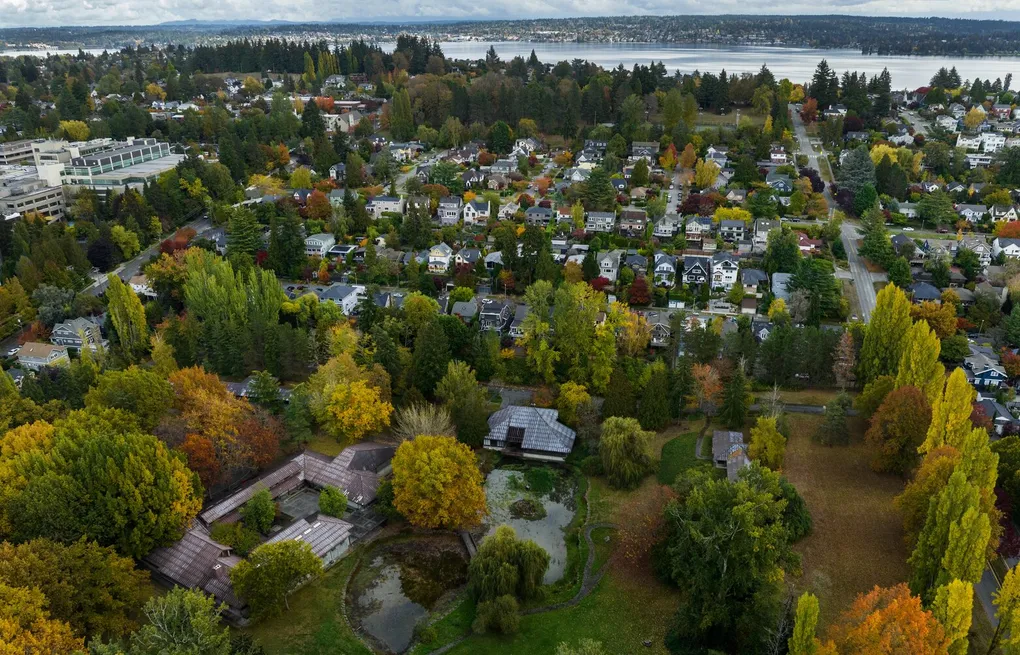
Seattle’s long summer dry spell, combined with compacted urban soils and heat from pavement, creates far more stress on city trees than most homeowners expect.
Seattle’s clay soil compounds the issue. During winter clay retains water. It is dry, hard and hydrophobic during summer. In fast applications of water on dry soil made of clay, a substantial amount of water is lost to the surface instead of being taken up into the root zone. Even those homeowners who water frequently could be providing significantly less water than they actually believe to be the case.
Urban heat island effects worsen this. Reflected heat on pavement and buildings in Capitol Hill, Ballard or West Seattle is absorbed by trees. Compressed soil restricts oxygen and root growth. That combination accelerates drought stress that Seattle residents increasingly see.
The cumulative risk matters. A tree that is left without additional watering in several dry summers can slowly weaken. Trees stressed by drought are susceptible to bark beetles, Armillaria root disease and Swiss Needle Cast.
The dry window of Seattle is increasing with Washington State drought emergencies being declared in 2024 and 2025. Summer watering is no longer optional for many species.
Which Seattle Trees Need Watering Most And Which Can Wait
Not all trees require equal attention. The equation is changed by species, age, and the condition of the soil.
An open-soil Douglas Fir 40 years old has little to fear as opposed to a Japanese Maple 3 years old, against a south facing wall.
Tier 1: High Priority: Water Regularly
- Newly planted trees (first 3–5 years)
- Western Red Cedar
- Japanese Maple
Newly planted trees have limited root systems confined to the original root ball. Without regular watering, they can fail quickly in the Seattle summer drought.
Western Red Cedar drought stress Seattle arborists are observing has increased in recent years. Sometimes we cannot just blame the month when it is July, and it is tip browning.
Japanese Maple is has a shallow root and is heat sensitive. Afternoon sun exposure dramatically increases water demand.
Tier 2: Water in Extended Dry Spells
- Pacific Dogwood
- Ornamental Cherry
- Big Leaf Maple
- Vine Maple
They can withstand moderate dry conditions but they like deep watering when the temperatures exceed 85°F or when the time passes three weeks pass without any meaningful rainfall.
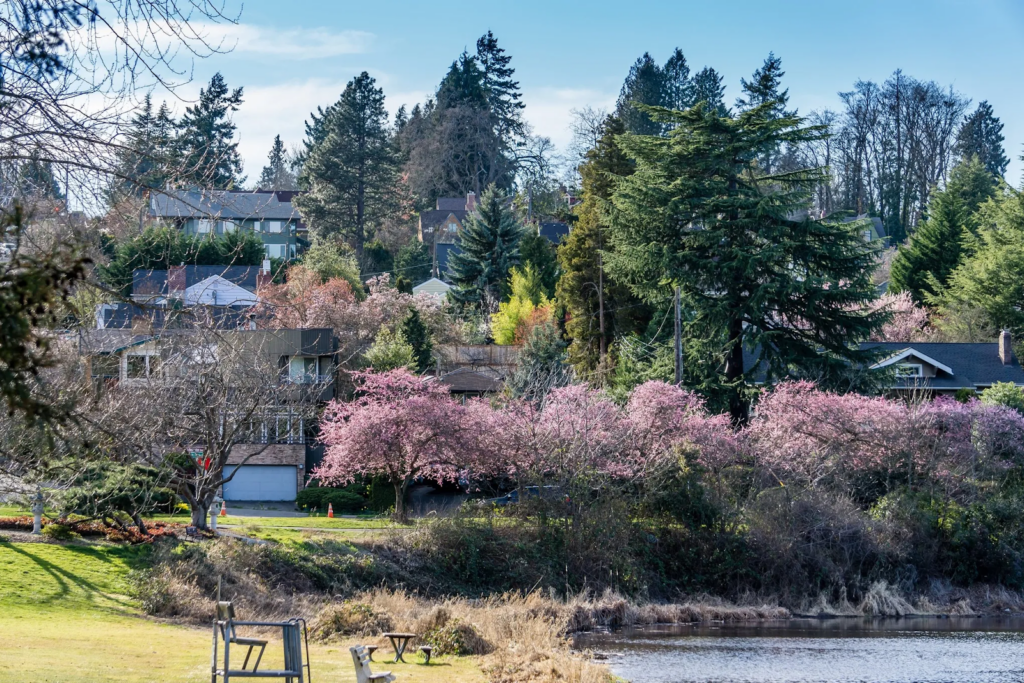
Some Seattle trees, especially newly planted and drought-sensitive species, need consistent summer watering, while mature, deep-rooted trees can often wait through shorter dry spells.
Tier 3: Generally Drought-Tolerant Once Established
- Mature Douglas Fir
- Incense Cedar
Conifers in open grounds that are already established usually require addition of water only in long periods of drought extending over more than four weeks.
And, of course, in case you are thinking of more drought-tolerant species in future, our guide to the best trees to plant in a small Seattle backyard.
Species Watering Reference Table
| Tree Species | Drought Tolerance | Start Watering | Frequency | Amount Per Session |
| Western Red Cedar | Low | Early July | Once per week | 20–30 gal slow soak |
| Japanese Maple | Low | Early July | Twice per week | 10–15 gal; increase in heat |
| Newly Planted Tree | Very Low | From planting | 2–3x per week | 5–10 gal slow soak |
| Pacific Dogwood | Low–Moderate | Mid-July | Once per week | 15–20 gal deep soak |
| Big Leaf Maple | Moderate | Late July | Once per 10 days | 25–35 gal slow soak |
| Ornamental Cherry | Moderate | Mid-July | Once per week | 15–20 gal |
| Douglas Fir (mature) | High | Extended drought | Every 2–3 weeks | 30–50 gal slow soak |
| Incense Cedar | High | Extended drought | Every 3 weeks | 15–20 gal |
Tree Watering Seattle Dry Season: How to Do It Correctly
This is where most mistakes happen.
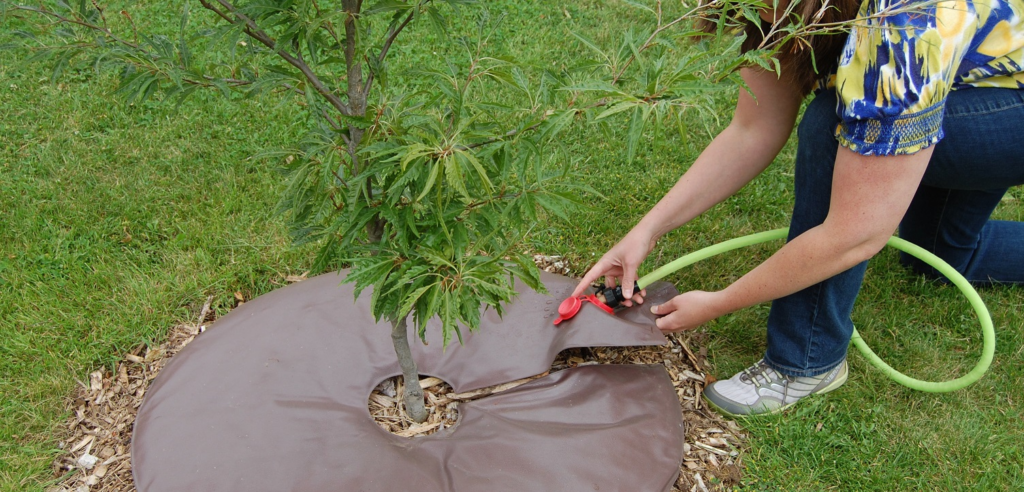
Slow, consistent watering during Seattle’s dry season helps young trees establish strong roots and resist summer drought stress.
Deep and Infrequent – Not Shallow and Daily
The main rule of summer tree plant care in Seattle is straightforward, at least, deep watering and not that often. Everyday watering of the soil ensures that moisture is close to the surface and promotes shallow root development that undermines stability in the long-run. Rather use a slow soak at 30 or 60 minutes until the water penetrates to the deeper root zone. In dry clay soils, it is best to pre-wet the soil a little, wait 10 to 15 minutes, but then proceed with the entire 10 to 15 minutes of wetting the soil.
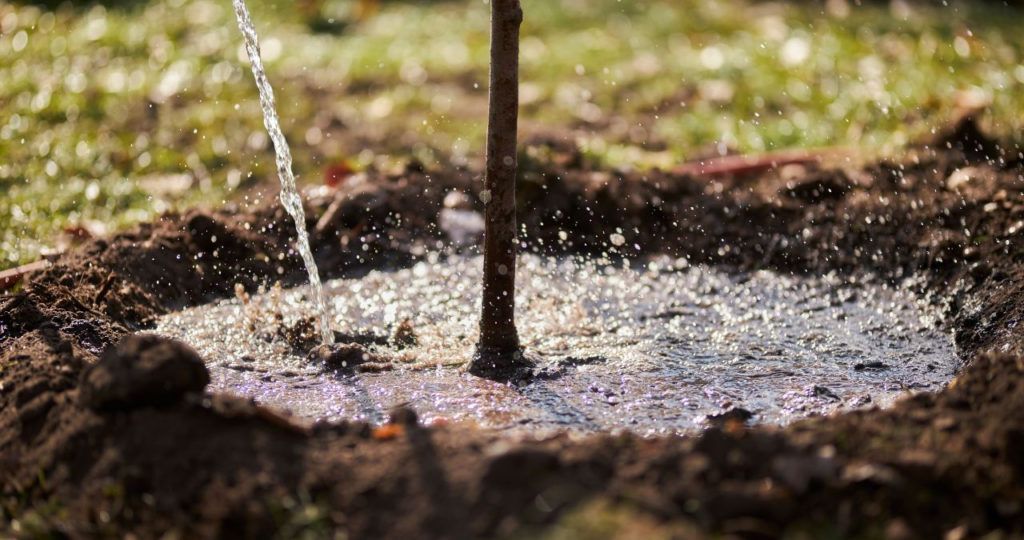
Deep, slow watering at the root zone ensures moisture penetrates the soil and supports healthy root development during dry summer months.
Where to Water – Not at the Trunk
Always water at the drip line rather than directly at the base of the trunk. The drip line which is found at the lower end of the canopy has the most active fuse root. The root flare is always kept wet on the trunk, which predisposes it to the risk of developing crown rot. In the case of bigger trees, spray water in a broad ring which is slightly over the drip line.
Tools That Work
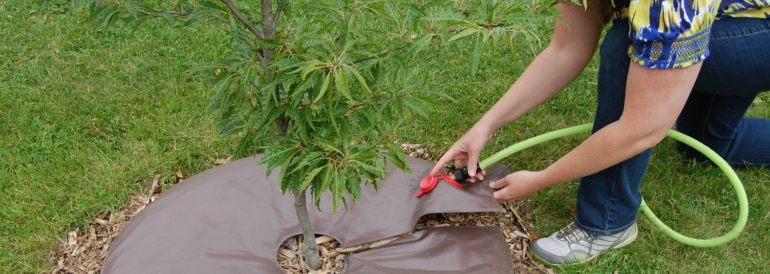
One of the most effective and cheap tools to use in deep watering is a soaker hose that has been coiled around the drip line. Newly planted trees should be watered with watering bags as it gives a slow flow directly to the root ball. A drip irrigation system is suitable for more than one tree. Sprinklers are not efficient as they release water at an excessively high speed that cannot be absorbed by clay soil.
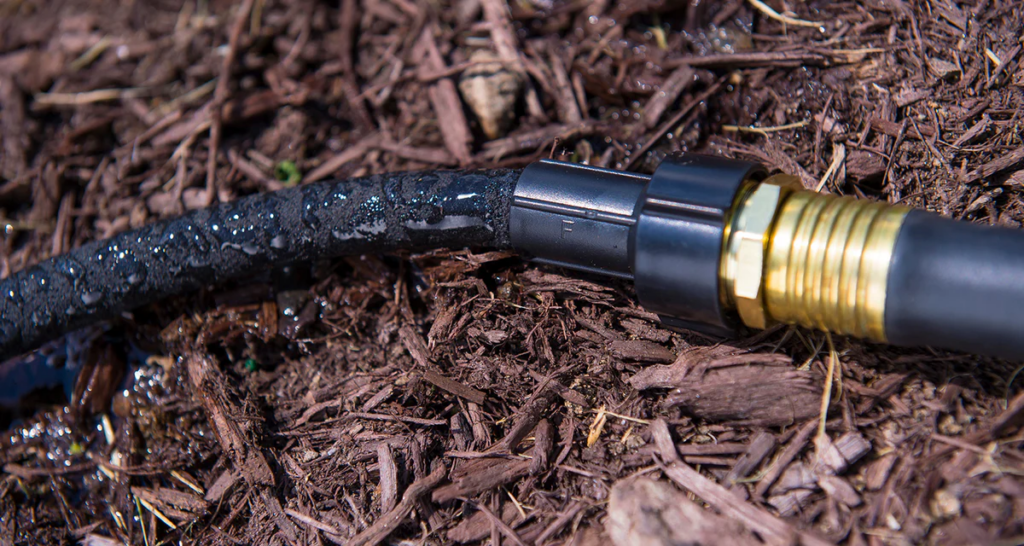
A coiled soaker hose placed around the drip line delivers slow, even moisture directly to the root zone, making it one of the simplest and most cost-effective deep watering methods.
Two Common Mistakes
Never mulch anywhere around the trunk as this is known as volcano mulching. Mulch must create a ring and remain 4 to 6 inches at a distance of the bark. The slow-draining clay soil in Seattle is also likely to overwater. Test the moisture in the soil by inserting a screwdriver in the soil before watering. In case it slides easily and it is wet, wait. Early in the mornings or at the end of the evenings to minimize the evaporation.
Newly Planted Trees: A Higher Standard of Care
Trees that are newly planted demand more and more regular care than the trees in the dry summer season in Seattle. In the initial two years of planting, watering should be done 2 to 3 times a week in July and August and then once or twice a week in the 3-5 years with the growth of roots. Water should be dripped slowly at the root ball, preferably through a watering bag. Without water for 10-14 days in the middle of summer, a newly planted tree is at a real threat of failure. When there are rainfalls in the fall, start decreasing the frequency of watering and restart the routine in June.
Recognising and Responding to Drought Stress Symptoms
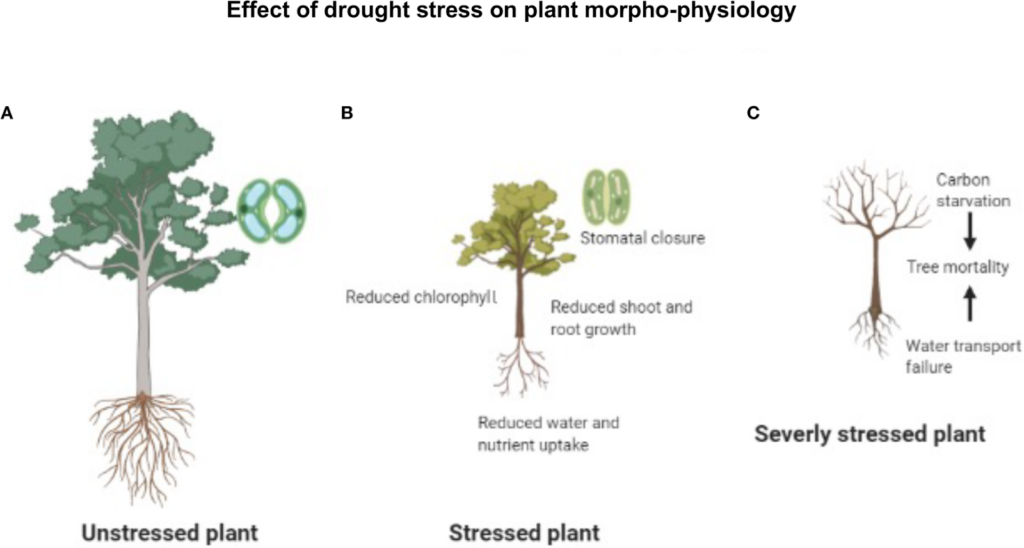
Drought progressively reduces chlorophyll, growth, and water transport in trees, ultimately leading from mild stress to severe decline and potential mortality when moisture loss persists.
Early signs of drought stress trees Seattle homeowners see include:
- Leaves wilting in afternoon heat
- Dull or pale foliage
- Slight branch tip droop
Mid-stage symptoms:
- Leaf scorch with brown edges
- Premature leaf drop in August
- Needle tip browning on Western Red Cedar
Advanced symptoms:
- Branch dieback
- Significant canopy thinning
- Dead limbs
Early and mid-stage drought stress is usually reversible with prompt deep watering. Advanced symptoms require professional assessment.
If your tree shows more serious decline, see our guide on signs your tree is dying.
Contact an ISA-Certified Arborist, in case the symptoms do not disappear in 2-3 weeks of proper watering.
Frequently Asked Questions
How often should I water my trees in Seattle summer?
Trees that have just been planted require watering 2-3 times a week. Western Red Cedar and Japanese Maple require watering once a week. Mature Douglas Fir typically need water only in extended drought. Always water deeply and slowly.
Does Seattle summer rain eliminate the need for watering?
No. July and August rainfall averages just 1–2 inches combined. That is insufficient for most urban trees in clay soil.
My Western Red Cedar is browning . Is it drought stress?
Outer tip browning beginning mid-summer is classic drought stress. Begin deep watering immediately. If browning continues, consult an arborist.
Can overwatering harm my trees?
Yes. Clay soil retains water. Root rot can be brought about by overwatering. The moisture of the soil should always be checked before it is watered.
What is deep root watering and do I need it?
Deep root watering is used to add moisture to water that is below the compacted surface layer, which makes sure that water is involved in the root zone. It especially works well in heavy clay soils.
Bloomatree’s Tree & Plant Care Program includes professional deep root feeding and seasonal moisture management for trees that need more than surface watering.
Conclusion
Deep watering of trees throughout July to September is by far the most crucial thing that a Seattle homeowner can do for the health of the trees on an annual basis.
During the increasing length and drier summers proper watering is not a choice anymore.
In case your trees are already stressed, recently planted, or you just want the professional treatment of your tree and plants prior to the onset of peak drought, the Tree and Plant Care Program by Bloomatree offers deep root feeding, moisture control, and professional attention in and around the Seattle area.
Call us now for a seasonal check-up of your tree before the driest weeks of summer arrive.