
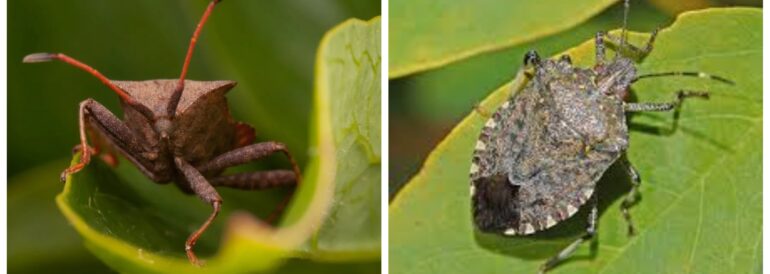
You go to look at your squash plants and find a dark and shield-like bug crawling on the lower part of a leaf. You realize it is a pest, but what kind of bug, a squash bug or a stink bug? And does it even matter?
The positive is that, with knowledge of what to be aware of, it is easy to tell the difference between these two pests. Determining the correct pest is important since using the incorrect pest management strategies would be a waste of time and money.
Although the stink bugs and the squash bugs appear to be similar, they attack and damage plants differently, and must be treated using different strategies.
In this guide, we will take you through the main differences: the egg color, the shape of the body and the type of plants they prefer and in doing so, you will be able to recognize these pests and take appropriate measures. Although they are both shield-like, and they both smell bad when threatened, the similarities are restricted to that. We are going to discuss the ways to distinguish these two pests and your garden will be safe.
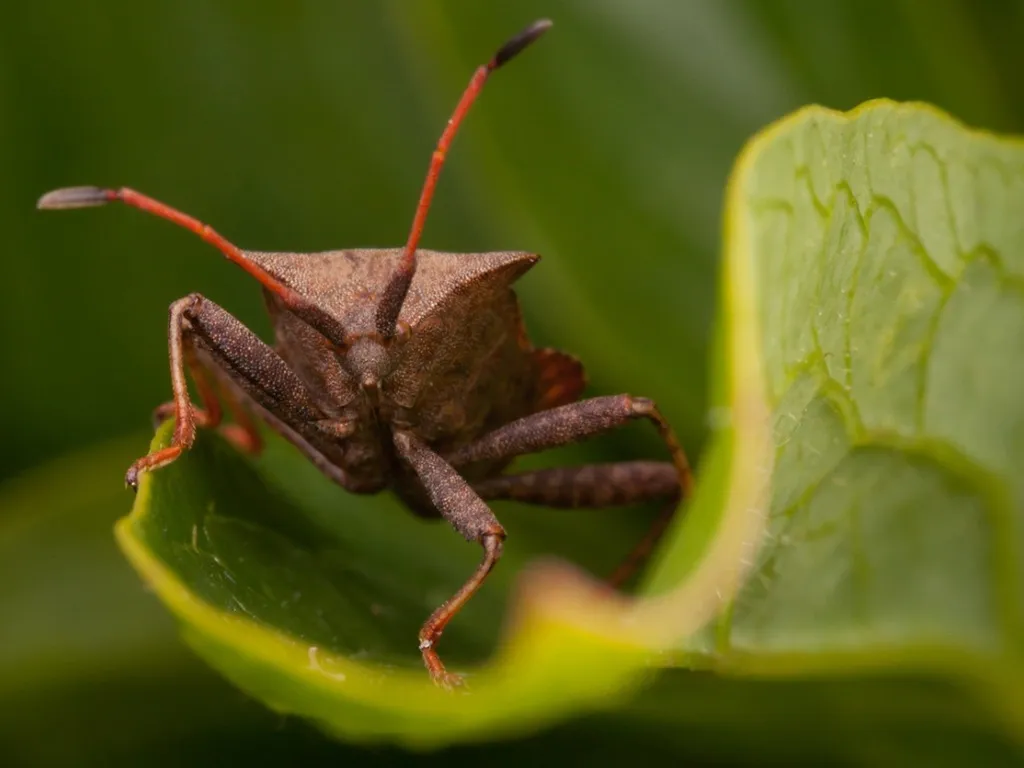
A close-up shot of an insect perched on a leaf, showcasing its intricate details.
Squash Bug vs Stink Bug: Quick Identification Guide
The quickest method of distinguishing between squash bugs and stink bugs?
Examine three things: the place where you found it, the appearance of the eggs and the shape of the body of the bug.
The following is your page guide comparison:
| Feature | Squash Bug | Stink Bug |
|---|---|---|
| Body Shape | Elongated, narrow, stretched-out | Shield-shaped, wide, rounded |
| Size | 5/8 to 3/4 inch | Just under 1 inch |
| Width-to-Length Ratio | About 1/3 as wide as long | Nearly as wide as long |
| Color | Dark gray-brown to black | Brown, gray, or green |
| Distinctive Markings | Orange-brown stripes on edges | White bands on antennae |
| Egg Color | Bronze, copper, brick-red | Light cream, pearly white |
| Egg Arrangement | Clusters of 15-40 eggs | Smaller clusters |
| Plants Attacked | Cucurbits ONLY (squash, pumpkins) | Many plants (tomatoes, peppers, beans) |
| Damage Type | Wilting leaves, plant death | Scarred/dimpled fruit |
| Home Invasion | Rarely enters homes | Invades homes in fall |
| Smell When Crushed | Mild, short-lived | Strong, persistent, foul |
In case you locate the bug on cucurbit plants and observe the bronze-colored eggs, then it is a squash bug. Stink bugs, however, have greater preferences, as they like more plants like tomatoes and beans and their eggs are white or cream.
- Quick Tip: Look at the eggs. Bronze/copper eggs = squash bug. White/cream eggs = stink bug.
How To Identify Squash Bugs
Squash bugs can be distinguished by their sizes, shapes and specific markings. Adults are 5/8 to 3/4 inch long and are elongated and narrow in shape and shaped like a football.
They are usually dark gray, brown and are orangish and brown in the edges of the abdomen. When they are raised up you may see a check pattern, brown and white, checkered.
The dorsal part of the bug is lighter in color than the ventral part. Squash bugs are the simplest to detect as their eggs are bronze, copper, or brick-red and have a metallic shine and they come in groups of 15-40 eggs on the lower part of the leaves. The eggs are easily distinguished by the green leaves.
The nymphs have a white gray color with black legs and antennas and change to a darker color when they grow older. They look like spiders and are wingless with long legs, and a white powder coating at their initial stage of hatching.
The squash bugs can only be found on cucurbit plants such as squash, pumpkins, zucchini, melons and cucumbers. It is not common to find them on any other plant, and in case you encounter a bug that is only attracted to cucurbits, then it must be a squash bug.
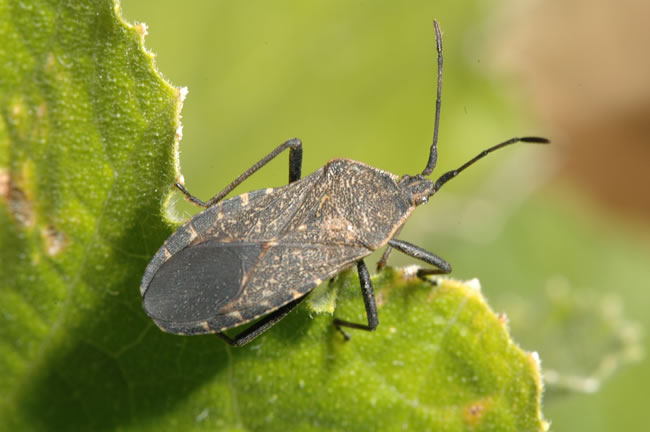
An adult squash bug rests on a leaf, showing its distinctive shape and markings.
How To Identify Stink Bugs
Stink bugs are bigger than squash bugs, being only slightly less than 1 inch long, and have the shield form, round in shape. The color of them depends on their species, most often it is brown, gray or green.
The white or cream-colored bands on their antennae are one of the main markers of their identification, which makes them stand out from the squash bugs. Also, more armored in look, they are more domed at the back than the flatter squash bug.
Stink bug eggs are smaller than squash bug eggs, being light colored, either pearly white, cream or very pale green.
They can be found in smaller groups, and stink bugs will be commonly found on many plants such as tomatoes, peppers, beans and tree fruits such as apples or peaches.
In the form of nymphs, stink bugs are usually more colorful than their adult counterparts and have red or orange spots on their green bodies.
The shape is rounder and smaller than the squash bug nymphs and wing buds become seen when they are older. Stink bugs are able to be found on many plants and are thus is more generalist pest than the squash bug.
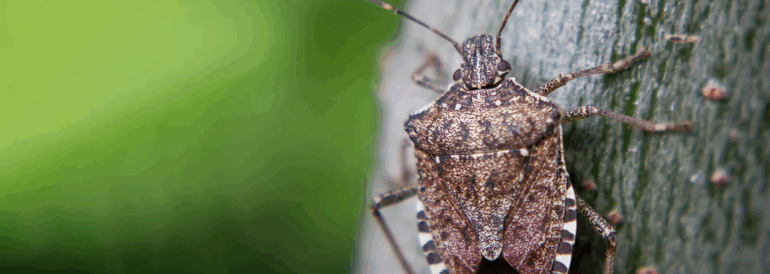
A close-up of a stink bug resting on the surface of a tree, displaying its detailed body and legs.
The 5 Key Differences: Squash Bug Vs Stink Bug
Body Shape
Squash bugs are long and thin and are consequently elongated, which means they look stretched; the stink bugs have a shield-like shape and are rounded. The squash bug is similar to a football and the stink bug appears like a shield in the Middle Ages.
Egg Color
The eggs of the squash bug are easily visible since they are bronze, copper or brick red and are metallic in appearance. Stink bug eggs are neither dark nor metallic as are the squash bug eggs, but are light-colored, perhaps pearly white, cream or a bit of green color.
Plant Preferences
The bugs attack the cucurbit plants such as squash, pumpkins, cucumbers and melons. Stink bugs are generalists, which consume numerous plants, such as tomatoes, peppers, and beans.
Smell Intensity
Both of the bugs also release foul smell when they are threatened, with the stink bugs having a much stronger, long-lasting smell which lingers. The bugs of the squash cause a very slight odour when disturbed and of a short-lived nature.
Seasonal Behavior
Squash bugs do not enter the houses and live in the plant debris throughout the winter. However, stink bugs appear to prefer bringing indoor overwintering conditions and are known to invade houses in the fall and hatch in the spring.
Damage Patterns: How Each Bug Harms Plants
Squash bugs are very harmful in that they inject toxic saliva into the plants as they feed. This causes leaves to wilt and turn yellow and brown, otherwise known as Anasa wilt.
In severe infestations, the squash bugs may kill the plants, particularly the young plants. They also carry the cucurbit yellow vine disease which is a bacterial infection that leads to sudden collapse and death of the vine.
On the other hand, stink bugs normally damage fruits in terms of cosmetics. They poke holes in tomatoes, peppers and other fruits and resulting in dimpling, scarring or cat-facing on tomatoes. Although the stink bugs will hardly kill plants, they may render the produce unsaleable, decreasing the worth of crops.
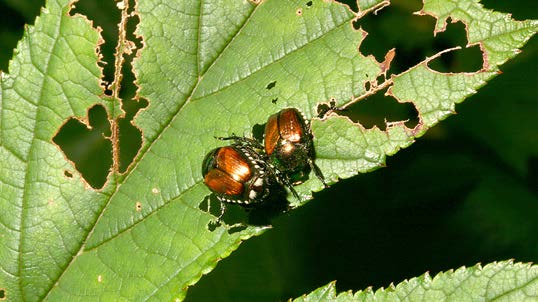
Beetles are feeding on a leaf, causing noticeable damage.
Why Correct Identification Matters
It is important to properly detect the squash bugs and the stink bugs so that the right plants can be targeted, so and the relevant control measures can be applied. Squash bugs harm only cucurbit plants whereas stink bugs harm more crops.
Labelling the wrong pests would result in a waste of time during the inspection of the wrong plants, and the possible ineffectiveness of the methods used to deal with the pests.
Also, the two bugs are carriers of various diseases and their habits and seasonal patterns will assist in maximizing control measures.
To illustrate, stink bugs tend to enter houses during the fall, whereas squash bugs remain outside thu,s exclusion does not have to be considered when using a home as an exclusion unit.
Control Methods For Squash Bugs
The control of the squash bugs starts with early detection. Check plants and look on the underside of the leaves in the spring and see bronze eggs. Eggs should be removed by scraping them off or duct taping.
Select adults and nymphs each day and put them into soapy water. Another way of catching bugs is to go out at night and use trap boards. Clean up after harvest to remove overwintering spots.
Control Methods For Stink Bugs
The most important in the control of stink bugs is home exclusion. Cover cracks and openings around the windows and doors to avoid their access into the house during the fall.
The hand-weeding of the garden by removing the bugs and scraping clusters of eggs. The crops can be covered with row covers. In case infestations are extreme, it may be effective to use pyrethrins or neem oil, but stink bugs may be hard to control with chemicals because of their locomotion.
Bugs Commonly Confused With Squash Bugs And Stink Bugs
Soldier Bugs
The shape of soldier bugs is similar to that of the stink bugs, but this time they have pointed shoulders that are extended out as spikes.
These insects are predatory insects that are instrumental in checking pest insects, including squash bugs, caterpillars, and beetle larvae. When you find a sharp spine on a shoulder, you have discovered a useful soldier bug.
Boxelder Bugs
Boxelder bugs are elongated, have red or orange coloring and are black in color. They are also common in boxelder, maple, or ash trees but not in gardens. They are less than the stink or the squash bugs and they do not harm the plants.
Leaf-Footed Bugs
The insects that feed on the leaves are leaf-footed bugs (as large as squash or stink bugs, up to 1 inch) with leaf-like, flattened extensions behind their back legs. They are longer and are usually confused with squash bugs. They destroy plants by sucking out juices, especially from fruits.
Western Conifer Seed Bug
Such bugs normally exist in or around conifer trees. They are very big (about 3/4 inch) and long, and, similar to stink bugs, fall into houses in the autumn. They are however, not garden pests.
Bordered Plant Bug
Plant bugs are brown, weighing less than a squash or a stink bug with a light colored border. They are not very frequent, and feed on many plants, although they are not a significant pest in the garden.
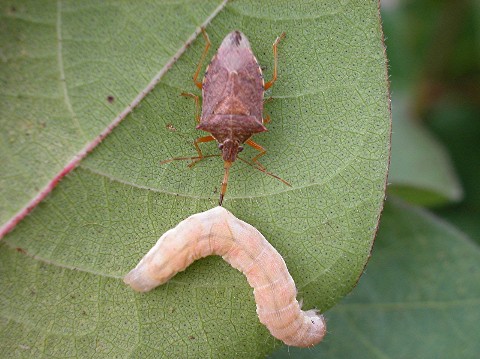
A spined soldier bug and its larva on a leaf, showcasing pest interaction.
FAQ’s – Squash Bug Vs Stink Bug
Q: How come that squash bugs and stink bugs are the easiest to distinguish?
A: See the color of the egg, bronze eggs are squash bugs, white/cream eggs are stink bugs. In case there is no eggs observed, body shape and location of plants may assist.
Q: Do both bugs smell bad?
A: Yes, but the odor produced by the stink bugs is very strong and persistent. Squash bugs have a less potent smell which loses its power fast.
Q. Are stink bugs harmful to squash plants?
A: Stink bugs have the ability to feed on squash plants; however, the squash bugs do not result in the same type of destructive wilt as does the squash bug.
Q: What is the worst kind of bug in the garden?
A: Squash bugs cause more destruction on cucurbits, whereas stink bugs cause a broader range of plants. Both are to be managed actively.