
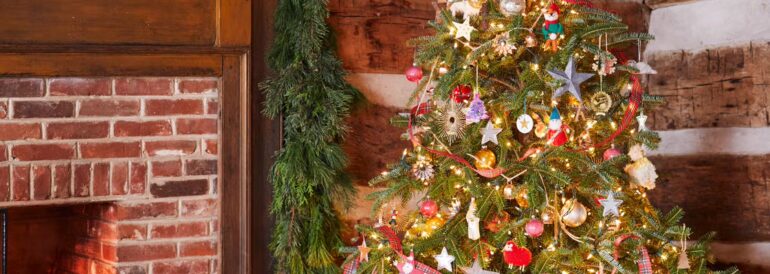
The Meaning Behind Decorating the Christmas Tree
Each year, in December, millions of families across the globe will put an evergreen tree in their homes, decorate it with lights and ornaments and sit around it to have a celebration. But have you ever said why we do this? The custom seems to be universal at this time, but it is an extension of older winter traditions, which were gradually transformed into the focus of the contemporary holiday.
The key point of concern that is central is a basic human concern that it is winter, dark and cold, and therefore people seek evidence that there will be life and light again. Evergreens remain green during the period when the majority of the plants appear dead hence they became a symbol of hope.
That symbol over the years passed through the primitive winter solstice ceremonies, through the medieval Christian traditions, and subsequently into German homes, where we see the form of the decorated tree. The Victorian era raised it to the international stage and the invention of new technology made the decorating process safer and easier.
We begin with prehistoric solstice terrors and the timeless icon in this guide, onward towards medieval Paradise Trees, and thence down the ornamented German tree, into the 1600s and 1700s. Then follows the Victorian boom in England and in America as well as the electric lights. We also describe the way gift practices changed so that larger gifts were transferred to the floor at the branches, forming the one we see under the tree. Lastly, we have the public trees, farms and artificial trees.
Thus, it is not a single tradition of the Christmas tree, but it is a pile of traditions. It is a tale that traces out of pagan winter celebrations, through to the Christian re-interpretation and to the royal modes of fashion, and to the current family practices in the present world. The message of the tree remains the same; along the way, winter is not the end. The details vary, the evergreen remains, murmuring that life may be long in the cold.

Decorated Christmas tree with lights and wrapped gifts underneath, a symbol of holiday tradition and celebration.
Ancient Origins – The Evergreen Symbol
Why Evergreens Were Sacred
There was a lot of ancient culture concerning the evergreens and their ability to withstand the death of winter. At the beginning of the winter (around the winter solstice or about December 21, the shortest day), everyone was worried that the sun would not come back. A green tree amid the frozen world was like evidence that life would overcome death and the darker world and spring would come back.
Trees also had a sense of specialty since they are taller than shrubs and grow upwards. In most religions, the elevation thereof was an indication of the connection between the heavens and the earth and the human world and the sky.
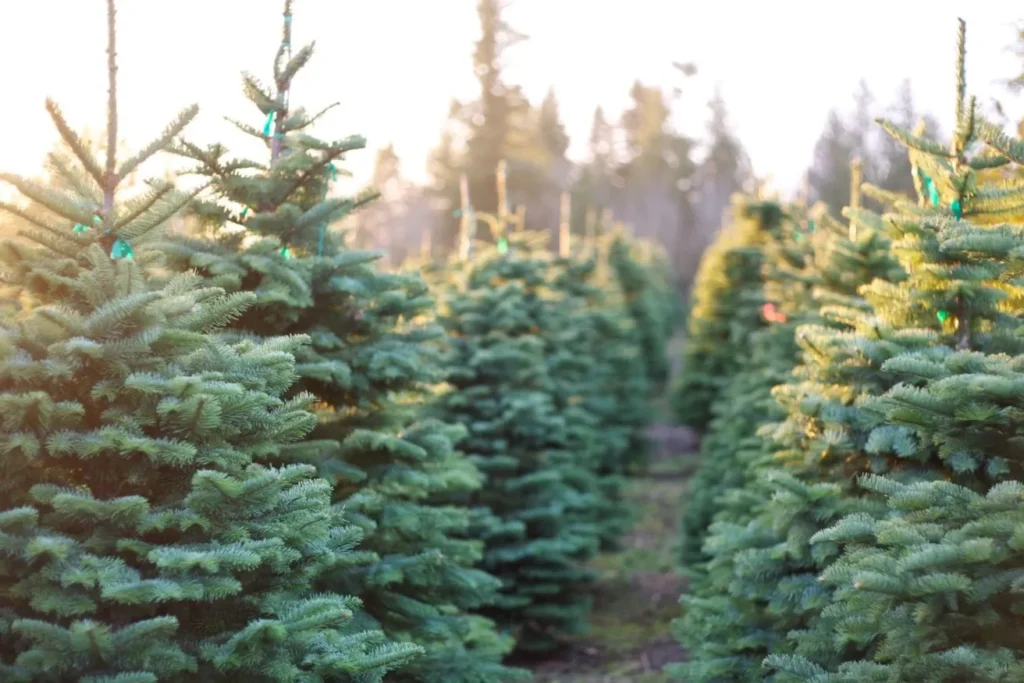
Rows of evergreen trees growing on a Christmas tree farm, ready for seasonal harvest.
Ancient Winter Solstice Celebrations
Romans used feasts as part of Saturnalia and covered houses with boughs of evergreen. Hanging evergreen branches, Celts and Druids did it to keep evil spirits out and bring good fortune. Vikings celebrated Yule by taking evergreen branches into the house and the season involved burning the Yule log. The Germanic people thought evergreens were able to host woodland spirits in winter providing refuge till the season changed.
Medieval Transition – Paradise Trees
Christian Adaptation of Pagan Traditions
With the spread of Christianity (4th to 8th century), most of the winter solstice traditions were absorbed by the Church, and thus Christmas was celebrated on December 25. Evergreens were taken in a new form: they were not pagan magic anymore, but a symbol of immortality by Christ.
Paradise Trees (14th-15th Century Germany)
The German Day of Adam and Eve was on the 24th of December. The Garden of Eden was represented by Paradise Trees adorning in churches with evergreens, apples (forbidden fruit) and wafers (Eucharist and redemption). Paradise Trees were then introduced to the houses by people. Apples were later turned into glass decorations (1800s) and wafers were turned into cookies and candies.
The German Christmas Tree Tradition
16th Century Germany: The Modern Christmas Tree Emerges
Towards the year 1500s, the contemporary house Christmas tree was emerging in Germany. There is a well-known story of Martin Luther that he put candles on when he saw stars in a forest. There is a high chance that it is apocryphal but candles on trees are recorded in Germany as early as the 1600s.
The Protestant Reformation was also significant: Protestants accepted the tradition of tree, whereas the nativity scenes were used much more by the Catholics, and the tradition of the tree developed as a domestic one in the Protestant regions.
17th-18th Century: Spread Across Germany
A decorated Christmas tree was written down in Strasbourg in 1605. Trees became widespread in German Lutheran houses by the 1700s, and were still uncommon. Ornaments changed into the ornaments in the form of paper, gilded nuts, and roses made of colored paper.
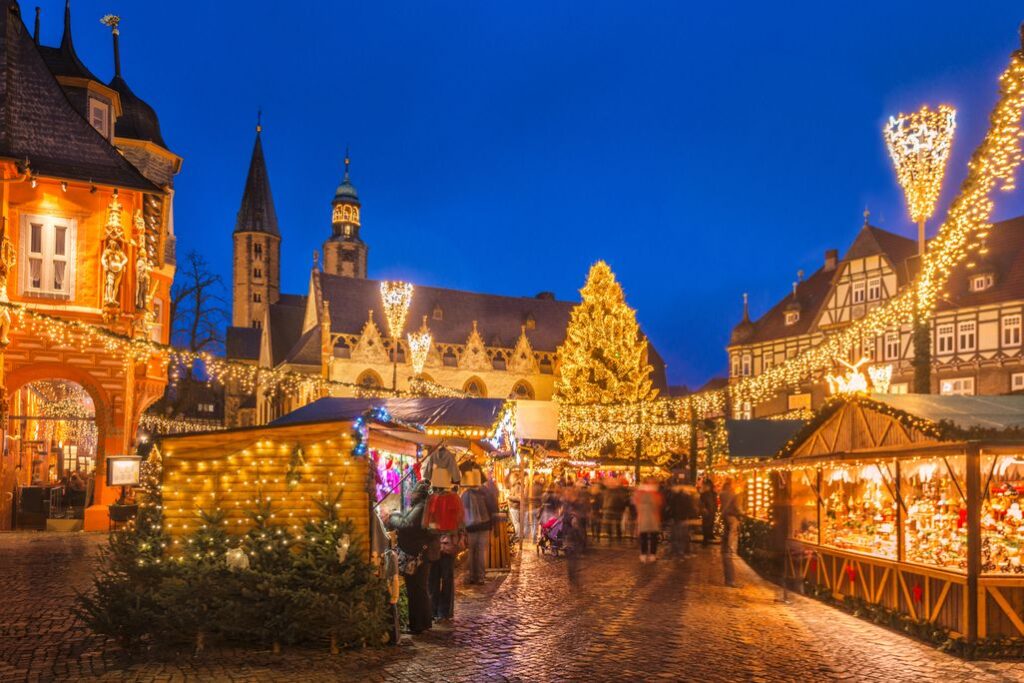
A festive European Christmas market glowing with lights, stalls, and a towering decorated tree at dusk.
Victorian Era – Global Spread
How Christmas Trees Came to England
It was at Windsor Castle in the 1790s that Queen Charlotte, a German-born wife of King George III, had a Christmas tree, but the tradition remained an insignificant one within the ranks of German expatriates. It reached its turning point in 1848 when a sketch of Queen Victoria, Prince Albert and their children around a Christmas tree was published in the Illustrated London News. People desired to imitate the royal family and this made trees stylish all around Britain and the British Empire as a whole due to the popularity of Victoria.
Christmas Trees Come to America
During the 1600s and 1700s, in New England, Wales, led by Puritans prohibited Christmas celebrations as being too pagan. In the 1700s and 1800s, German immigrants preserved the tradition of the trees in such states as Pennsylvania and Ohio. The image of the 1848 royal was reprinted in American magazines in the 1840s and 1850s and was used to popularize trees. The Christmas trees gained popularity in the United States after the Civil War. In the 1870s and 1880s, the decorations became less expensive as a result of imports of German glass ornaments by F.W. Woolworth.
Technological Innovations
Candles were lovely yet dangerous. The first electric Christmas lights were produced in the 1880s by the assistant of Thomas Edison. Throughout the 1890s, commercial sales of electric lights were made, but they were costly. Mass domestic consumption began in the 1920s and 1930s.
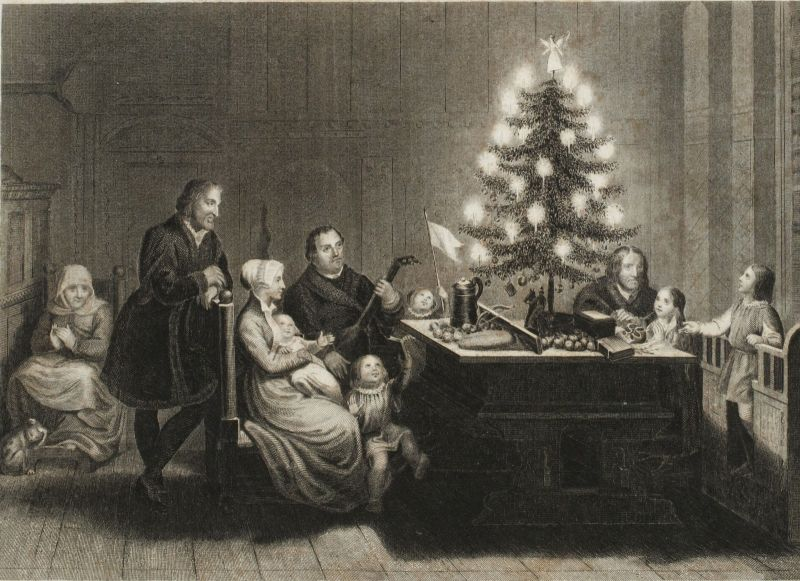
An early historical illustration of a family gathered around one of the first decorated Christmas trees indoors.
Why We Put Presents Under the Tree
Medieval Gift-Giving Traditions
Modern Christmas is not the first instance of winter gift-giving. During St. Nicholas Day (December 6), children placed shoes outside their houses to be filled with little presents and candies. It was also important on Epiphany (January 6), which is connected to the bringing of Jesus’ gifts by the Three Wise Men. Gifting during Christmas days did not take place widely before the 1800s.
From Hanging On the Tree to Placing Under It
Small gifts, candy and nuts were commonly hung on the branches of the trees in the 1700s and early 1800s. Branches were unable to take larger gifts and hence by mid 1800s, larger gifts were put beneath. The transformation formed the conventional scene of gifts under the tree on Christmas morning.
Victorian Era and Santa Claus Connection
The Victorian era focused on gift-giving. The Industrial Revolution resulted in the low prices of toys and gifts due to mass production and therefore more families could afford them. The 1870s and 1880s department stores Macy’s and Marshall Field, encouraged Christmas shopping and thus moved the holiday towards a family gift-giving celebration. During that change, Christmas turned more commercial and the tree turned out to be the center of the house creating a classic Christmas morning image.
This picture was cemented into place with the help of Santa Claus stories. The 1823 Santa-stuff-stocking-filling poem, the Night Before Christmas, popularized the Santa legend, and by the 20th century, the stereotyped myth was that Santa dropped presents under the tree.
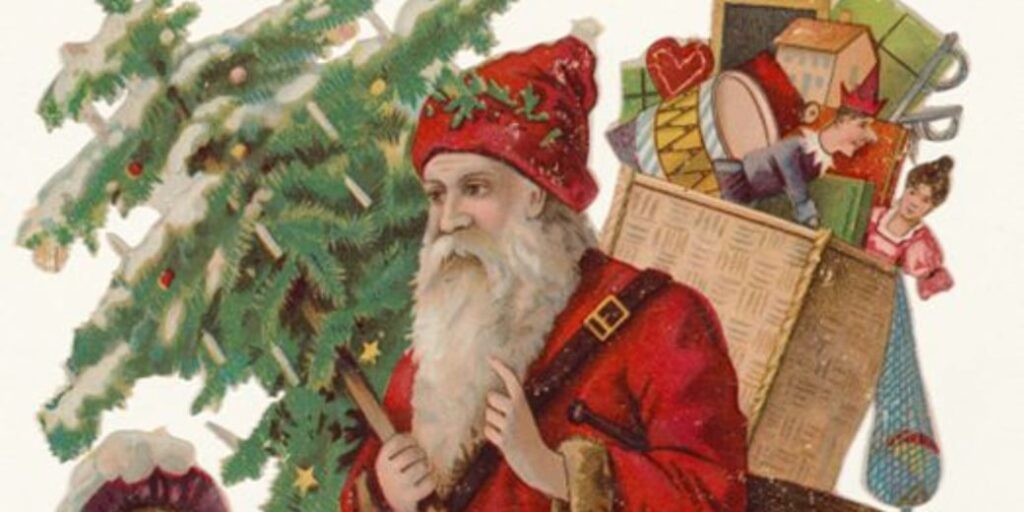
A vintage illustration of Santa Claus carrying a basket of toys beside a decorated Christmas tree.
20th Century – Modern Traditions
Public Christmas Trees
Public tree traditions grew fast: 1912 saw the first community Christmas tree in New York City (Madison Square Park), 1923 brought the first National Christmas Tree lighting at the White House, and 1933 began the first Rockefeller Center Christmas tree lighting, now an iconic New York City tradition.
Christmas Tree Farms and Industry
Christmas tree farms were then introduced in the early 1900s and this practice replaced the previous mode of tapping trees in the wild. The United States alone sells some 25 to 30 million real trees every year. The average tree is expected to grow in 7 to 10 years and farmers normally replant another seed after harvesting a tree.
Artificial Trees
- The 1930s saw the creation of artificial trees (brush bristle style). The aluminum trees started to be popular in the 1950s and 1960s, and they were usually accompanied by a rotating color wheel light.
- The 1990s -Present days: Realistic PVC and PE trees and pre-lit choices have been the norm. Artificial trees are now used by 75 to 80 percent of U.S. households.
Tree Species and Selection
Traditional Christmas Tree Species
Fir trees are the most popular: Douglas Fir (full shape, excellent needle retention, sweet fragrance), Fraser Fir (compact, strong branches for heavy ornaments, pleasant scent), and Balsam Fir (traditional scent, good needle retention). Spruce options include Norway Spruce (traditional European choice, dense branches) and Colorado Blue Spruce (blue-gray color, stiff branches). Pine options include Scotch Pine (long lasting, good needle retention, economical) and White Pine (soft needles, natural shape).
Global Variations
Nordic countries usually leave trees as late as January 13 (St. Knut’s Day). The use of trees began in Mexico and most of Latin America in the 20th century, and they are usually combined with nativity scenes. Japanese people place Christmas trees primarily as a secular and modern decoration despite the fact that 1 percent of the population is Christian. Bamboo or a palm tree can be used in the Philippines. Christmas occurs during the summer season in Australia and New Zealand and hence some individuals adorn native plants such as the pohutukawa.
Fun Facts and Statistics
- An average Christmas tree requires 7 to 10 years to produce a real Christmas tree and an average of 25 to 30 million real Christmas trees are made in the United States annually. The highest cut Christmas tree was 221 feet in height ( Washington state, 1950).
- A Christmas tree worth $11 million was considered to be one of the most costly ones (Emirates Palace Hotel, Abu Dhabi, 2010). Tinsel used to be produced with real silver (1600s in Germany). The Rockefeller Center tree is a tree that is usually 75 feet or higher and it employs more than 50,000 LED lights.
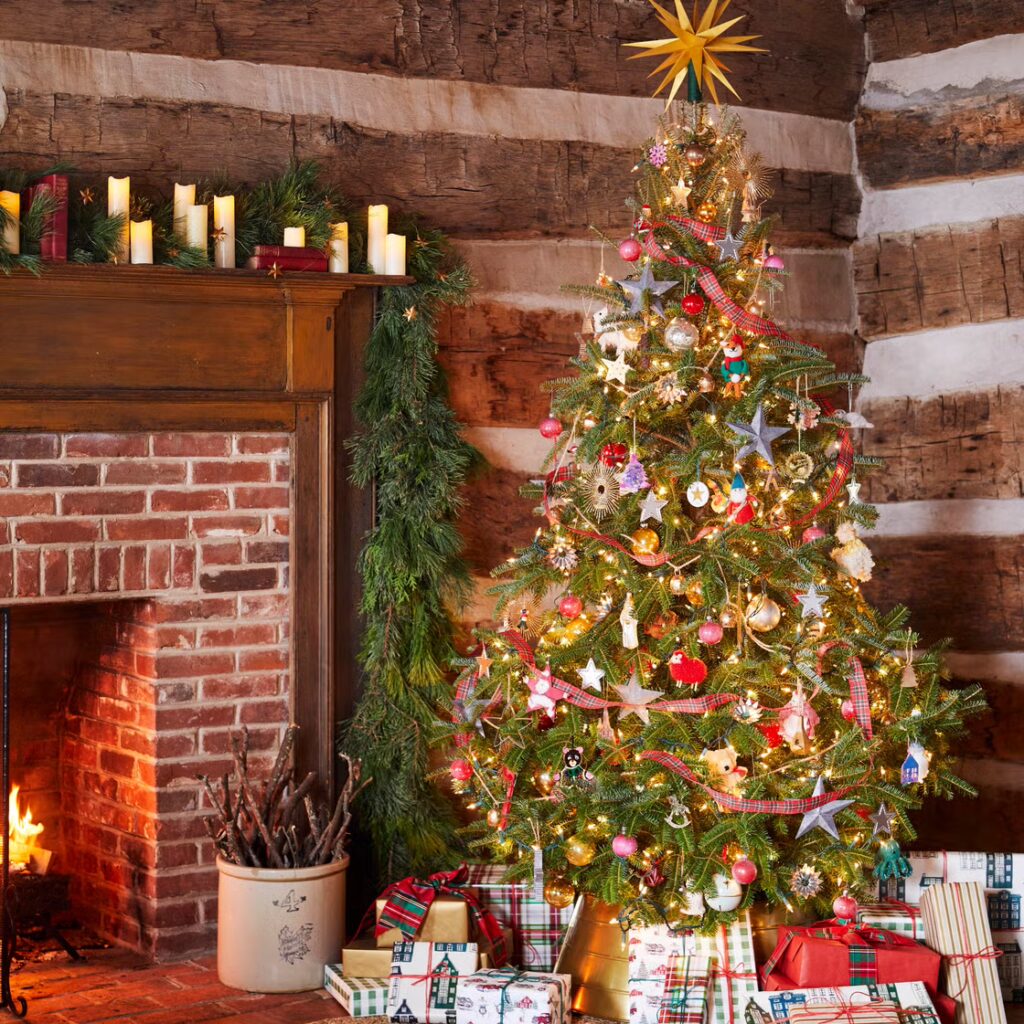
A warmly decorated Christmas tree beside a glowing fireplace in a rustic wooden cabin, surrounded by wrapped gifts.
Conclusion From Allen
The tradition of the Christmas tree has been developed gradually: the greenery of the ancient solstice season, the adaptation of Christianity on December 25, Paradise Trees in medieval Germany, the decorated home tree of Germany with candles and decorations (documented in Strasbourg in 1605). The influences of the Victorian era and the image in the newspaper in 1848 and the German immigrants and the American culture later introduced it to America.
Gifts began to be passed not on trees but under them, which in turn over time became a community image with public lightings. The artificial trees and farms, as well as the electric lights, transformed the way people acquire and adorn trees, yet not the reason why the tree remains significant. Buy an actual Douglas Fir or a pre-lit PVC one, the tradition still can pass the same message that we had in the old winter, light comes back, life goes on, and people meet.