Suppose you step outside and gaze out your window at your garden, following a typical Pacific Northwest storm. You notice a large mature Maple that’s been your property for decades. There is one thing different this time around, though. There has been a slight crack that has formed at the junction of the two major stems. You think of all the bad things that could happen: Will the tree fall down? Do I have to cut down a piece of my property’s history?
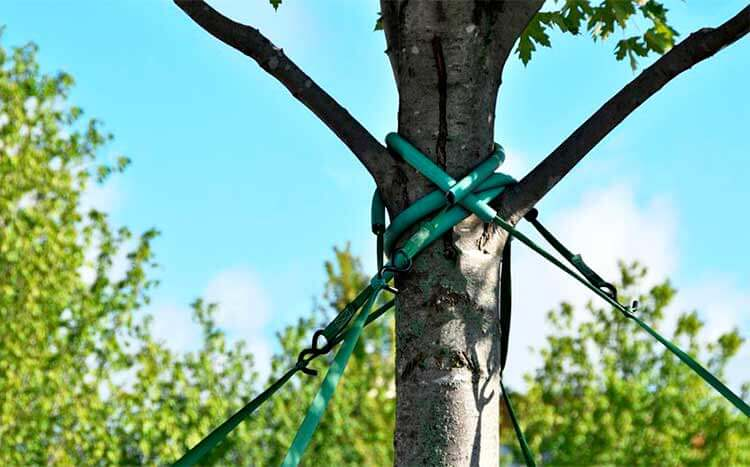
An expertly installed tree cabling system can reinforce the tree’s higher level structure and save your home and extend the life of your tree.
Luckily, sometimes it is not possible to remove it entirely. If a tree has structural problems, but otherwise is healthy, tree cabling and bracing can extend the safe, vigorous life of a desired tree for many years. This extensive guide covers what structural support systems are, how to identify the warning signs of your property, how they are installed and what you can expect the tree cabling cost to be.
What Is Tree Cabling and Bracing?
For many people, the idea of a tree support system is like a make-shift planter stand. However, in professional arboriculture, cabling and bracing is a very structured process done to minimize stress on weak joint connections and limit potential failure risks.
- Tree Cabling: This is a procedure that entails the placement of high tensile steel cables or new synthetic ropes that are flexible in the tree’s canopy. These cables link two or more of the major limbs, reducing wind sway of these limbs and spreading the weight of larger limbs over a wider canopy.
- Bracing: Bracing involves inserting sturdy threaded steel rods into weak unions, co-dominant stems or fractured trunks. This gives complete lateral support to maintain a bond between fracturing sections.
These solutions are not solutions substitutes. While a tree bracing system physically bolts a splitting trunk together, canopy cables reduce the leverage forces acting on that split from above. The ultimate goal of our tree cabling service is to mitigate structural risks without altering the natural beauty of your landscape. These systems, however, do not provide a solution to every tree issue, and only an ISA qualified arborist will be able to determine if your tree is suitable for planting.
Warning Signs Your Tree Might Need Structural Support
How do you know whether your landscape features are bearing their own weight or are on the brink of breaking? Identifying structural deficiencies in their early stages will enable you to take steps before the next big storm permanently damages the structure.
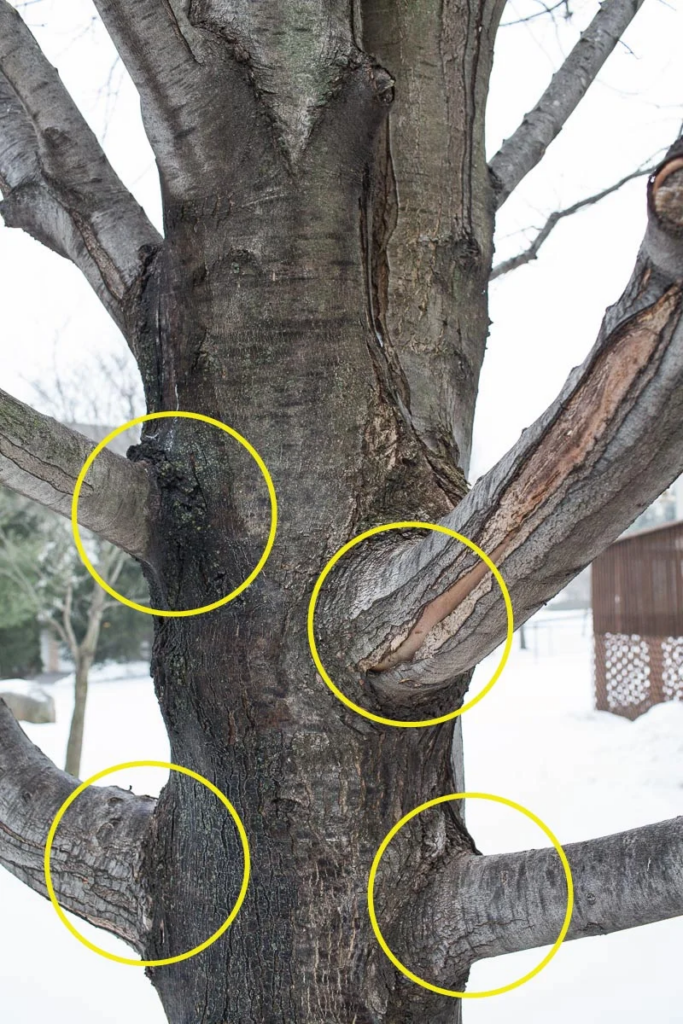
Co-dominant stems which are arranged in a sharp “V” shape do not have strong connective wood fibers, and are primary candidates for structural support.
1. Co-Dominant Stems with Included Bark
This is the most common structural defect in mature trees. Co-dominant stems are two or more main trunks of about equal size from a single junction. When these stems are not wide “U” shaped, as they grow they trap or “included” the bark between the stems.
This makes it impossible for strong wood fibers to glue themselves together, thus establishing an implied weakness in the structure that is subject to winter storms. A split tree trunk support plan (combination support of through-rods and upper canopy cables) is frequently the only method of saving a tree with this defect.
2. Deep Fractures and Visible Splits
When it can be determined that an open fissure or crack exists at a major branch union or along the trunk it is an indicator that the structural integrity of the tree has been compromised. This should be done as early as possible before the wood completely splits.
3. Heavy, Overextended Horizontal Limbs
Certain native trees naturally grow long, low horizontal branches. These limbs have tremendous weight on their tips over time. Any overhanging limb that is too heavy or sways too much or hangs low over your home, roofline, driveway or patio could need a tree limb support cable to reduce gravity’s strain on the tree and keep your house safe.
4. Sudden or Progressive Leaning
The first step in protecting a leaning tree is to determine the cause of leaning. When the trees grow naturally at an angle to the sun, the root system is probably adapted. If a tree suddenly leans after a major windstorm or if soil is heaving or cracking around the root plate, however, there is a problem with the structural stability because of root disturbance.
It should be noted that structural support systems are intended for structurally weak, but otherwise healthy specimens. Cabling is not a safe choice for trees that are hollowed out from rot or trees that are obviously dying. Likewise, if you have advanced pest problems in your landscape, it is better to focus on some of the more specific birch tree health treatments or structural removals, than to try to save a dying structure.
Types of Tree Support Systems
Arborists utilize two distinct categories of support systems depending on the tree’s age, species, and specific structural issues.
Traditional Steel Cable Systems
It is a method of using high tensile, extra galvanized steel aircraft cable with heavy duty lag hooks or drop forged eye bolts driven directly through the wood and into the limbs.
Steel systems are extremely rigid and non-movable, and the most common option for heavy, large limbs on historic canopy trees. Steel is not a stretchy material, which makes it important that installations can be engineered to not overly limit natural movement, or damage trunks over time.
Synthetic / Dynamic Rope Systems
Dynamic systems utilize high-strength, flexible synthetic ropes (such as Cobra or TreeSave systems) woven around the exterior branches. Rather than anchoring into drilled holes, these systems use wide, non-invasive friction sleeves wrapped gently around the limbs.
Dynamic cables allow the tree to sway naturally in mild winds, which encourages the tree to produce its own “reaction wood” to strengthen its trunk naturally. These systems are very popular for young trees and mid-sized trees and have a significantly reduced long-term tree health impact.
How the Tree Cabling and Bracing Process Works
To attach structural hardware to a living organism, you need to know a lot about biology and be quite technical.
Our structural reinforcement process consists of four steps that are well documented with Bloomatree:
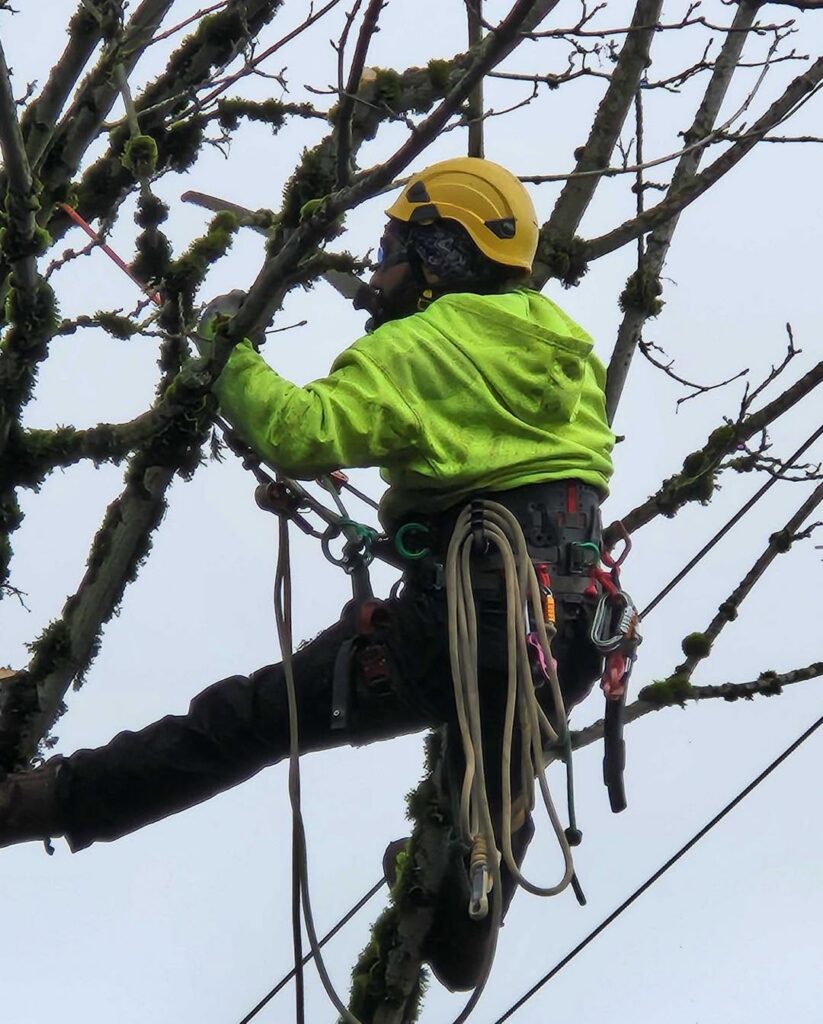
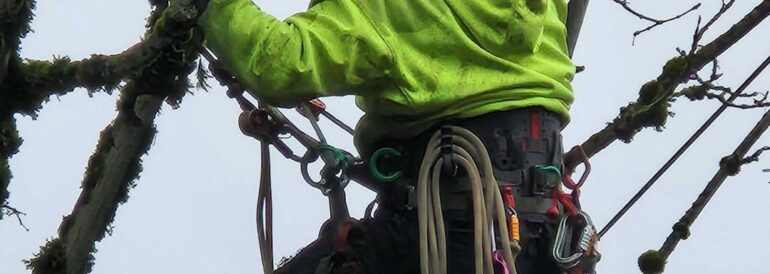
Our certified arborists visit the top canopy to identify exactly where, how and how much tension to use for a safe installation.
Comprehensive Structural Assessment: An ISA certified arborist examines the entire tree to determine canopy density, trunk soundness and root-plate stability for the tree to confirm that structural reinforcement is a viable alternative to tree removal.
Engineering a Tailored System Design: We determine the exact hardware configuration needed for your tree’s architecture. This includes choosing between steel and synthetic cables, calculating the ideal installation height (typically two-thirds of the distance from the weak union to the branch tips), and mapping out brace rod entry points.
Precision Hardware Installation: Our expert climbing crews install the hardware efficiently, ensuring proper tensioning while protecting the surrounding canopy and your underlying property from disruption.
Long-Term Monitoring Protocols: Trees are dynamic, growing organisms. Once installed, cabling systems should be checked annually or every two years to ensure that hardware is not becoming too tight and/or that hardware is not wrapping around developing bark.
Choosing the Right Approach for Your Landscape
It can be difficult for many homeowners to pinpoint if the tree would require hardware or if the canopy should be trimmed, or whether the tree should be pruned off the land. It will depend on the condition of the tree and location, including near buildings or pedestrian areas.
Technical Intervention Comparison
| Intervention | Ideal Structural Scenario | Required Tree Health | Property Invasiveness | Expected Long-Term Outcome |
| Tree Cabling | Heavy, overextended limbs; broad co-dominant canopy splits | High. Must have strong, disease-free structural wood | Low. Flexible cables installed high in the upper canopy | Effectively manages failure risks while extending tree lifespan. |
| Tree Bracing | Acute structural fractures; open trunk splits; shifting unions | Moderate. Must have viable, living wood on both sides | Moderate. Threaded steel rods drilled directly through trunk | Physically bolts splitting trunks together; provides stable support. |
| Crown Reduction | Overweight canopy tops; heavy wind-catching branch profiles | Suitable for almost all trees | Low. non-invasive canopy pruning cuts only | Removes end-weight to complement or reduce the need for hardware. |
| Tree Removal | Advanced interior hollows; severe root failures; dead canopies | Poor. structurally compromised beyond safe saving | High. Complete dismantling and removal of the tree | Eliminates safety risks completely; stump grinding is recommended. |
| Do Nothing | Minor structural leans with zero nearby structural targets | Healthy wood with standard growth patterns | None. Natural growth | High risk of unmanaged branch failure near homes or walkways. |
In many complex cases, a combined approach delivers the best results. For instance, pairing a professional crown reduction to remove heavy end-weight with an upper canopy cable system offers an excellent defense against severe winter storms. If you are exploring alternative landscape management options, understanding basic professional tree pruning methodologies can help you maintain your remaining trees properly.
Understanding Tree Cabling Costs in Seattle
When calculating a homeowner’s budget for a structural intervention, what should they anticipate? The tree cabling process will cost differently as every tree has its own architectural profile and will thus require a different number of cables and height.
- Standard Single Cable Installations: A typical installation with medium size tree and good ground access typically costs between $200 and $600.
- Multi-Point Canopy Systems: Engineering an advanced, multi-cable system to protect a massive, historic tree usually costs between $600 and $1,500.
- Threaded Steel Bracing Rods: These are steel rods that are fixed through the trunks and are rigid, the total cost is approximately $150 to $800 per rod, depending on the thickness of the trunk.
- Comprehensive Systems: A large tree overhanging a home will cost $1,000 to $2,500+ for a combined high-tier cabling and bracing system.
It helps to keep in mind the other option when reviewing these numbers. The cost of a professional support system is a fraction of the expense of full tree removal, not to mention the decades it would take to grow a replacement tree of similar stature. Plus, structural cabling typically avoids the complex municipal paperwork involved with Seattle tree work permits, making it an efficient way to preserve your property’s value.
Fact Check – Common Misconceptions Verified
To help you protect your investment, our arborists have fact-checked the most common myths surrounding structural tree hardware:
CLAIM 1: “Once a tree cable is installed, the tree is permanently fixed and perfectly safe forever.”
- VERDICT: FALSE. Cables are risk-management tools, not permanent cures. Trees grow, accumulate weight, and shift. Hardware requires regular inspection every one to two years to prevent bark girdling and ensure the system remains safe.
CLAIM 2: “You can easily support a leaning tree yourself using heavy ropes or hardware-store stakes.”
- VERDICT: FALSE. While temporary staking works for newly planted saplings, attempting a DIY fix on a mature tree is incredibly dangerous. Incorrect cable angles, improper hardware placement, or over-tensioning can choke out wood tissue and cause catastrophic failures. Professional installations must align with strict national ANSI A300 structural standards.
CLAIM 3: “Every tree with a visible lean requires immediate cabling support.”
VERDICT: FALSE. Trees often grow at an angle to reach sunlight, building natural “reaction wood” to balance their weight. A lean only becomes dangerous if it develops suddenly after a storm or is accompanied by soil cracking around the roots.
CLAIM 4: “Cabling can save any damaged or splitting tree.”
- VERDICT: FALSE. If a tree has extensive internal hollows, advanced fungal rot, or a failing root system, cabling cannot make it safe. In these situations, our arborists will provide an honest assessment explaining why removal is the necessary path forward.
After Care: Ongoing Maintenance and Inspection
A little proactive effort is needed to make sure that the job is done as the seasons change, and a structural support system is effective.
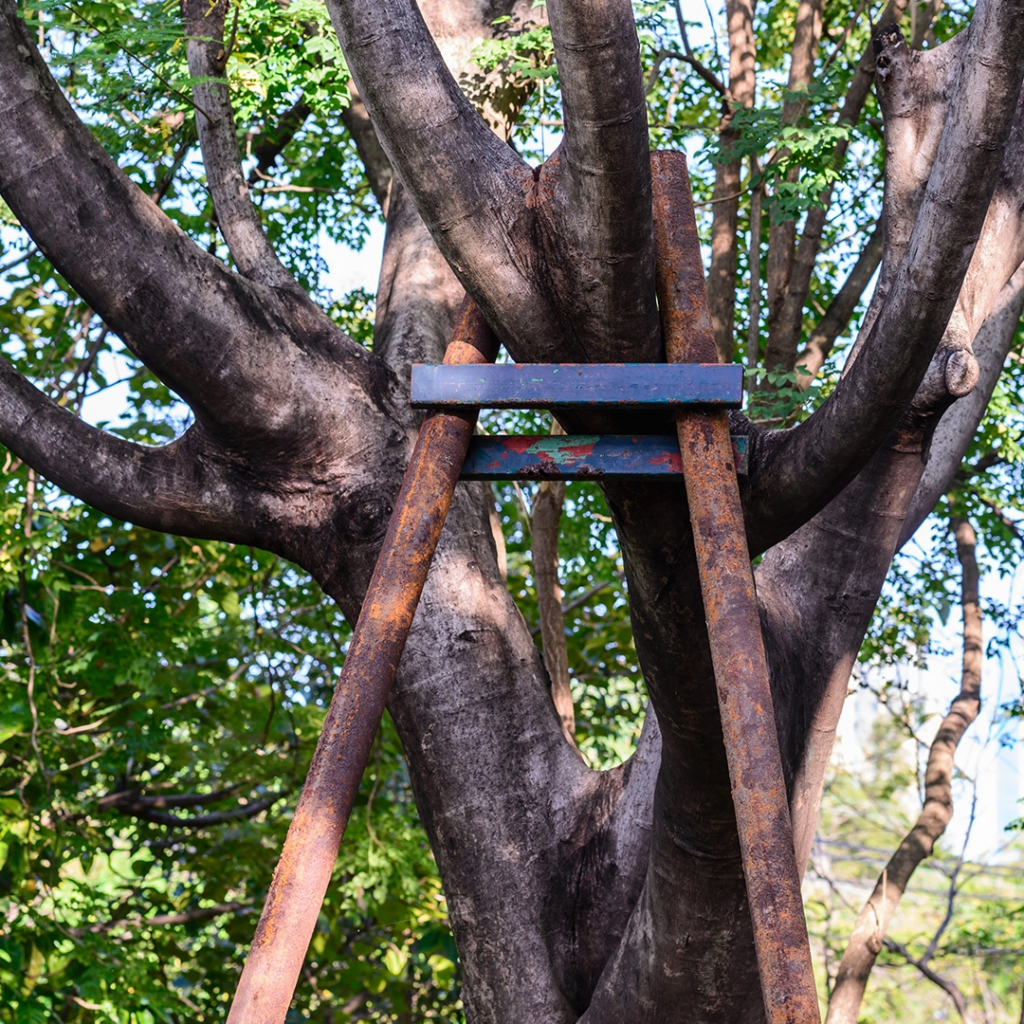
Regular arborist inspections check for proper cable tension and ensure the tree is growing healthily around the hardware.
- Routine Inspections: Get regular checks on support hardware. Our experts check cable tension, ensure equipment is in good condition and check to see if the tree is growing too large for the system.
- Post Storm Checkups: After heavy winds or ice storms, perform a quick visual inspection on the ground to check the cables for damage and possible new fractures. Always get trees ready for storm season ahead of time.
- Focus on Holistic Health Care: A healthy tree will have better wood fibers around its hardware anchors. If you enroll your landscape into a complete Tree and Plant Care Program, you can rest assured that your trees are receiving the comprehensive fertilization, seasonal moisture management and root care they require. Maintaining a healthy tree during summer and proper mulch around a supported tree can make a big difference in the enjoyment of your tree.
Protect Your High-Value Trees
Your mature trees are natural assets that add beauty, shade and value to your home and are irreplaceable. Don’t let the next storm make the decision for you if you have a concern about the overhanging branch or visible trunk splits or weak union. By working with a professional team that is licensed and registered, you can be sure that your landscape is being evaluated by the best practices in the industry.
Call Bloomatree today. An honest, comprehensive assessment of the structural condition of your tree and a protection strategy for your property that is appropriate will be prepared by our ISA Certified Arborists.
Request your free on-site estimate, and book your No Pressure Review:
- Call a Local Expert: Contact us directly at 206-714-9835 and get help and tree solutions as soon as possible!
Frequently Asked Questions (FAQ)
What is the difference between tree cabling and tree bracing?
Tree cabling is used to reduce branch movement and spread load under windy conditions in the upper levels of the tree canopy. Tree bracing involves the use of steel rods with openings between trunks or branch unions that are attached to the tree with a tight connection for lateral support. They are often coupled together to treat major structural problems.
What are the signs that indicate if my mature tree is suitable for cabling?
An ideal candidate tree is a tree that is structurally unsound, maybe has co-dominant stems, an over-extended limb or a minor split, but is otherwise structurally sound and not having any wood rot in the interior. Cabling will not help a tree that is dead, is heavily decayed or leaning because of failed roots and it is typically necessary to remove the tree from the landscape.
May I purchase cables at the hardware store and secure a leaning tree myself?
No. This needs to be understood in terms of tree biology, physics and load distribution to install structural support systems. If hardware is not correctly positioned, it can cause choking of the bark, increase the rate of rot or generate abrupt snap points. Professional crews adhere to ANSI A300 standards and employ specialized tools to ensure safe and effective installation.
What is the service life of the typical tree cabling system?
A good steel or dynamic synthetic framework will last from 10 to 20 years with proper care. Trees do grow however, and need to be checked annually, or every two years in order to adjust tension and keep the hardware safe.
Is the cabling equipment permanent and will it damage my tree?
If done by a professional, no. A healthy tree will encircle the hole in the small diameter around the eye bolt and tightly anchor it over time, whereas, traditional steel cabling will require holes to be drilled in the tree for eye bolts. Even softer, dynamic synthetic systems wrap around the outside of the limbs and do not require any drilling.