
Now picture catching a glimpse of a healthy canopy and a fresh green color on mature Douglas Firs and they changed color to a washed out green and the canopy was sparse when you walked out in your Bellevue yard. As a proud home owner you will immediately think of running to the garden centre for a large sack of fertiliser. But what about that being the right move, though?
When a tree appears to be struggling, most homeowners think that it needs a quick influx of nutrients, but fertiliser isn’t the magic cure for all trees. In fact, if applied at the wrong time or in the wrong manner it can cause serious injury to your tree, threatening the health of Seattle’s urban tree canopy. This thorough guide will help you determine the ultimate diagnostic question: Do you really need to apply a chemical boost to your tree? We will discuss the proper methods for diagnosing a true nutrient deficiency, when to fertilize trees, what to use, and how to use it safely for a truly productive landscape.
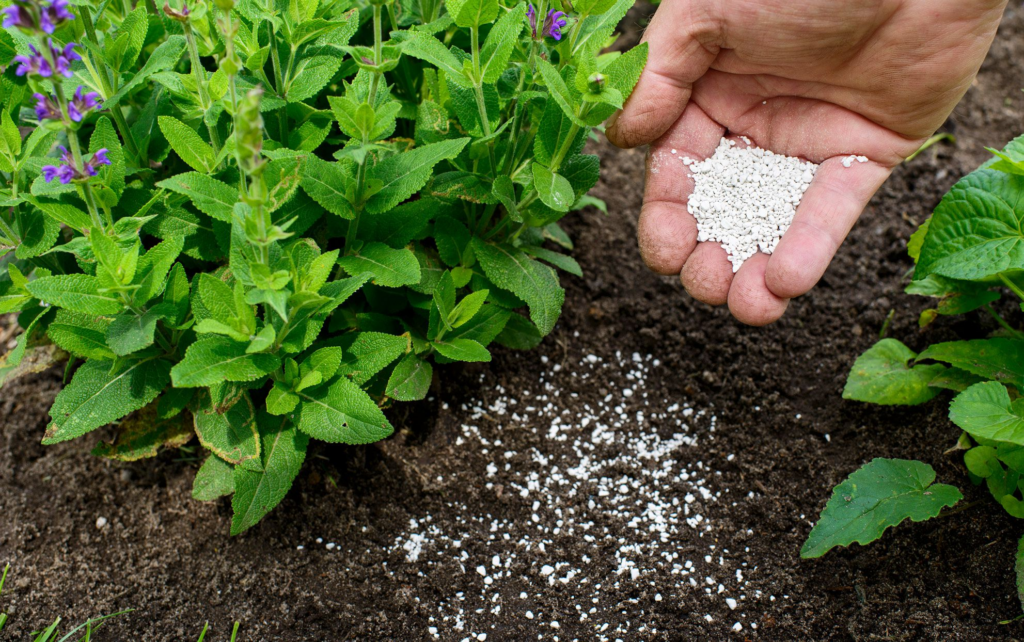
A Seattle homeowner fertilizing a mature tree in his garden with a slow release granular fertiliser.
Does Your Tree Actually Need Fertiliser? Start Here.
The single biggest mistake in tree care is treating fertiliser like general “tree food.” Trees make food from the sun via photosynthesis; fertiliser supplies the raw elemental blocks to help in that process. What is actually the case is that usually many well established trees on a well-drained soil aren’t requiring any extra fertiliser at all. Good mulching, proper watering and the natural decay of the leaves will keep them in existence.
So, when should it be necessary to give a deliberate nutrient boost to a tree? Look for these specific signs tree needs fertilizer:
- Short Twigs: Annual twig growth is below the species’ average.
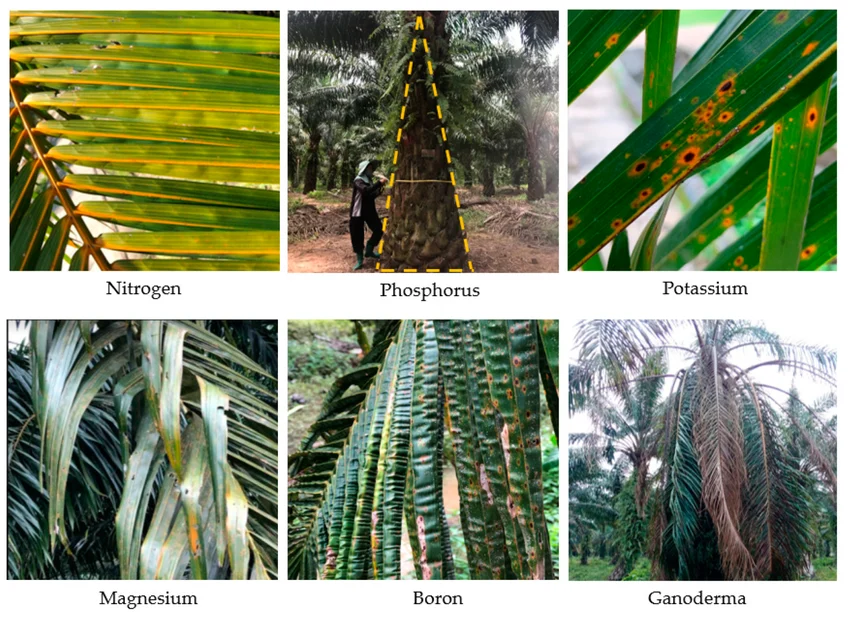
- Yellows (chlorosis): Leaves are becoming a distinct yellow, but veins stay dark green.
- Sparse Canopy: Leaves are smaller than normal and foliage is sparse.
- Poor Soil Conditions: The tree is on a site that has been disturbed by recent construction, or in heavy, compacted soil, or growing in an urban environment.
- Young Trees: Your tree is an established sapling in year two or three of its development.
Conversely, you should never fertilise a tree that is perfectly healthy, nor one suffering from severe drought or waterlogged soil in those cases, you must fix the water issue first. Most important, don’t fertilize a tree if it has severe disease and pest issues as this may worsen the problem. If trees are in a very poor state, it is helpful to determine whether there is a nutritional problem or whether the tree is dying or very stressed and the nutrients in a bag cannot help the tree. In cases of doubt, an approach of diagnosis first is most appropriate for addressing a tree soil nutrient deficiency.
Healthy tree vs. nutritient deficient yellowing tree foliage.
When Is the Best Time to Fertilise a Tree?
Timing is everything. Timing is key to applying nutrients; if done at the wrong time, it exposes your tree to environmental stresses.
Early Spring (The Optimal Window)
The ideal time for tree fertilizing in Seattle is early spring, just before bud break (March-April). The tree is in the early stages of ‘waking up’ from winter dormancy and stimulating its root system, and it can readily take up soil nutrients in support of the early flush of spring growth.
Late Spring to Early Summer (The Acceptable Window)
If you miss the early spring window, you can apply fertiliser in May or June. However, you must avoid applying product once the signature Pacific Northwest dry season arrives in July. Pushing new vegetative growth when a tree is already fighting heat and water stress is highly damaging. If your tree is showing mild symptoms during a hot spell, focus your energy on watering your trees through Seattle’s dry season before you ever consider introducing chemical inputs.
Autumn (The Root Support Window)
A light application of a highly stable, slow-release formula can be beneficial between September and October to encourage winter root development. But, do not use quick release fertiliser in late autumn. This will result in a late flush of tender succulent foliage that will not have hardened off before winter and stormy weather hit, when you would expect the trees to be getting ready for winter and stormy weather.
Winter (The Prohibited Window)
Avoid winter fertilising. The tree is dead dormant, roots are not able to absorb nutrients. It will simply filter through the soil and pollute local streams and rivers – at the expense of the local environment and local resources and your dollars. If you’ve recently planted some saplings, go through our guide and find out how to care for newly planted trees in the first 3 years, and coordinate the timing of your saplings with the information provided.
Choosing the Best Fertiliser for Trees: Types, NPK Ratios, and What to Avoid
Walking down the lawn care aisle can be overwhelming. You need to know how to read the packaging and to select the appropriate delivery system to select the correct product.
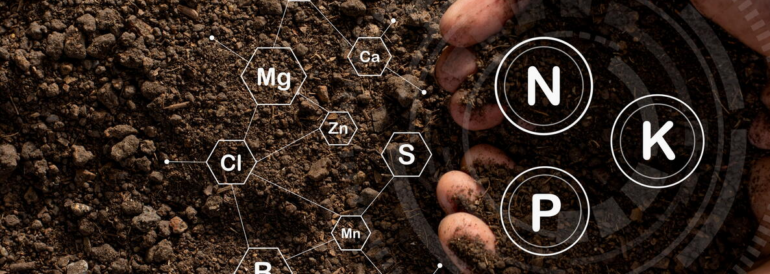
The three numbers on every fertiliser bag are referred to as NPK.NPK is the term used for the three numbers that are written on each bag of fertiliser.
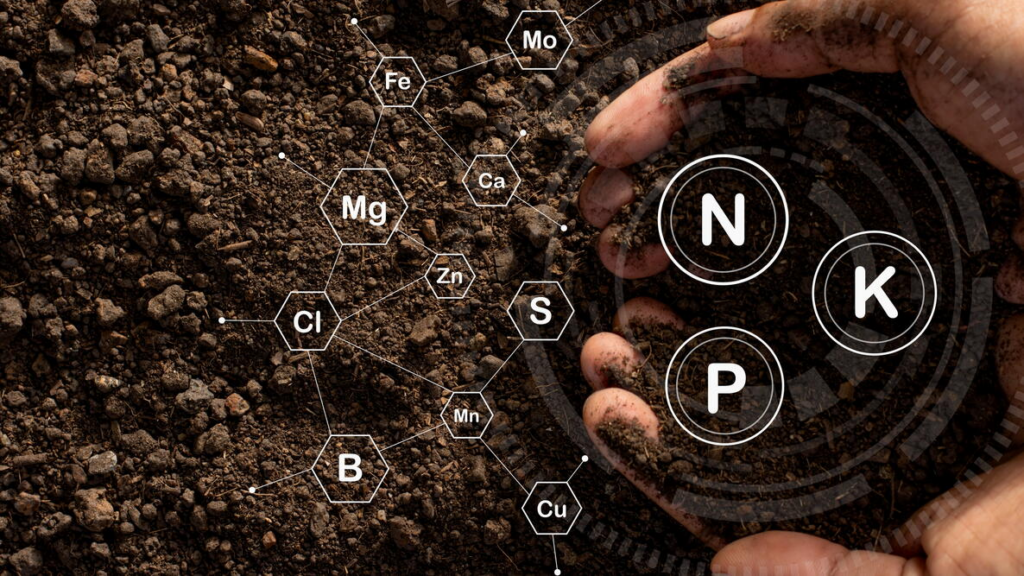
Three prominent numbers are found on every commercial box or bag, e.g., 10-10-10 or 12-4-8. This is the tree fertilizer NPK ratio, which is the percentage of Nitrogen (N), Phosphorus (P) and Potassium (K) contained within.
- Nitrogen (N): Drives green leaf and shoot growth.
- Phosphorus (P): Promotes robust root development.
- Potassium (K): Enhances overall disease resistance and climate tolerance.
A balanced formula or a low nitrogen, slow release tree fertilizer works well for most of the established landscape trees. Do not use standard lawn fertilisers (such as a 30-0-0 ratio) next to your trees, as they are aggressive and will result in too much and too weak an upward growth – it makes the tree very appealing to destructive pests. If you’ve selected trees for their fast-growing traits, keep in mind that fast-growing trees and their needs require soil resources to be depleted more rapidly than slow-growing trees.
Tree fertiliser bag showing NPK ratio explained for homeowners.
Comparison Table: Types of Tree Fertiliser – Pros, Cons, and Best Use
| Fertiliser Type | Best For | NPK Guidance | Release Speed | Risk of Over-Application | Bloomatree Recommendation |
| Slow-Release Granular | Established landscape trees; routine maintenance. | Balanced ratios (e.g., 10-10-10 or 12-4-8). | Slow (3 to 6 months) | Low. Releases gradually as it breaks down. | The best and most convenient of choices for regular household maintenance. |
| Deep-Root Fertiliser (Liquid Injection) | Trees in very compacted urban soils or disturbed construction areas. | Tailored directly to specific soil tests. | Medium (Weeks to months) | Low when performed by a certified specialist. | Best Professional Option. Our preferred method to deliver nutrients directly to target roots. |
| Fertiliser Spikes / Stakes | Small to medium trees; convenient DIY care. | Varies widely; check product labeling. | Slow (1 to 3 months) | Medium. Concentrates chemicals in isolated spots. | Acceptable for small trees, but highly inefficient for extensive, mature root systems. |
| Fast-Release Soluble | Correcting acute, severe deficiencies under expert supervision. | Highly variable based on immediate need. | Fast (Days) | HIGH. Can easily cause chemical root burn. | Not Recommended for DIY. Should only be applied under specific professional guidance. |
| Organic Compost / Mulch | Improving overall soil biology; long-term soil health. | Low, balanced natural macro and micronutrients. | Very Slow (Seasons to years) | Very Low. Virtually impossible to over-apply. | Highly Recommended as an ongoing foundation before using synthetic additives; pairs with mulching around your trees correctly. |
| Organic Fertiliser (Bagged) | Environmentally conscious homeowners. | Typically lower values (e.g., 4-3-4 range). | Slow (2 to 4 months) | Low. Minimal impact on the surrounding ecology. | Excellent choice for homeowners looking for steady, natural soil improvements. |
How to Fertilise a Tree Correctly: A Step-by-Step Guide
If you decide that you do need to feed your tree, use this step-by-step procedure to understand how to do it safely.
Step 1: Get a Soil Test First
Never guess what is happening in your soil. A professional soil test removes all guesswork by identifying the exact macro and micronutrient deficiencies present, while also measuring soil pH (which dictates whether a tree can physically absorb nutrients). You can obtain test kits from local university extensions or book an analysis directly through our specialized Tree and Plant Care Programme.
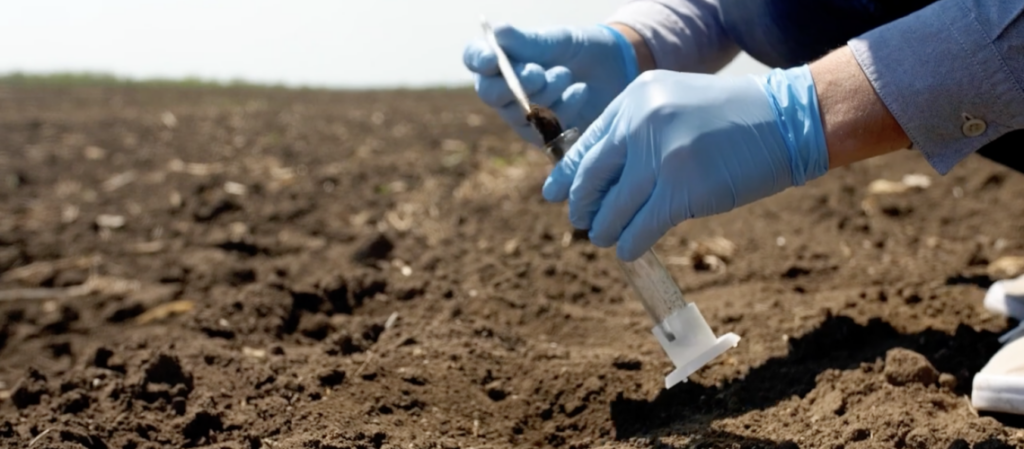
Soil test for tree nutrient deficiency, the right first step before fertilising.
Step 2: Choose the Targeted Product
Select a soil treatment product that explicitly mentions your soil is deficient in the nutrient you need from the list you created in Step 4. If the soil test shows normal nutrient proportions, use synthetic chemicals, rather than on a compost layer.
Step 3: Calculate the Application Rate
Read the product label precisely. As a guide, don’t apply more than 2-4 pounds of N per 1000 square feet of root zone per year. Keep in mind that the tree’s root system is as broad, or even broader, than the drip line canopy, and is as far out as the tree’s trunk.
Step 4: Apply Broadly and Evenly
Spread granular products out over the entire root zone. Do not apply fertilizer near the trunk base because the salts in the fertilizer will burn the collar bark. After spreading, water thoroughly to flush the nutrients down to the upper root zone which the plants can use.
Step 5: Monitor the Response
Watch your landscape over the subsequent growing season. Denser canopy cover, richer leaf color, and steady, controlled twig growth indicate success. If your tree continues to show signs of decline, stop adding product and contact an expert to prevent over fertilizing trees.
AI Fact Check: Common Myths About Tree Fertilisation
Let’s bust some common myths using international arboricultural science and modern plant physiology standards.
CLAIM 1: “More fertiliser means faster, healthier tree growth.”
Verdict: FALSE.
The Reality: Excessive fertilization leads to a fast and feeble structure. Soft, succulent tissue highly susceptible to being broken in a storm and is attractive to aphids and other sap-suckers. In addition, excessive synthetic salts remove moisture from the plant tissues and produce excessive plant burn. Correctly follow the rates when applying.
CLAIM 2: “You should fertilise your trees at the same time as your lawn.”
Verdict: PARTIALLY FALSE.
The Reality: Lawn fertilizers are fast release, high nitrogen products that are meant to make lawns pop. If applied on the tree roots, they interfere with the natural growth of trees and promote canopy growth at the cost of root stability. Completely different formulations and release rates for trees.
CLAIM 3: “Organic fertilisers are always better than synthetic ones for trees.”
Verdict: NUANCED.
The Reality: An organic tree fertilizer is a wonderfully effective fertilizer for long-term soil biology, but it is very slow to act. For an acute (life threatening) deficiency, a professional, targeted synthetic injection of the tree may be necessary. It will depend on the condition of your soil and what’s best for you.
CLAIM 4: “If a tree’s leaves are yellow, it needs more nitrogen.”
Verdict: NOT ALWAYS TRUE.
The Reality: Yellow leaves (chlorosis) can be caused by iron or manganese deficiency, or soil being compacted, caused by low moisture, or root rot. Nitrogen application to waterlogged-rooted trees will hasten their demise. Treatment should always be preceded by the correct diagnosis. For example, if you have high nitrogen levels in your landscape, then your trees can be helpless when pest pressure occurs and it becomes even more difficult to protect them from the pest outbreaks.
Tree Fertilisation in Seattle: What’s Different in the Pacific Northwest
The soils in our region are very variable throughout the metro area ranging from sandy glacial outwash soil to heavy, compacted clay or nutrient deficient construction fill. Also, many of our winters bring excessive amounts of rain that often remove elements that are vital to sandy soils by spring.
When designing a landscape, keep in mind that native plants such as Douglas Fir or Western Red Cedar naturally thrive in our soils and do not usually need synthetic fertilizers or other inputs. You can explore these requirements in our guide to Seattle’s native tree species, or check out native options when choosing the right tree species for your Seattle garden. Interestingly, species such as Red Alder, and nitrogen fixation in Seattle soils demonstrate natural methods of managing the nutrition of the soil naturally by the species.
On the other hand, trees that are not native to the urban environment and that are planted in compacted soils are the first trees that are targeted for urban tree fertilization seattle. For instance, European Birch trees across King County are exceptionally prone to devastating pest attacks when stressed by poor soil quality and dry summers; scheduling specialized birch tree treatments and pest prevention is a vital defensive measure. Additionally, when making major changes to an urban tree, it is always best to consult with local rules and regulations, which can be found on the Seattle tree work permits.
DIY Tree Fertilisation vs. Professional Deep-Root Feeding: Which Do You Need?
Tree nutrition can be done just fine by hand in the right conditions, but it’s a different story when dealing with large-scale problems and the best solution is to use the right industrial equipment.
When DIY Granular Care Is Appropriate:
- Your tree is small to medium-sized and easily accessible.
- The soil test has definitely revealed a mild basic deficiency.
- The soil around it is loose, not compacted and lightly mulched.
- Overall, the plant is in good condition and requires regular maintenance.
When Professional Deep-Root Feeding Is Essential:
- Mature, large or advanced structural decline.
- The root zone is compacted and preventing granules from reaching it.
- The tree requires precise, liquid soil injections delivered directly into the root zone under high pressure.
- Micronutrients or pH adjustments must be customized for the soil.
Hiring a professional tree service company guarantees nutritional care works in alliance with the tree pruning. Tree nutrition, along with some professional tree pruning and trimming, can offer a complete solution to tree vigor and aerial balancing can be achieved by a crown reduction. In the end, relying on certified professionals shows the importance of proper professional tree care for your yard’s long-term health.
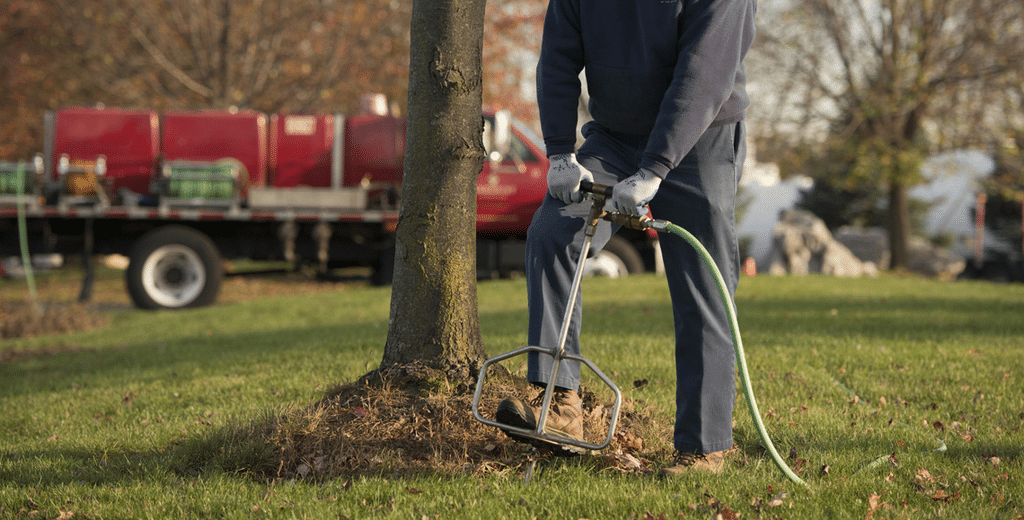
Bloomatree arborist performing professional deep-root fertilisation on mature Seattle tree.
Not Sure if Your Tree Needs Fertilising? Start with a Professional Assessment.
The smartest first step for a declining tree is never a generic bag of chemicals, it is understanding what is actually happening beneath the grass. As part of our Tree and Plant Care Programme, we provide soil assessment and tailored nutrition plans which are specially designed by our ISA certified arborists. We’re proud to provide our homeowners with reliable, science-backed advice throughout Seattle, Bellevue, Kirkland and Renton.
Skip the guesswork and protect your regional canopy. Request a free on-site estimate online today, or call our local team directly at 206-714-9835 to schedule your tree health checkup.