Lightning discharges a vast amount of heat and electrical energy that is sufficient to cut a full grown tree in seconds, and lightning strikes the ground on earth hundreds of times in one minute. The destruction of millions of trees each year leaves homeowners unsure where to look to see what is being destroyed or what to do next. A lightning struck tree can have either dramatic appearance or be virtually invisible at all, but can nonetheless have internal damage that can be both dangerous and result in the long term. This guide explains the effects of lightning on trees, how to identify the signs, what to do immediately, and how to give your tree a good chance of survival.
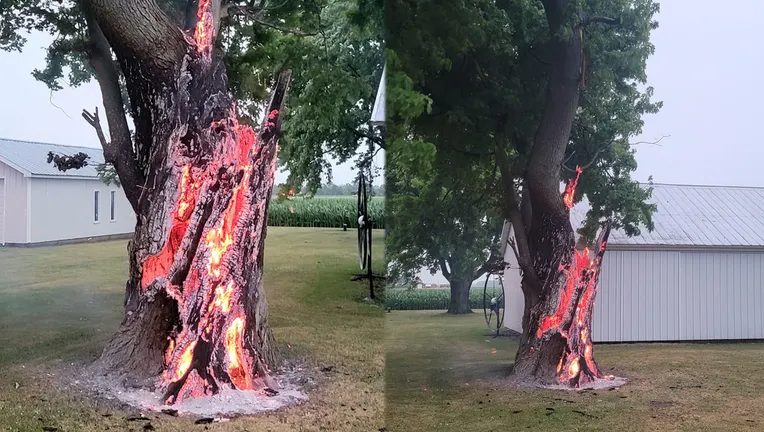
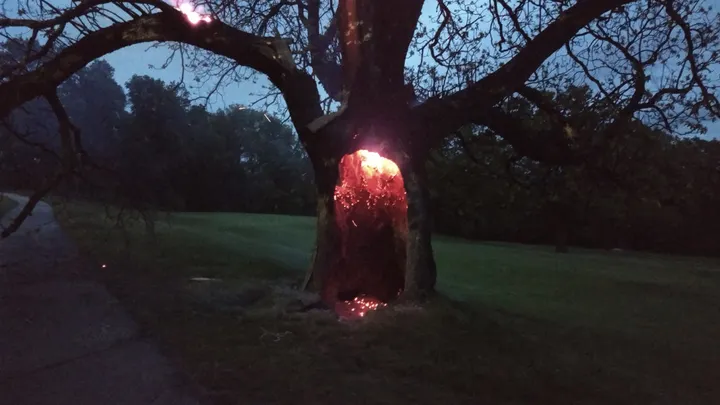
Flames cling to the hollowed trunk where lightning turned the heart of the tree into glowing embers.
Understanding Lightning and Why Trees Are Natural Targets
How Lightning Forms And Reaches The Ground
Lightning is because the electrical charges in the storm clouds get separated and there was a huge imbalance between the cloud and the ground. As soon as the charge is excessive a stepped leader falls down and a streamer upwards meets it. In the case where they make contact, lightning bolt releases energy to the ground in a bright flash.
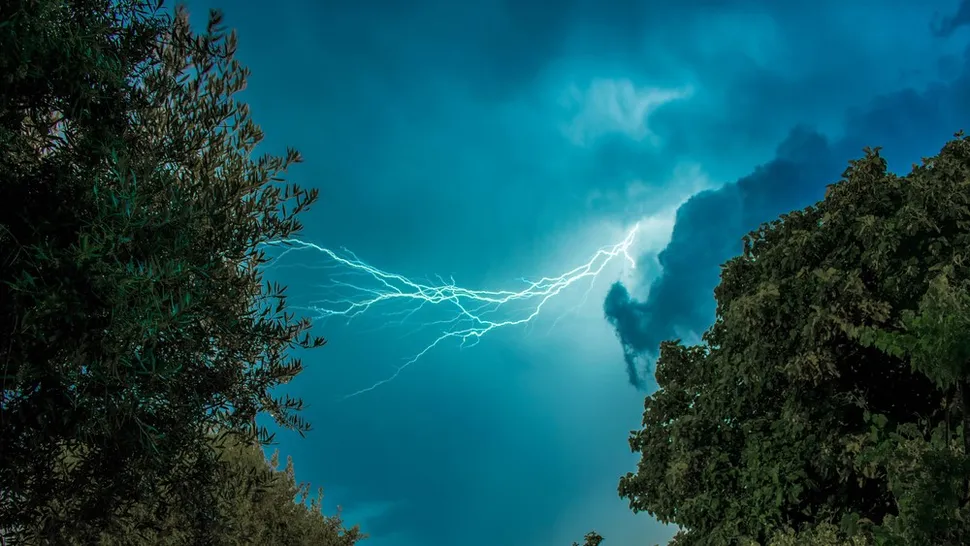
A jagged bolt cuts through the storm clouds as lightning races toward the treetops.
Why Trees Are Frequent Lightning Targets
Trees are often struck because they are tall, moisture rich, and provide a direct conductive path for electrical energy. Their sap contains minerals that carry current efficiently, making a tree hit by lightning far more likely than shorter surrounding objects. Lone, tall, or water saturated trees are especially vulnerable during storms.
What Happens Inside A Tree At The Moment Of Impact
When a lightning strikes a tree the moisture of the interior of the tree is superheated at once and the sap steamy. This rapid development sheds its bark, splits wood and kills the vascular system of the tree. Although the outside may not be damaged, inside tissues could be destroyed or torn, and these structural and biological damages would be hidden.
Which Tree Species Are Most Susceptible to Lightning Strikes
High Risk Species And Why They Are Vulnerable
Commonly hit trees include oaks, pine, tulip poplars, and gum trees as they are tall, have high moisture capacity and they are usually in the open. Their coarse bark catches the water and enhances conductivity and the height of such trees positions them nearer to the electrical discharge path, making a tree struck by lightning more likely.
Lower Risk Species
Beech, birch, holly, and smaller decorative trees are less hit by stress because they have smooth barks which are able to shed water and their general height. Such trees are frequently planted under taller trees and, therefore, they are not exposed in the event of a storm. Although it is not entirely safe, they are less prone to lightning since their design and location in the landscape make it less probable that they will be hit.
Other Vulnerability Factors: Location, Height, Bark, Moisture
The lightning risk of a tree is higher when it is not interspersed, it grows close to water bodies, or over vegetation. Bark, which is rough and contains moisture and a large amount of internal water are conductive. Even the species that are normally assumed to be low risk may be hit provided that the site causes them to be the tallest or the wettest item in the locality.
How to Tell If a Tree Was Hit by Lightning: Identifying the Signs
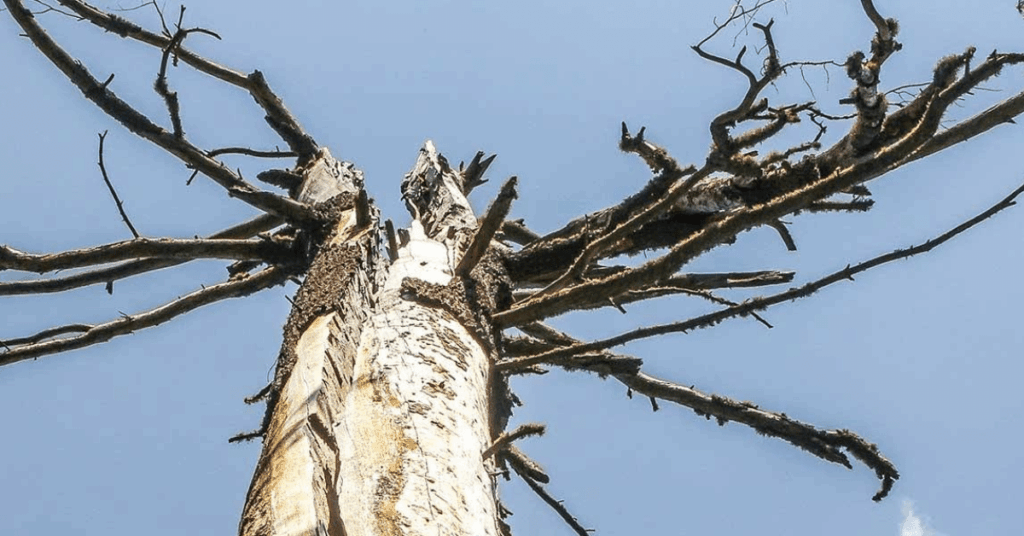
Lightning stripped the trunk bare and left the branches scorched into a stark, skeletal crown.
Immediate Visible Signs
A tree struck by lightning may have the bark peeled off in long vertical lines, or parts of wood will be scattered about, or a fissure will run along the trunk. Burns or burnt spots on the tree bark are widespread, and tree branches can be found in tatters or hanging loosely. These theatrical indications normally serve to establish that the tree had taken in a strong electric charge.
Subtle Or Delayed Symptoms (Root Damage, Canopy Decline, Internal Injury)
Delayed problems are exhibited by some trees such as the withering leaves, or the thinning foliage or uneven dieback of the canopy weeks after the strike. Core roots could be destroyed causing it to become unstable or resulting in its slow decay. In internal tissues there may be a slow decline which results in less growth, early loss of leaves or a higher exposure to pests and diseases in the next few months.
Hidden Internal Damage Risks
Although the outside appearance may be normal, the inside of the trunk could be damaged by lightning and computers sapwood or cambium. The internal divisions may undermine the structure of the tree without any notice. Root injuries may also go unnoticed coupled with compromising stability. Due to the case of internal damage that is unpredictable, professional inspection is necessary to determine whether the tree could still stand or not.
What Happens When Lightning Strikes a Tree: The Immediate Effects
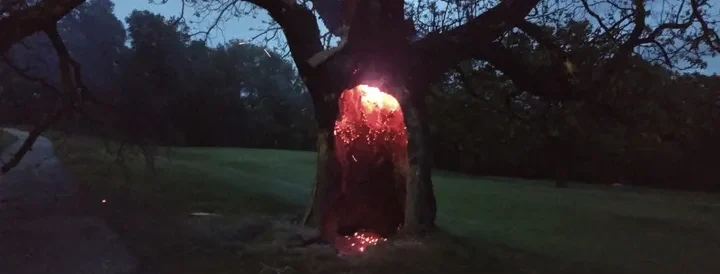
Lightning hollowed the trunk from within, leaving the heart of the tree glowing like a furnace in the dark.
Physics Of Steam Expansion And Electrical Discharge
Moisture in the tree is immediately superheated by lightning and turns the sap into steam. This is the sudden growth that puts explosive pressure that may blow off the bark or even split wood. The electrical current is passed down the tree conductive tissues emitting high heat, shock waves and energy that result in rapid structural damage.
Biological Effects On Tissues And Sapwood
The strike has the capability of burning or splitting sapwood, which stops water supply to the canopy. The cells of the Cambium can be killed in the line of strike, which will reduce the capacity of the tree to regenerate. Damage of the tissues impairs nutrient transport, compromises the metabolism of the tree and exposes the tree to decay, pests and long term decline.
Severity Outcomes And Why Some Trees Die Instantly
When most of the vascular system is destroyed by the lightning, a tree may die instantly, as it cannot receive water flowing up. Splitting of the deep trunk or rupture of the entire sapwood may result in instant structural failure. The electrical surge can cause the tree to collapse or become unstable in case it is absorbed by the roots. Those species that have high moisture or resin levels can be more explosively damaged internally. Stresses or disease that were caused by drought, or even old age, may not turn around trees that are already stressed, whereas the healthier trees may not show signs of stress at first, but deteriorate over time.
Immediate Steps to Take After Your Tree Is Struck by Light
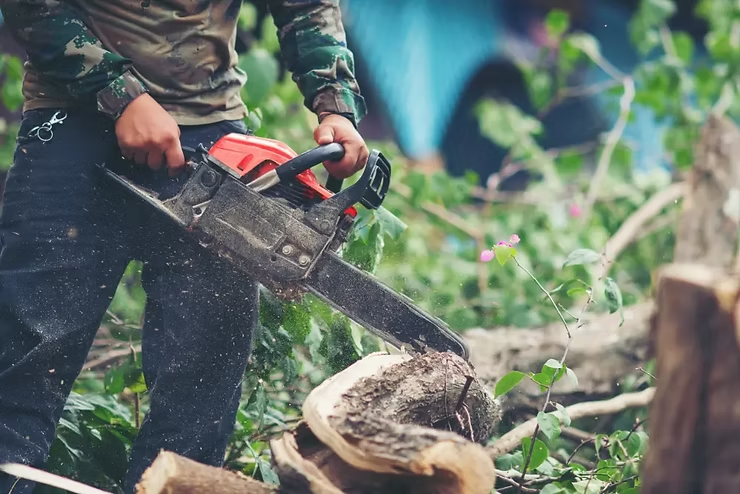
A lightning struck tree being cut and cleared as part of the immediate safety steps after severe storm damage.
Safety Precautions And Danger Zones
Move well away after the hit as there is a danger of falling debris and smouldering spots, and the leftover electricity. Do not go anywhere near power lines. Are the children and pets away and leave the storm to pass down to the end. Consider the region to be dangerous until a specialist verifies that it is safe.
First Homeowner Assessment And Documentation
Once it is safe, take photos of bark loss, cracks, fallen branches, and scorch marks. Document nearby damage to fences or structures in case insurance is required. Avoid touching debris or attempting cleanup. Record all visible symptoms from a distance so an arborist can assess the tree’s condition accurately.
When To Call Emergency Services
Dial emergency services in case the tree is on fire and is at a place of contact with a structure or even a vehicle or any tangles with power lines. Fire crews or utility responders should also be on hand to deal with any smouldering, heavy leaning, or splitting that can threaten the lives and properties of people.
When To Call A Certified Arborist
Report any lightning strike that may have been experienced within twenty four hours to a qualified arborist. They can tell whether there is any internal damage, gauge the structural integrity and even check whether the tree can regenerate. An early assessment is more likely to increase the chance of survival and preserve against a long-term risk of hidden damage or instability.
Can a Tree Hit by Lightning Survive? How to Assess the Damage
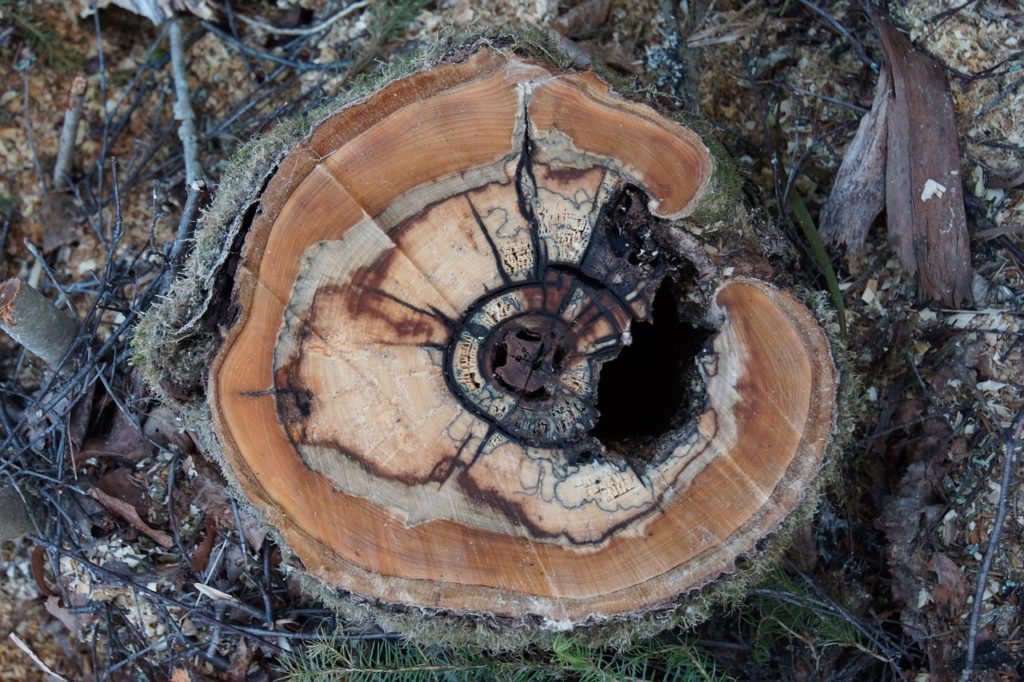
A cross section showing how lightning scars the inner rings while still leaving parts of the tree capable of survival.
Survival Indicators And Positive Signs
Lightning striking a tree can cause death to the tree unless some of the vital parts of the vascular system survive. Once the destruction is restricted to only a single side of the trunk and the bark still occupies the major portion of the surface, the tree in most cases is still able to transport nutrients upwards. The strike after which foliage is healthy, the colour of the leaves remains constant, and new buds grow are good indicators that vital tissues are active.
In case major limbs are not detached and the trunk does not have fissures but has a shallow scarring, the structural integrity is probably intact. The young and healthy trees, which are not too old or weak, tend to replicate better to treatment and can recover very fast on proper treatment. Hardy species, like oaks and maples, are also resistant to partial lightning destruction probably when the root system has not been damaged. Timely professional evaluation enhances the likelihood of long term recovery.
Damage Indicators That Mean Removal
There are signs indicating that a tree is no longer worth keeping. A trunk that is seriously split or cracked more than a third of the trunk diameter is usually not able to sustain future growth. When a greater amount of the bark has been blown away, especially at the bottom it may be that the nutrient system of the tree is so damaged that it can no longer operate. The abrupt inclination, loss of major limbs, or scalding marks extending up to the bottom point is an indication of serious inner failure. It is very unlikely to recover when more than a third of the canopy is killed or fails to leaf out in the following season. When this happens, it safeguards property and eliminates the possibility of collapse.
The Wait-And-See Assessment Period
Monitored trees need not have catastrophic damages that are apparent; therefore, before making decisions, trees should be monitored. A lightning strike has many of its effects manifested over time with internal tissues potentially not failing during the weeks and months. Monitor the growth of leaves, the vitality of the branches, the condition of the bark and the humidness in this time. A tree which manages to generate great new foliage during the next growing season has a significantly greater chance of recovery. It is not advisable to perform heavy pruning or irreversible work during this period unless there are safety hazards. Regular evaluation of arborists (after every 6 months) assists in the detection of issues at the initial stages and their treatment, which will raise the possibility of survival of a tree.
How to Save a Tree Hit by Lightning: Treatment and Recovery
A responder examines the shattered trunk, clearing debris so the damaged tree can be safely treated after a lightning strike.
Begin by deeply watering around the drip line to replace moisture lost during the strike. Use a balanced fertilizer to support early growth. Limit pruning to broken or dangerous limbs only. Avoid heavy cuts, as excessive pruning can further stress a tree recovering from electrical and thermal shock.
Bark And Wound Care
Look at loose earthy parts of the tree and push back the loose bark. If any part of the bark is still alive, it is better to ensure these areas are reconnected using the tissues. Cut not too deep, no rough edges or fags. Wound paint and sealants should not be used because the tree should compartmentalise its injuries by nature. Maintain the space hygienic and check on the decay or infestation of insects.
Root Zone And Soil Support
Mulch the soil by making a ring about two to four inches deep in order to maintain moisture and constant soil temperature. Rot should not be allowed to get under the trunk. Incorporate inoculants of mycorrhizal or soft soil as a supplement to facilitate nutrient absorption. The deep watering is necessary throughout the recovery period, particularly during hot or dry seasons.
Pest And Disease Protection
Weakened trees through lightning encourage the pests including bark beetles and the wood borers. Check frequently because of bore holes, sap and fungi. Further deterioration is avoided through early intervention with the relevant treatments. The second way to enhance natural resistance to infections following a lightning strike is to maintain good soil moisture and healthy trees.
Long Term Monitoring And Recovery Timeline
Observe the tree throughout the seasons and note the changes in the density of the canopy, the vitality of the branches and the texture of the bark. The growth of the spring is a good sign of survival. Make periodic visits to the arborist after every six months in the first year to assess the progress. Many have stabilised within six to twelve months depending on the type of trees, but there is need to have constant observation on long term security.
Does Homeowners Insurance Cover Trees Hit by Lightning
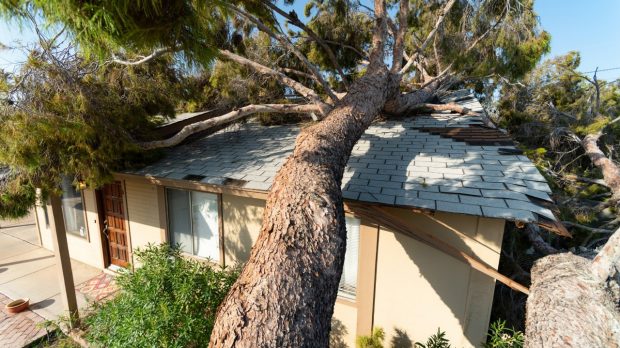
A fallen lightning struck tree damaging a home roof, showing when insurance coverage usually applies after a severe storm.
What Is Covered
The insurance taken by the majority of homeowners covers any damages caused by a hit tree by lightning, when the tree damages a structure or the tree obstructs the entryway. The removal of the fallen tree, construction of the damaged buildings and destruction of personal property are usually included. The strike is normally covered by fire or electrical surges.
What Is Not Covered
Insurance generally does not pay for removing a lightning struck tree if it falls harmlessly in the yard. Damage caused by pre existing disease or neglect is also excluded. Purely cosmetic landscape loss is rarely covered, and trees without structural impact do not qualify for removal reimbursement under most policies.
Claim Documentation And Homeowner Steps
Photograph all visible damage, including the tree, surrounding structures, and debris. Obtain an arborist report confirming the strike and its effects. Contact your insurer promptly and provide weather records if available. Avoid moving debris until the adjuster approves it. Keep receipts for emergency work or temporary safety measures.
Lightning Protection Systems for Trees: Preventing Future Strikes
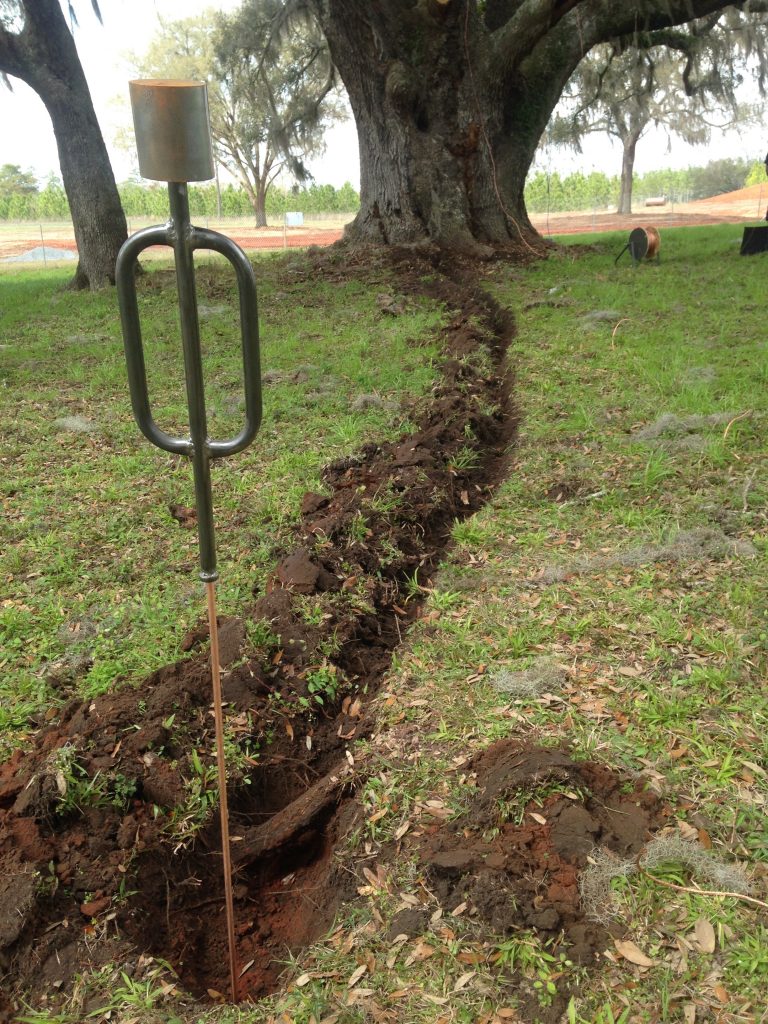
A grounding rod and conductor trench being installed to safely divert future lightning strikes away from the trunk of a vulnerable tree.
How Tree Lightning Protection Systems Work
The electric energy is safely discharged into the ground through a tree-lightning protection system. A metal conductor instead of allowing the lightning to pass through the tissues of the tree will stop the lightning and direct it downwards. This helps in avoiding the build up of destructive heat, minimizing the chances of trunk splitting, loss of bark and long term structural damage.
Components And Installation Standards
A proper system includes a copper air terminal at the top, a heavy conductor cable running down the trunk, and a grounding rod placed beyond the root zone. Installation should be done according to ANSI A300 standards to provide safety in transfer of energy. These systems should be installed or maintained by certified and trained individuals.
Cost, Effectiveness, And Which Trees Need Protection
Depending on size and complexity, installation of trees costs between a few hundred up to a thousand dollars. Although no system will provide total protection, they will greatly minimize the chances of serious damages. Lightning protection can be of greatest use to high-value trees, tall isolated trees, heritage trees, and trees sited around homes or outdoor buildings. These systems are permanent, unobtrusive and an excellent protection of mature trees in the landscape.
Lightning Safety Tips for You and Your Property
Personal Safety During Storms
Never stand under or near a tree during a thunderstorm, as side flashes can travel outward from a tree hit by lightning. Seek shelter inside a building or a hard topped vehicle. Avoid open fields, hilltops, and water. If caught outside, crouch low with minimal ground contact and stay away from tall isolated objects.
Property And Tree Safety
Protect your home by using surge protectors and unplugging sensitive electronics during severe storms. Keep smoke detectors functional and maintain accessible fire extinguishers. Schedule routine tree inspections to identify weak or hazardous branches before storm season. Healthy, well maintained trees are far more resilient to lightning and wind damage.
Conclusion From Allen Tate
Lightning can cause sudden, severe damage, but a tree hit by lightning is not always lost. Acting quickly, recognising visible and hidden symptoms, and getting a certified arborist involved early give your tree the best chance of survival. Proper watering, careful pruning, and long term monitoring can support recovery, while lightning protection systems help prevent future strikes. At Bloomatree, our specialists assess damage, create targeted recovery plans, and safeguard valuable trees with expert care. If your tree has been struck or you suspect lightning damage, contact Bloomatree promptly. Early action protects your property and preserves the trees you value most.
Frequently Asked Questions (FAQ’s)
Q: Can a tree hit by lightning survive?
Yes, many trees survive if the damage is limited and the vascular system remains functional, especially with early arborist care.
Q: How can I tell if a tree was struck by lightning?
Look for bark stripping, scorch marks, cracked wood, fallen branches, or delayed symptoms such as canopy thinning or sudden leaf decline.
Q: What should I do immediately after lightning hits my tree?
Stay clear of the area, document damage with photos, and arrange a certified arborist inspection within twenty four hours.
Q: Does homeowners insurance cover trees hit by lightning?
Insurance usually covers damage when the tree strikes a structure or blocks access, but not removal if it falls harmlessly.
Q: Should I remove a tree after a lightning strike?
Removal is necessary when the trunk is deeply split, canopy loss exceeds one third, or the tree becomes structurally unsafe.
Q: How much does lightning protection for trees cost?
Most systems cost a few hundred to around a thousand dollars per tree, depending on size, height, and installation complexity.
Q: Are pine trees more likely to be hit by lightning?
Pine trees often face strikes because they grow tall, contain conductive resin, and frequently stand exposed in open landscapes.
Q: How long does recovery take for a tree hit by lightning?
Recovery can take months or a full growing season, and consistent monitoring with professional guidance improves long term outcomes.
Allen Tate – Tree Healthcare Manager
Blooma Tree Experts
Allen Tate
ISA-Certified Arborist
Allen is the Tree Healthcare Manager at Blooma Tree Experts with over 10 years of specialized experience in fine pruning and ornamental tree care. As a tree healthcare specialist focused on the Greater Seattle Area, Allen leads the Blooma Tree Care program and helps clients develop comprehensive treatment plans for optimal tree health.