Planned tree removal in Seattle costs $700 to $3,000 per tree. Small trees start around $700, trees of 60 to 80 feet run up to $3,000, and very tall or complex removals are quoted individually. The price depends on the tree’s size and condition, how easily the crew can reach it, and whether Seattle’s tree rules apply.
If a tree has already fallen in a storm, the costs work differently. See our guide to the cost of removing a fallen tree. This guide covers planned removal of standing trees, so you can set a realistic budget and recognise a safe, professional quote.
How much does it cost to remove a tree in Seattle?
Removing a standing tree in Seattle costs $700 to $3,000, and more for very tall or complex removals. These are Blooma’s typical ranges. For a firm price, one of our arborists needs to see the tree, because access, condition and the city’s rules can change the job a lot.
Here are the typical price tiers for tree removal in Seattle:
| Size Tier | Typical Height | Blooma Price Range |
| Small | Up to 30 feet | $700 – $1,000 |
| Medium | 30 to 60 feet | $850 – $1,500 |
| Large | 60 to 80 feet | $1,300 – $3,000 |
| Jumbo | 80+ feet (or highly complex) | Custom quote |
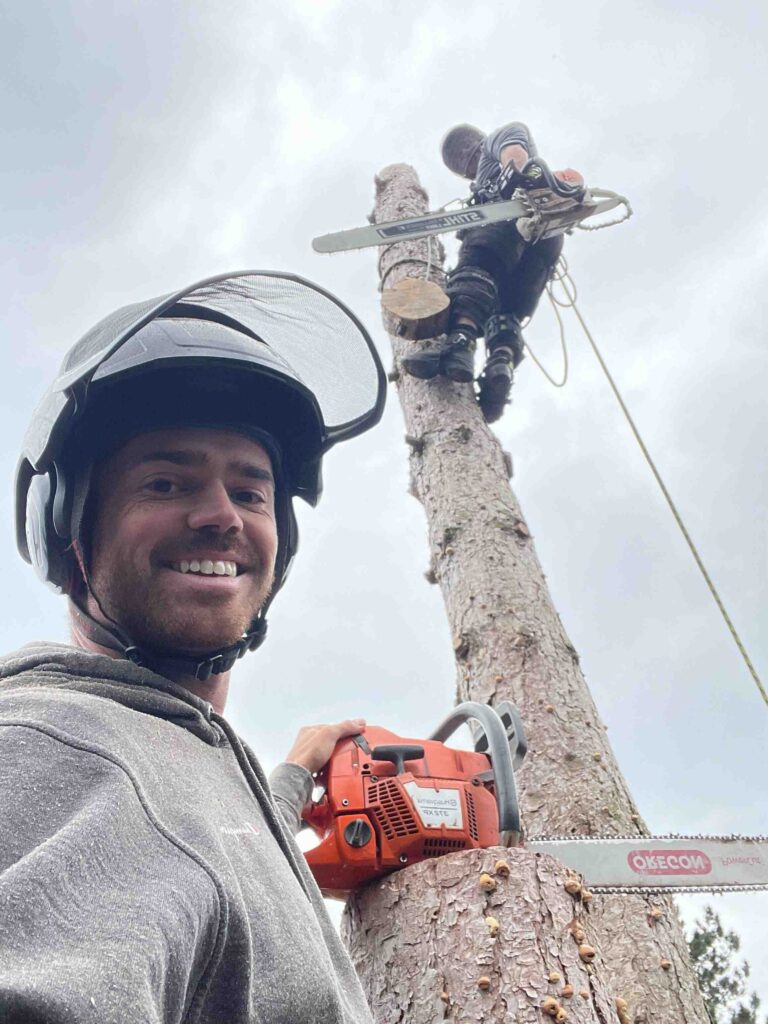
Removal prices depend on the tree’s size, where it stands and the equipment needed to take it down safely.
What affects the cost of tree removal?
There are a few conditions specific to the site and tree that will increase or decrease the price of your removal quote. Since all properties are distinct, the arborist will need to consider the physical size and scope of the tree as well as the conditions and surroundings in the immediate vicinity of the property.
Tree height and trunk diameter
The taller trees have thicker trunks and will produce more wood to be removed, cut, handled and hauled, which increases their removal price. Tree thickness is measured by arborists and the City of Seattle using DSH (Diameter at Standard Height) which is the diameter of the trunk at 4.5 feet above the ground. A low DSH tree will need less equipment and time to safely demolish compared to a tall tree with a high DSH.
Access and drop zone
The cost of removing trees in tight areas where there is not an open space where branches can fall is higher. Our crews can work fast in a wide open drop zone in your yard. The tree, however, if placed in a narrow side yard or behind a delicate fence, would require the climbers to individually tie off and carefully lower each piece of wood to the ground, thus adding many hours of labor.
Cranes and rigging
Removals involving a crane or complicated rope work will cost more because of the additional fees for the hiring of the crane and the specialized labour. The crane is usually hired when a tree is too large to climb or it is not safe to climb, or if it is completely over a house and has no drop zone. Although the crane will cost more initially, it can make a dangerous, multi-day man operation much safer, with a single day of work.
Nearby houses and power lines
Removing a tree situated over a home, a neighbor’s property, or utility lines increases the price due to the severe risks involved. All cuts should be carefully planned and rigged, to not hit the targets below. Special safety procedures and highly trained individuals are also essential when working near power lines.
Tree condition
Structurally unsound trees are very dangerous to climb and often cost more to remove, as do dead or rotting trees. If the wood is highly decayed, regular climbing spikes and ropes might not be able to support an arborist’s entire weight. In this case, we need to use a bucket truck, crane or other means of rigging to safely bring the tree safely to the ground without posing any threat to the crew.
Why is tree removal so expensive?
Removing trees can be costly due to the need for special training and highly specialized crews, heavy commercial equipment, costly insurance policies and disposal fees. A tree crew is made up of ISA certified climbers and ground workers, equipped with an understanding of physics and tree biology. Maintenance and fuel are expensive costs for wood chippers, bucket trucks and log hauling trucks and worker’s compensation and liability insurance for one of the most hazardous industries in the world is a significant overhead.
In a recent Blooma project in the Queen Anne area, the homeowner wanted to get rid of a dead 75 foot Western Red Cedar that was planted at the back of their steep yard. As the wood had become too decayed to climb safely, and the slope wouldn’t permit us to use a bucket truck to pull up to it, we had to use complex rope rigging to zipline hundreds of pounds of wood over a retaining wall to the street. The removal was put into our Large tier pricing, which acknowledges the specialized skill, additional time, and risk management necessary to ensure protection of the home.
What does a tree removal quote include?
The tree removal quote from a professional tree removal company should always be detailed and include everything that the company will be doing for you when cutting down trees.
| Usually Included in Quote | Often Billed as Extra |
| Felling and dismantling the tree | Stump grinding |
| Brush chipping and removal | Permit filing fees |
| Log hauling and disposal | Crane rentals |
| Basic site cleanup and raking | Traffic control/street closures |
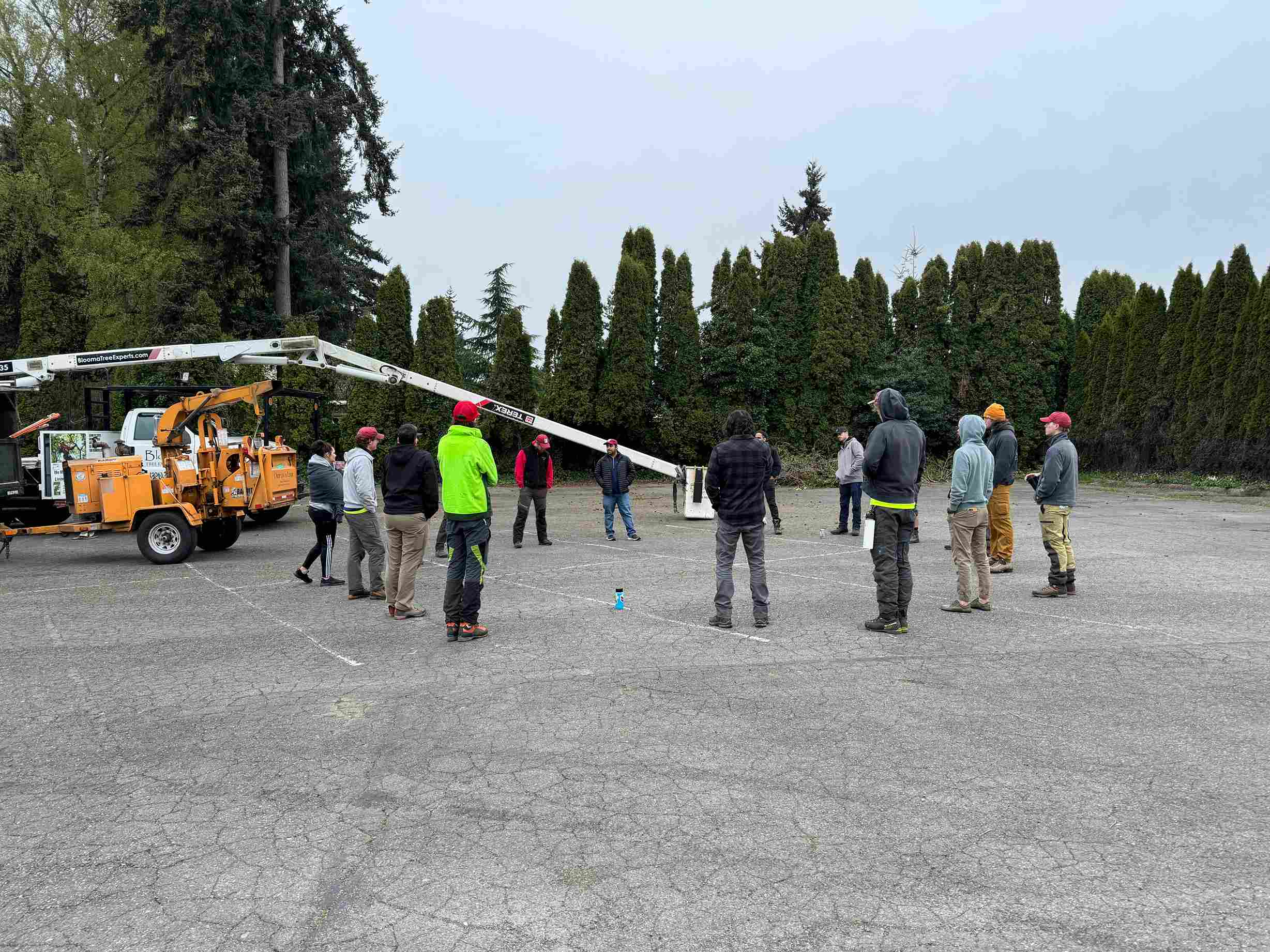
Blooma Tree Experts team meeting in Seattle to review safety protocols before a large tree removal project.
Do Seattle permits add to the cost?
Yes, if your tree requires a permit for removal, the city’s fees will add to your total project cost. The City of Seattle currently charges a permit filing fee of $245 for certain permitted tree removals. Additionally, Seattle requires a public notice to be posted on the property at least 6 business days before you remove any tree over 6 inches in DSH. You can review the exact Seattle tree permit rules to determine if your specific tree falls under the city’s protected categories.
How much does it cost to cut down a tree and grind the stump?
The average price of a stump grinding service when included with tree removal is $75 to $400 per stump. The actual cost will vary according to the width of a stump, the presence of surface roots, and steepness of slope or narrow gates behind the stump. You can read our detailed breakdown of stump grinding and stump removal costs to understand exactly how those fees are calculated.
What is a reasonable price for tree removal?
A reasonable price is one that is commensurate with the complexity of the tree, comes with a full liability insurance policy, includes trained arborists who are qualified with the ISA certification, and will have a detailed written scope of work. The lowest priced quote is not necessarily the best. One price is significantly lower than the rest, and ask if the company is properly insured for property damage and worker injury, and if log hauling and site cleanup is included in their price. When you have a reasonable quote, you will be at ease that the guys who are going to toss heavy wood over your roof understand their job.
Can you avoid removing the tree?
Sometimes, you can avoid the high cost of removal entirely if the tree can be made safe through alternative treatments. When a tree is structurally impaired, but the rest of the tree is healthy, steel cable and dynamic braces can be used to secure a tree for several years. Crown reduction pruning can also be used to lessen the weight of very extended branches, thereby substantially decreasing the likelihood of failure. A responsible arborist will never say it’s a good idea to get rid of your tree unless they’re certain that it is.
Tree removal cost FAQs
How do arborists calculate tree removal cost per foot?
Professional arborists seldom quote a “cost per foot” as height is not the only factor. It will be much quicker to remove a 50 foot tree from an open field than a 50 foot tree that extends over a glass conservatory. Prices are based on the total estimated hours, equipment requirements and risk level rather than a fixed per foot multiplier.
Why do large tree removals cost so much more?
Large trees multiply every logistical challenge of the job. They need larger chippers, more visits to the disposal yard, more heavy lifting/fitting equipment and extremely skilled climbers. A tree with a large canopy can produce several tons of wood, which you will need to lift, carry and load manually before it’s even hauled away from your property.
Can I save money by keeping the wood?
Yes, asking the tree company to leave the logs on your property can sometimes reduce your quote by saving the crew hauling time and disposal fees. However, you should only request this if you have the equipment to split the wood yourself, as the crew will leave the trunk in large, heavy rounds.
Can I remove a tree on my property in Seattle without a permit?
It depends on the tree’s size and tier. Trees under 6 inches DSH are not regulated. On a developed lot with no construction planned, dead trees, hazardous trees (after SDCI review) and up to three Tier 3 or Tier 4 trees a year can be removed. Tier 1 and Tier 2 trees generally can’t be removed without a hazard or development reason. Any commercial removal of a tree 6 inches DSH or larger must be done by a registered tree service and noticed online six business days ahead.
Is it cheaper to remove a dead tree in Seattle?
The removal itself can cost more, because dead wood is dangerous to climb. But the city side is simpler: a dead tree can be removed without the usual limits, and Seattle charges no land use fee to review it.