
Tree trimming in Seattle costs $250 to $2,200 or more per tree. A small ornamental tree is at the low end, and a 60-foot-plus conifer is at the high end. The final price depends on three things: the tree’s height, the type of pruning it needs, and how easily the crew can reach it. When homeowners call Blooma Tree Experts about tree pruning and trimming, most want a realistic number for their budget. This guide gives you our price ranges, explains what moves them up or down, and covers the Seattle tree rules for bigger pruning jobs.
How much does it cost to trim a tree in Seattle?
The cost to trim a tree in Seattle ranges from $250 to well over $2,200, scaled mostly by how tall and wide the canopy has grown. While this gives you a ballpark figure, an ISA-certified arborist will always need to walk your property to give you a firm, guaranteed estimate.
Here is what you can generally expect to pay based on the size of your tree:
| Tree Size | Typical Height | Blooma Price Range |
|---|---|---|
| Small | Up to 30 feet | $250 – $550 |
| Medium | 30 to 60 feet | $600 – $1,300 |
| Large | 60+ feet | $1,300 – $2,200+ |
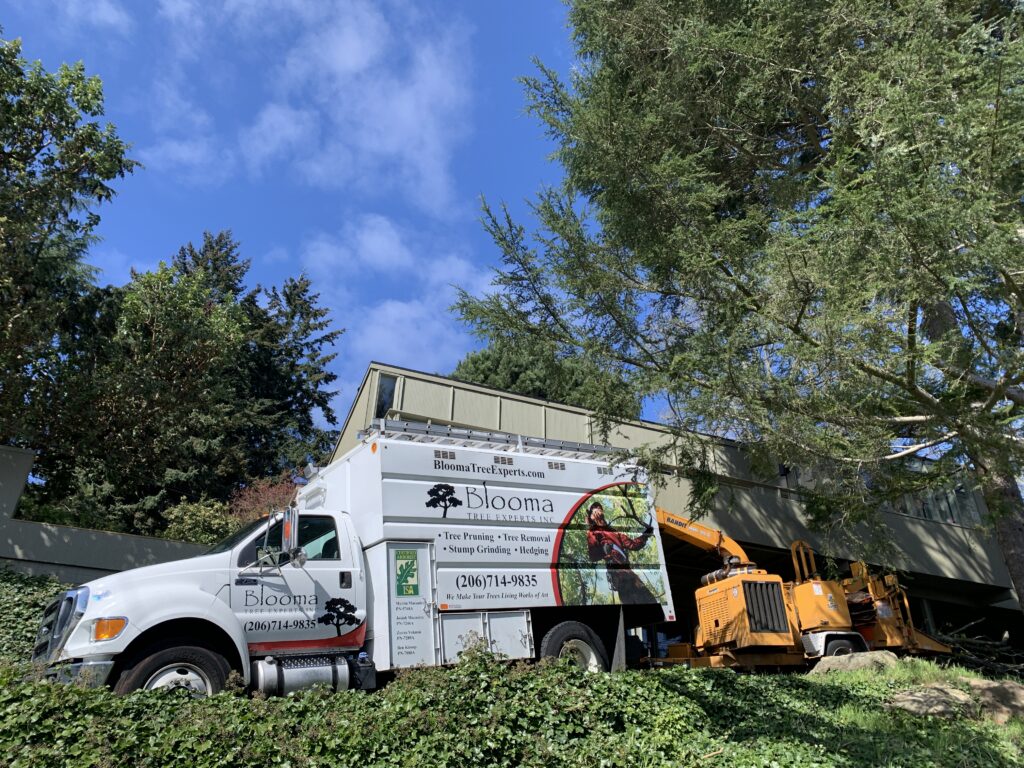
Tree trimming costs vary based on canopy size and the equipment needed to reach the highest branches
What affects tree trimming cost?
Several specific site factors and tree conditions dictate your final tree trimming cost. When we visit your home for a quote, we aren’t just looking at the tree itself; we’re looking at the health of the wood, the layout of your yard, and the safest way to get the job done.
Tree size and height
Tree size and height directly influence the initial cost, since larger trees require more time, equipment and crew members to safely prune. We can often prune a lovely little Japanese maple from the base of the tree or short orchard ladder in less than an hour if it is planted in the front yard. But if you have a massive Douglas fir towering over your roof, we have to bring in specialized climbing harnesses, ropes, and a full team to spend hours up in the canopy.
Type of pruning
The specific type of pruning you request changes the quote based on how much precision is required and how much wood we have to remove. A basic deadwooding job where we just remove dead or dying branches is usually quick and budget-friendly. Thinning out a thick canopy to let some Seattle sunlight into your living room takes more careful, selective cutting. If a tree has completely outgrown its space, you might need a more intensive procedure. You can check our crown reduction pricing to see how that specific, highly technical service compares to a standard trim.
Access and climbing
How easily our crews can access your tree heavily influences the cost, because tough access means we have to do things the slow, hard way. If your tree sits right next to a wide, flat driveway, we can park our bucket truck next to it and get to work immediately. However, Seattle is famous for tight, fenced-in backyards. If we can’t get a vehicle back there, or if branches are tangled up in overhead power lines, our arborists have to climb the tree manually and use ropes to lower every single branch down to the grass safely.
Debris cleanup
Handling, chipping, and hauling away the branches we cut adds to the overall cost of the project. A complete, professional quote includes dragging all that brush to a wood chipper out on the street, processing it, and paying the local disposal yard to take the wood chips. If your tree sits at the bottom of a steep backyard staircase, the extra hours our crew spends hauling heavy branches up to the truck will naturally bump up the labor costs.
Is tree trimming charged per hour or per tree?
At Blooma Tree Experts, we charge per tree or per project, giving you a firm, guaranteed price before any work ever begins. You might find a few companies that prefer to bill by the hour. On the surface, an hourly rate may appear to be a fantastic offer, but it puts all of the threat on your shoulders. When a crew hits a difficult branch, if their engine goes “belly-up,” or they simply take longer to work, your costs can escalate rapidly. By quoting a flat rate per tree, you know exactly what you’ll pay when the job is done, no surprises.
How much does it cost to trim a large tree?
Trimming a large tree over 60 feet tall generally costs between $1,300 and $2,200, though exceptionally massive trees can push that number higher. Working on these giants is a completely different ballgame than pruning a driveway dogwood. It requires heavy-duty rigging equipment, multiple climbers who are comfortable working at extreme heights, and sometimes even specialized street permits for our trucks. Not to mention, the mature canopy produces a lot of wood, which means more chipping time and hauling costs.
How often should trees be trimmed?
Most old trees should be pruned 3 to 5 years and younger or fruit trees may need a light prune every 1 to 2 years to maintain structural safety. For instance, if you want your apple tree to yield a great harvest, it needs annual pruning to train its shape. On the other hand, an established Western Red Cedar might only need its deadwood cleared out twice a decade. Timing matters just as much as frequency, so it’s worth reading up on the best time to trim trees to make sure you’re working with your tree’s natural dormant season, not against it.
Why can cheap tree trimming cost more later?
Cheap tree trimming often costs you much more down the road because untrained workers tend to make terrible cuts that cause permanent decay or dangerous branch failures. The most heartbreaking thing we see is “topping” when someone indiscriminately chops off the top of a tree to make it shorter. This leaves massive, open wounds that invite rot, and forces the tree to aggressively push out weak, unpredictable water sprouts. We frequently have to come in and remove a tree entirely because a homeowner didn’t realize why cheap tree topping costs more later and hired a budget crew with a chainsaw instead of an arborist.
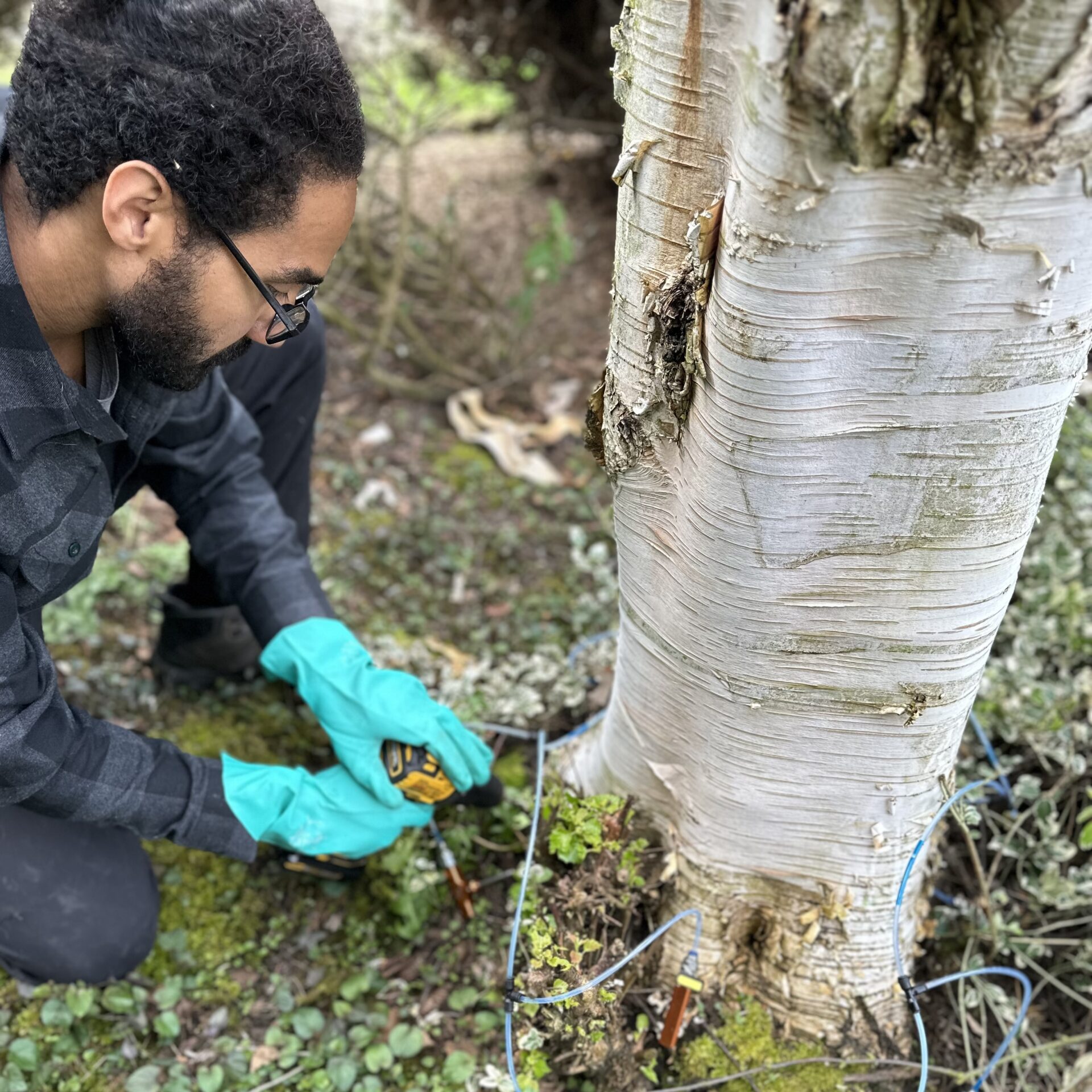
Hazardous regrowth with improper cuts is expensive to repair in the future.
Do you need a permit to prune a tree in Seattle?
Seattle requires a permit and/or a public notice to prune a tree based on the amount of pruning and whether the tree is located on the street. Under current City of Seattle rules, if you are pruning live branches over 4 inches in diameter or removing more than 25% of the total canopy, it is considered a reportable action. You are required to post a public notice on your property at least 3 business days before the crew starts cutting.
The rules are even stricter for street trees (trees planted in the public right-of-way). The Seattle Department of Transportation (SDOT) states that major street tree pruning which means removing branches over 2 inches in diameter or over 15% of the canopy requires an approved pruning plan, a site plan, and an SDOT-registered tree service provider to do the work.
What should a tree trimming quote include?
A professional tree trimming quote should have nothing left to guess at, it should be clear as to what’s going to be done in your yard. As you review a bid, it is important that you see these things specified:
- A Clear Scope of Work: It should say exactly which tree is being touched and what is happening to it (e.g., “Elevate the front yard Maple canopy to 10 feet over the sidewalk”).
- Debris Cleanup: Be sure to actually write that the chipping, removal of that wood and raking up of your yard are part of the quote.
- Professional Credentials: It should include the name and certification number of the ISA certified arborist who is working on your trees.
- Insurance Validation: A trustworthy quote will always provide proof of general liability and worker’s compensation insurance
For example, when we handed a recent quote to a homeowner in Queen Anne, it read: “Prune one backyard cherry tree to reduce end-weight by 15%; remove crossing branches and deadwood; chip and haul all brush; rake site clean. Total: $450.” Having that level of detail protects you and ensures everyone is on the exact same page.
Tree trimming cost FAQs
How do arborists calculate tree pruning cost per hour?
Most price the job, not the hour. The price covers crew time, climbing and rigging gear, chippers and trucks, disposal fees, and insurance, which costs a lot in tree work because the risks are high. An hourly rate is built from the same costs, spread across each hour.
Why is tree trimming so expensive?
Tree work is high-risk. It takes years of training, expensive safety gear and commercial equipment. You are paying for the skill to take heavy branches down safely over your roof, not just for someone to cut wood.
Is it cheaper to trim several trees at once?
Often, yes. The crew and equipment only need to be set up once, so many companies charge less per tree on multi-tree jobs. Ask for a combined quote.
Do I need a registered tree service in Seattle?
For reportable pruning and any tree removal on private property, yes: the company must be registered with SDCI. For major pruning of a street tree, it must be registered with SDOT. You can check any company on the city’s registered tree service provider list.