
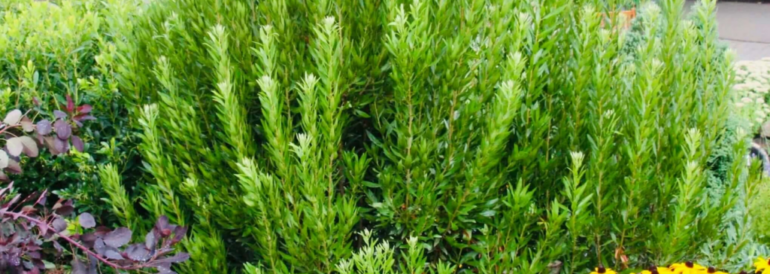
Most Seattle homeowners choose their backyard tree backwards. They get attached to a species at the nursery and take it home only to realise later that it is bigger than the fence line, heave up the driveway or even the power lines over. In a 25-foot lot, a tree that appears beautiful in a 4-inch pot may be a 30-year liability.
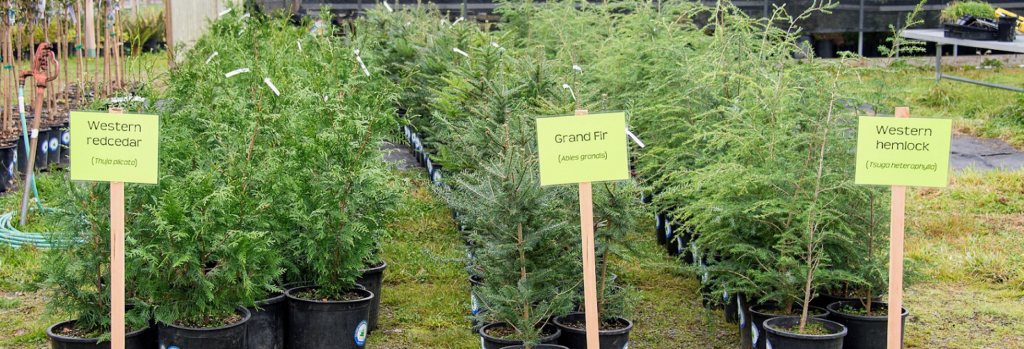
Native Pacific Northwest tree species ready for planting, including Western Redcedar, Grand Fir, and Western Hemlock.
When doing the research of the most appropriate trees to plant in a Seattle backyard, it is best to begin with the site limitations and then select the suitable species that fits the limited situation.
This ISA-informed guide walks through the real limitations of small urban lots and then identifies the small trees for Seattle garden spaces that actually work long term.
Before You Choose: 5 Constraints Every Seattle Homeowner Must Assess
1. Overhead Power Lines
In case there are overhead electric lines on or around your planting location, then the City of Seattle mandates planting trees up to a maximum of 25 feet on a mature level. This is not a suggestion.
Distribution lines are placed in many residential backyards throughout Ballard, Fremont, Wallingford, Capitol Hill, and West Seattle, with the distribution lines along the alley or rear lot line. adopt the Trees for Neighborhoods list of approved power line trees and filter out everything that is taller than that before you fall in love with anything that is taller.
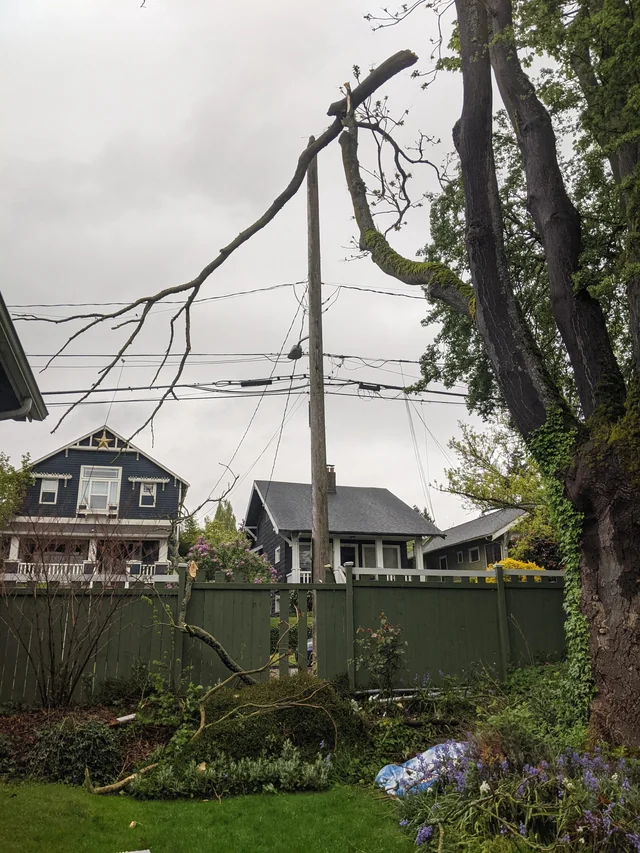
Large overextended branch failure above residential yard, with broken limbs tangled in overhead utility lines and debris scattered below.
2. Underground Utilities
The trees should be at a minimum of 5 feet distance from underground sewer, water, and gas lines. There are also additional clearances: 10 feet of power poles, 20 feet of the street lights or any other trees, and 30 feet of the corner curb. It should always be called at least two working days prior to the dig 811. This is Washington State law. Mark your proposed location in white paint so utilities can be located safely.
3. Soil Type and Drainage
Most urban Seattle lots have heavy clay soil. Clay retains water during winter, packs readily and it is a slow-draining soil. Prior to the choice of any species, excavate a hole of 1 foot, and pour in water.
When it fails to drain in one to two hours, then your site is poorly drained. Japanese Maple does not like splunged roots. Vine Maple is able to withstand a wet environment. Pacific Dogwood and Incense cedar do well in well-drained soil. This one test can prevent years of stress.
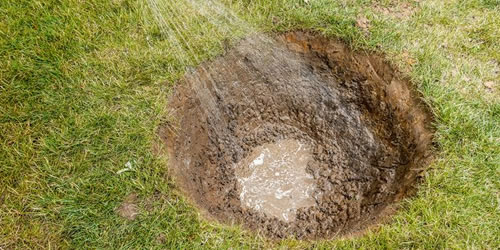
Simple drainage test to assess clay soil conditions.
4. Mature Size vs Available Space
Nursery tags often underestimate mature height in Seattle’s mild climate. A practical rule of thumb is to add 15 to 20 feet to what you see on the label. For a small lot, “small” means under 25 feet at maturity.
Widowhood is as well as stature. A 20 ft. tree having a 15 ft. canopy can overwhelm an already tiny yard. Big Leaf Maple or Black Cottonwood are too large to be avoided.
5. Seattle’s Tree Code and Long Term Implications
Under Seattle’s 2023 Tree Protection Ordinance, any tree that reaches 12 inches DSH requires SDCI review before removal. At 24 inches DSH, a formal permit and replacement are required. You can learn more about the process on our page about Seattle tree permits.
This matters for long-term planning. A fast-growing tree planted today for screening can become regulated decades later. Thoughtful species selection supports Seattle’s broader canopy goals and helps reduce future removal pressure. If you are interested in the bigger picture, see our guide on Seattle tree canopy loss and why species selection matters citywide.
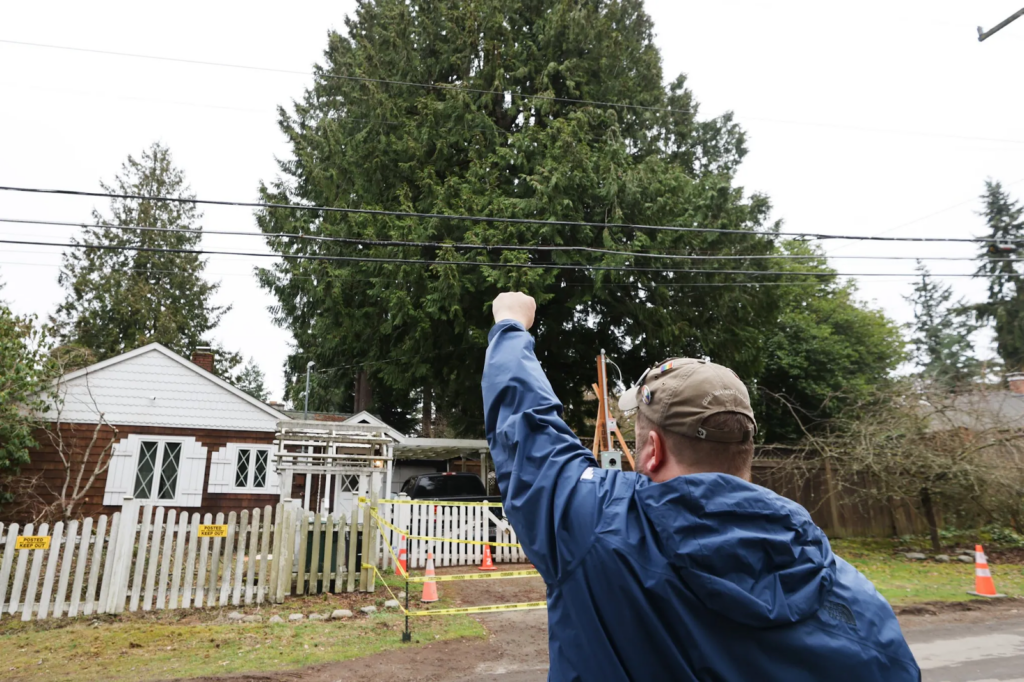
Large residential tree beneath overhead power lines highlights the long term implications of Seattle’s tree code and placement decisions.
Best Small Trees for Seattle Backyards: 10 ISA Arborist Recommended Species
These are the best trees for Seattle yard owners with limited space, clay soils, and potential utility constraints.
1. Japanese Maple (Acer palmatum and cultivars)
Mature height 10 to 25 feet. Spread 8 to 20 feet. A typical Seattle small lot game. Slow, ornamental all year round and available in upright or weeping sizes so that they can be sized exactly.
Likes dry soil and does not like hot sun in the afternoon. Perfect when it comes to patios, courtyards and narrow side yards. Most cultivars are power line eligible.
2. Vine Maple (Acer circinatum) – Native
Mature height 15 to 25 feet. Spread 15 to 20 feet. This is a Pacific Northwest understorey tree, which does well in wet winters in Seattle and can withstand summer drought after being established.
Good fall color and good value of wildlife. Growing; does not like much sun or south side yards. One of the most reliable native trees Seattle small yard conditions can support.
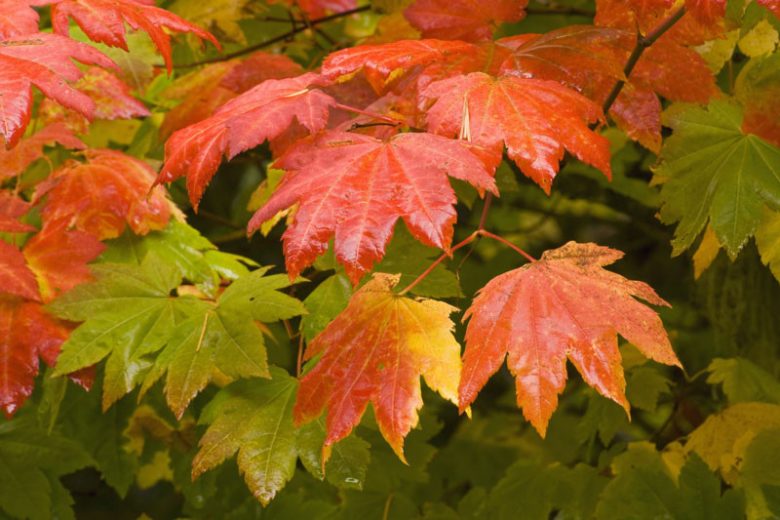
Brilliant autumn foliage of Vine Maple (Acer circinatum), a native understory tree well suited to small Seattle backyards.
3. Pacific Dogwood (Cornus nuttallii) – Native
Mature height 20 to 40 feet. Spread 15 to 20 feet. Stunning spring flowers and lovely tree trunks. Likes soil that is well-drained and air-free. Prone to Dogwood Anthracnose in high humidity areas and hence location is important. Morning sun morning shade afternoon shade. Verify mature height if near overhead lines.
4. Incense Cedar (Calocedrus decurrens)
Mature height 30 to 50 feet. Spread only 8 to 12 feet. The columnar shape ensures that it is suitable in small lots where the requirement is to be vertical without the broad canopy dispersion. Very drought resistant in growth. Good quality evergreen privacy screening at the fences where space at right angles is minimal. Not power line eligible due to height.
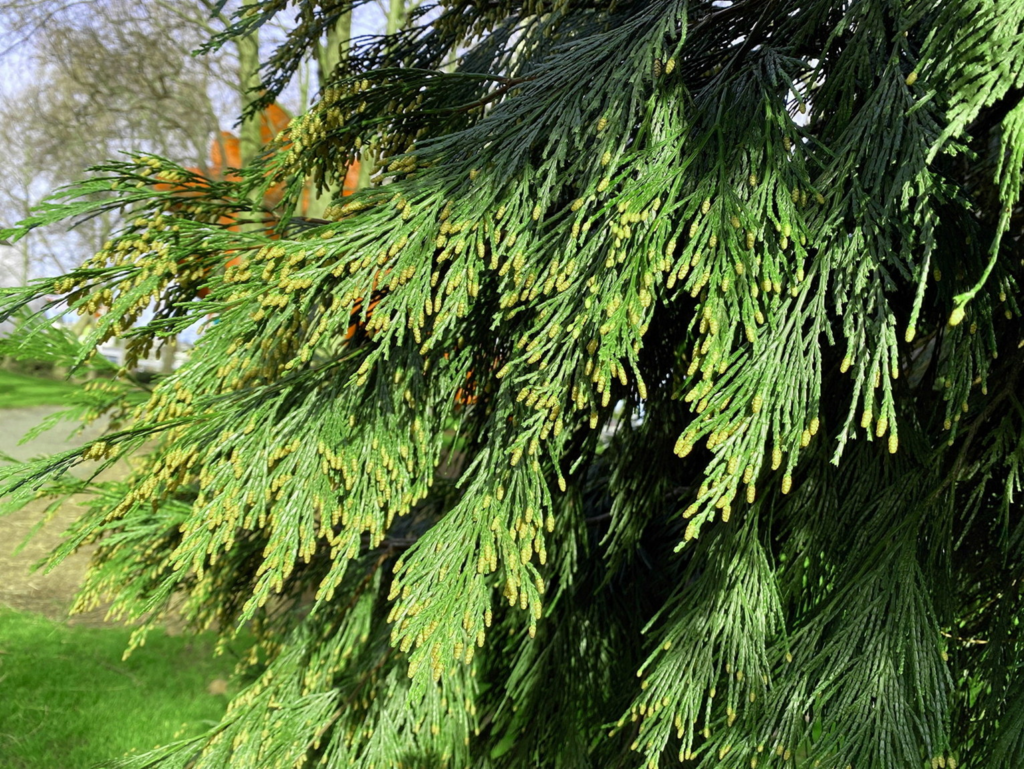
Incense Cedar foliage with distinctive flattened sprays and developing cones, a narrow evergreen well suited for privacy screening in Seattle backyards.
5. Paperbark Maple (Acer griseum)
Mature height 20 to 30 feet. Spread 15 to 25 feet. Exfoliating cinnamon and powerful autumn color. Not growing fast and very decorative without becoming fat. Seattle clay soil is adaptable and partially shady. A strong long-term feature tree for compact backyards.
6. Western Serviceberry (Amelanchier alnifolia) – Native
Mature height 15 to 25 feet. Spread 10 to 15 feet. Spring flowers, nice edible berries and great fall color. Grows under various soil conditions such as clay. Favors pollution absorbents and pollinators. It is one of the most suitable small trees in Seattle gardens under power lines and wildlife friendly.
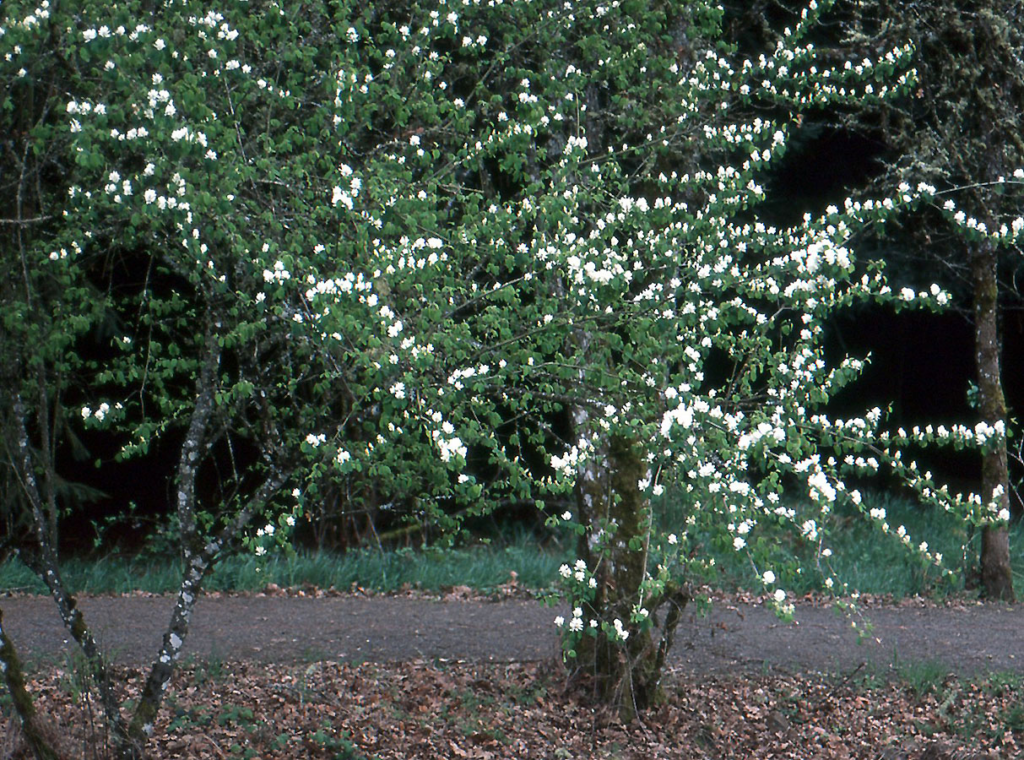
Western Serviceberry (Amelanchier alnifolia) in spring bloom, a native small tree valued for flowers, wildlife habitat, and compact urban form.
7. Coral Bark Maple (Acer palmatum ‘Sango Kaku’)
Mature height 20 to 25 feet. Spread 15 to 20 feet. Bright coral stems in winter make it stand out during Seattle’s grey months. Upright vase form fits tight yards. Performs well in Seattle’s cool climate and is suitable beneath power lines if cultivar height is verified.
8. Weeping Alaska Cedar (Chamaecyparis nootkatensis ‘Pendula’) – Native
Mature height 30 to 45 feet. Spread 6 to 10 feet. Sophisticated, slender and structural. Offers vertical privacy and foliage that is blue-green all year round and not wide thinking. Perfect to filter a certain line of sight like the window of a neighbor. Not suitable under power lines.
9. Pacific Wax Myrtle (Morella californica) – Native
Mature height 10 to 20 feet. Spread 8 to 15 feet. Strong semi-evergreen indigenous that can withstand low drainage and clay-ey soils. Dark shiny vegetation offers certain security. Underused compared to Arborvitae but more climate resilient and wildlife supportive. Power line eligible.
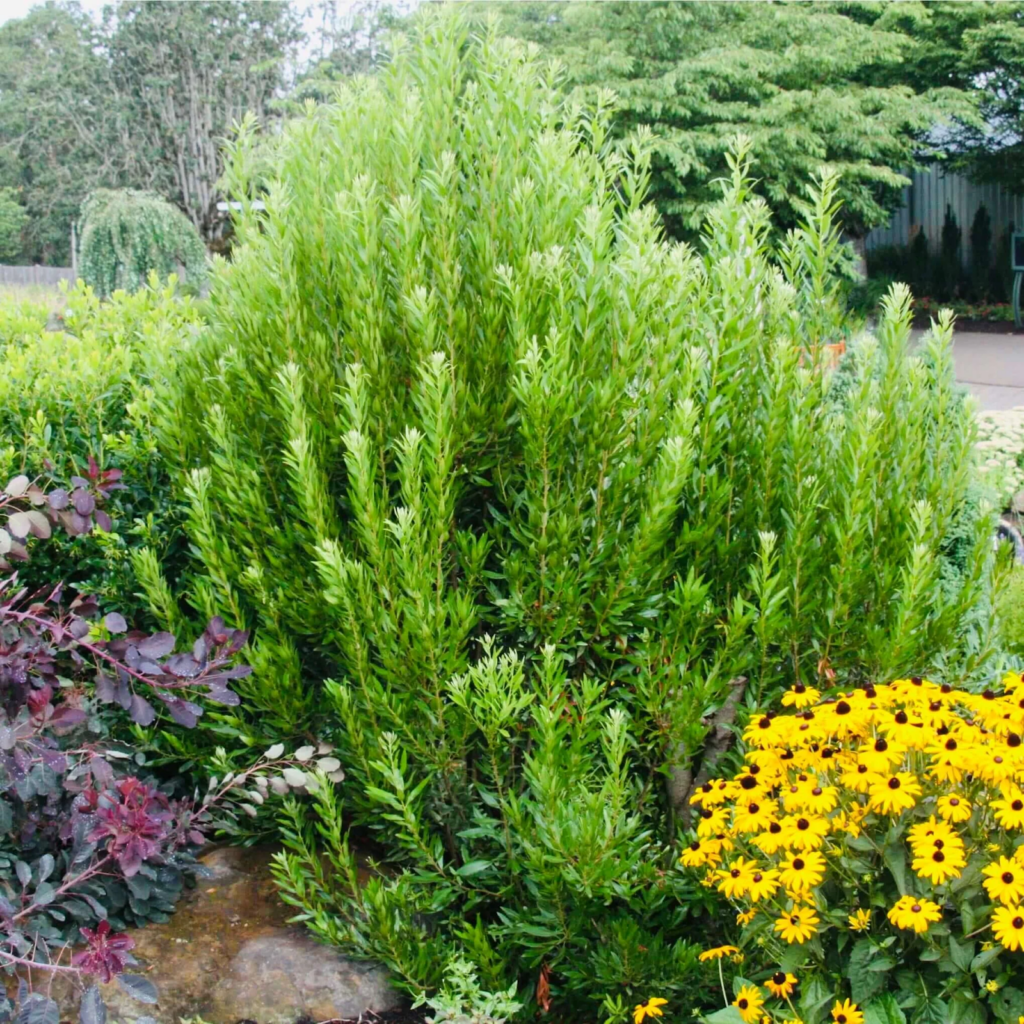
Pacific Wax Myrtle (Morella californica), a dense native evergreen ideal for year-round privacy screening in Seattle gardens.
10. Kousa Dogwood (Cornus kousa)
Mature height 15 to 30 feet. Spread 15 to 30 feet. A disease-resistant alternative to Pacific Dogwood. Flowers later in early summer and develops attractive fruit. Tolerates clay better than its native counterpart. Layered branching structure creates strong winter interest. Verify mature height for power line compliance.
Species Reference Table
| Species | Mature Height | Mature Spread | Best For |
| Japanese Maple | 10 to 25 ft | 8 to 20 ft | Patio or courtyard ornamental |
| Vine Maple | 15 to 25 ft | 15 to 20 ft | Shade tolerant native |
| Pacific Dogwood | 20 to 40 ft | 15 to 20 ft | Spring display tree |
| Incense Cedar | 30 to 50 ft | 8 to 12 ft | Narrow evergreen screen |
| Paperbark Maple | 20 to 30 ft | 15 to 25 ft | Low maintenance ornamental |
| Serviceberry | 15 to 25 ft | 10 to 15 ft | Wildlife and bloom interest |
| Coral Bark Maple | 20 to 25 ft | 15 to 20 ft | Winter color focal tree |
| Weeping Alaska Cedar | 30 to 45 ft | 6 to 10 ft | Vertical privacy accent |
| Pacific Wax Myrtle | 10 to 20 ft | 8 to 15 ft | Year round screening |
| Kousa Dogwood | 15 to 30 ft | 15 to 30 ft | Disease resistant feature tree |
Trees for Privacy Seattle: 4 Evergreen Options for Year Round Screening
Many homeowners searching for trees for privacy Seattle automatically choose Green Giant Arborvitae or Leyland Cypress. Both can exceed 50 feet. On a small urban lot, it becomes a future removal problem.
Incense Cedar – Best for Narrow Lots
This is perfect along the fence line where there is dark evergreen foliage with a narrow spread of between 8 to 12 feet. Drier than Arborvitae in summer in Seattle. Works well where the width is limited but the height is acceptable.
Pacific Wax Myrtle – Best for Wet Clay
It has thick foliage and reaches 10 to 20 feet of mature height that makes it a good screening choice on small lots. Handles Seattle clay soil better than most evergreen privacy trees. Low maintenance once established.
Weeping Alaska Cedar – Best for Vertical Accent
A narrow 6 to 10 foot spread creates a tall curtain of foliage without blocking light. Ideal for screening a specific line of sight such as a second-story window.
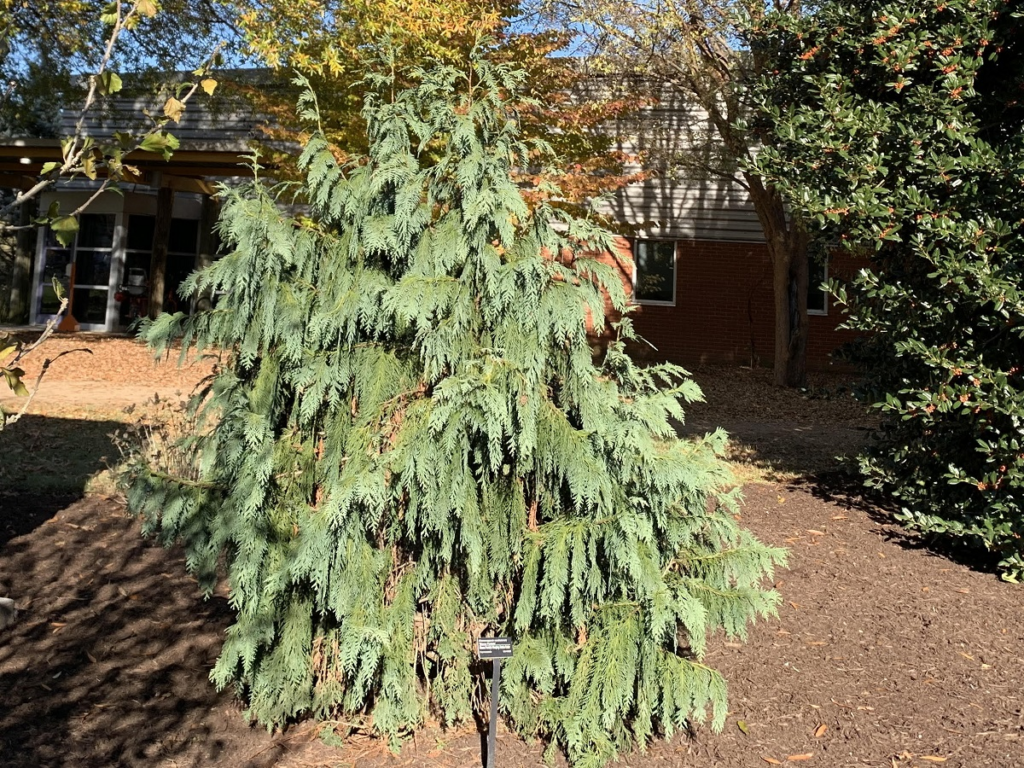
Weeping Alaska Cedar (Chamaecyparis nootkatensis ‘Pendula’) showcasing its elegant, narrow form and cascading branches in a winter landscape.
Western Red Cedar – For Larger Lots Only
Excellent native privacy tree but requires space. Can reach 50 to 70 feet. Only appropriate in case of a minimum clearance of 15 to 20 feet.
Green Giant Arborvitae, Leyland Cypress, English Laurel or English Holly should not be planted on small lots. English Laurel and English Holly are listed as invasive species in Seattle and create long-term ecological issues.
When to Plant, How to Establish, and Seattle’s Free Tree Program
In Seattle the season of fall is the most suitable to plant a tree, namely, the months of October and November. The wet cool season enables the roots to be formed before the summer drought. Spring is the second-best window. Avoid July and August planting.
The first 3 to 5 years necessitate constant watering of the new trees. Once or twice a week deep watering during summer stimulates downward growth of roots instead of keeping roots surface level. This is what makes the difference between a flourishing tree and a failing one: proper establishment. Our Tree and Plant Care Program helps in long term health of trees even after planting.
The Trees for Neighborhoods program by Seattle provides free trees, workshops, mulch and watering bags. Applications open each July. The program is more oriented toward street tree planting but the education on backyard planting is also valued.
Power lines, drainage of the soil, and code implication are the doubts that you may have. Arborist planting consultation: Seattle homeowners can answer all such doubts in one visit. Whenever it comes to planting, a consultation is always cheaper than cleaning up.
Frequently Asked Questions
What is the best time of year to plant a tree in Seattle?
October and November. Fall planting will enable the roots to develop in the cool and wet months before summer drought sets in. Also April and March are good. Planting should be avoided during mid summer because of water stress.
Can I plant a tree under power lines in Seattle?
Yes, but species that grow not more than 25 feet at all. They are mostly Japanese Maple, Vine Maple, Coral Bark Maple, Serviceberry, and Pacific Wax Myrtle. Check the height of the plant at maturity.
What trees grow well in Seattle clay soil?
Vine Maple, Pacific Wax Myrtle and Kousa Dogwood thrive in clay. Japanese Maple and Pacific Dogwood should be provided with improved drainage. A simple drainage test should be conducted at all times prior to planting.
What are the best fast growing privacy trees Seattle homeowners can use?
Watch out with rapists. Pacific Wax Myrtle offers fairly fast screening with a height of less than 20 feet. Green Giant Arborvitae and Leyland Cypress should not be placed in small lots because of their extreme size in maturity.
Do I need a permit to plant a tree in my backyard?
There is no permit needed to plant on personal land. A permit is required for planting in the public planting strip. Any tree that eventually reaches 12 inches DSH will require SDCI review before removal.
Conclusion
Planting a tree is a 30 year investment on a small lot in Seattle. Before choosing a species, power lines, utilities, soil drainage, available space and tree code implications ought to be considered.
To understand how to come up with the correct decision the first time, arrange a visit to the site of the proposed planting with an ISA Certified Arborist. The arborists at Bloomatree are operating in Seattle, Bellevue, West Seattle, Kirkland, Edmonds, Shoreline and other neighbourhoods. We will evaluate your site limits, suggest the appropriate species for your objectives and we will assist you in achieving your goal of planting with certainty before you waste money at the nursery.