
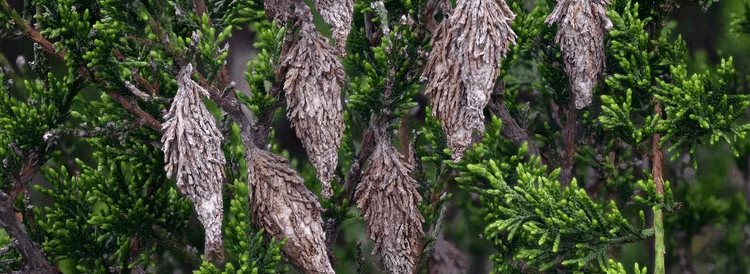
The bagworm is a stubborn pest that can attack both trees outside and indoors. They are of two species, the outdoor tree bagworms ( Thyridopteryx ephemeraeformis ) and indoor plaster bagworms ( Phereoeca uterella ). Their environments are different and hence they need different control measures.
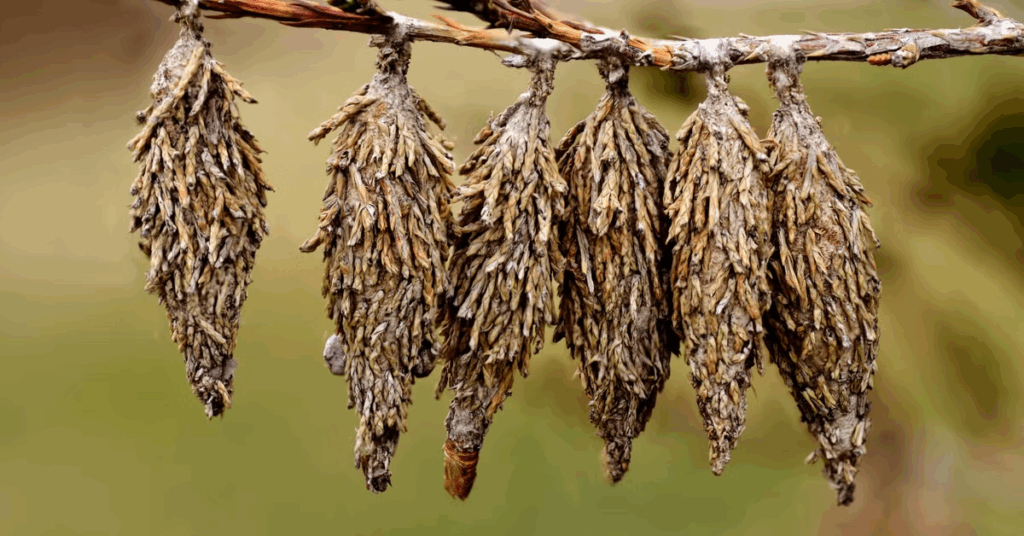
Outdoor bagworms feed on trees and plaster bagworms live in warm and humid houses where they feed on dust and spider webs.
Hand-picking is the most effective technique of controlling the outdoor bagworms, as it can be performed before late May to avoid bagworms hatching, or through the use of Bacillus thuringiensis (Bt) spray at the end of the spring months, and the application of pyrethroid insecticides such as bifenthrin at the beginning of the summer. It is possible to control the presence of indoor bagworms through vacuum cleaning, keeping the humidity below 50%, sealing the cracks, and removing garbage like lint and webs.
Quick (Bagworm Removal) Overview
Bagworms fall into two types that require entirely different approaches. Outdoor tree bagworms live on foliage and hatch in late spring, while indoor plaster bagworms hide inside homes year-round.
Control Methods by Type
| Method | Outdoor Tree Bagworms | Indoor Plaster Bagworms | Effectiveness | Cost |
| Hand-picking/Manual | Early season only (pre-May) | N/A (inaccessible) | 60-70% if complete | $0-50 DIY |
| Bt Spray (Late Spring) | Late May-June optimal | Not applicable | 80-90% young larvae | $20-50 |
| Pyrethroid Spray (Summer) | June-July timing critical | Not applicable | 70-85% active larvae | $15-45/app |
| Vacuuming | N/A (outdoor) | Highly effective primary | 70-80% active larvae | $0 DIY |
| Humidity Control | N/A | Critical prevention | 60-70% prevention | $100-300 equipment |
| Professional Treatment | $150-400 per service | $200-500 per service | 85-95% complete | $200-500 |
Why Treatment Differs So Dramatically
The outdoor tree bagworms are visible, available and susceptible within a narrow period of time throughout the season upon hatching of the larvae. Their bags protect them from later insecticide applications.
Indoor plaster bagworms, however, are hidden behind walls or in closets and breed continuously in humidity. These cannot be removed manually but are managed through cleaning and environmental control.
Outdoor Tree Bagworms – Identification & Damage Assessment
The bagworms are 1.5 to 2 inches long and they live in camouflaged silk bags constructed using twigs and other plant materials when outdoors.
They hatch at the end of May to the beginning of June, feed for approximately ten weeks and the females stay in their bags until they lay eggs, which survive the winter, up to 1,000 eggs.
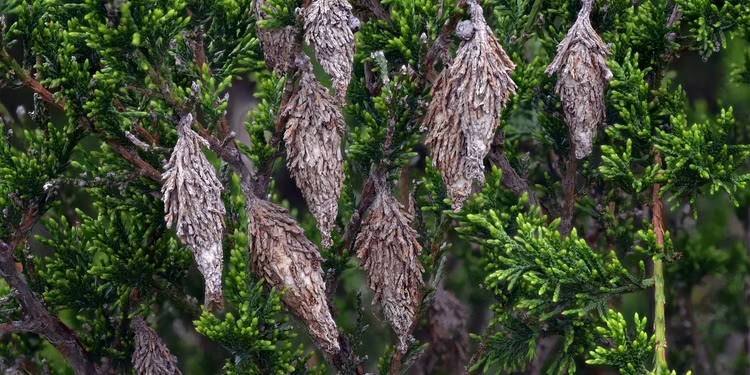
Visual Identification – Tree Bagworms
Bags are spindle-shaped and are of a brownish color; and they are suspended on branches. Larvae are black when hatched and become brown in their maturity.
In autumn the males transform into small gray moths, and the females remain without wings. Damage is manifested by fruit-colored ends of the branches, shriveled foliage and a great number of hanging bags.
Preferred Host Trees (120+ Species)
- Bagworms prefer evergreens like juniper, arborvitae, cedar, spruce, pine and fir.
- They also eat the trees that are in the form of the forest, like oak, maple, elm, birch, ash, willow and honey locust.
Damage Severity Assessment
- Light infestation (under 20 bags): minor foliage loss, hand removal is sufficient.
- Moderate infestation (20-50 bags): 25-40% defoliation, chemical treatment needed.
- Heavy infestation (50+ bags): 60-80% defoliation, urgent multi-stage treatment required.
Best Method #1 – Outdoor Bagworms: Hand-Picking (Manual Removal)
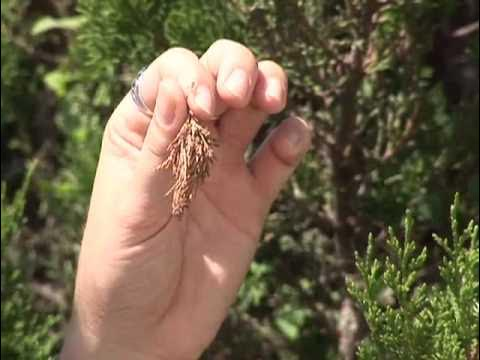
When picked before the end of May, hand-picking has up to 70% control.
The removed bags ought to be placed in soapy water to ensure that they kill the remaining eggs. Silk threads that are left in branches should be removed at all costs since they can girdle and kill twigs in the future.
Timing – Critical Success Factor
- Bags are sound and larvae are inactive making the best time to remove them during September to early May.
- Larvae are no longer enclosed in the bags after the end of May and hand-picking does not work anymore.
Hand-Picking Protocol – Step-by-Step
- Wear gloves and use pruning shears.
- Take some branches and cut off their bark and then drop them in a bucket of soapy water.
- Scrape off all the silk left on.
- Allow to not dry, keep in trash, 24 hours.
Why This Method Has Limitations
It is work-intensive and it works well prior to the hatching of larvae. Often unreachable or hidden bags will be left alive and the tall trees are always hard to remove without the help of a professional.
Best Method #2 – Outdoor Bagworms: Bt Spray (Organic Control)
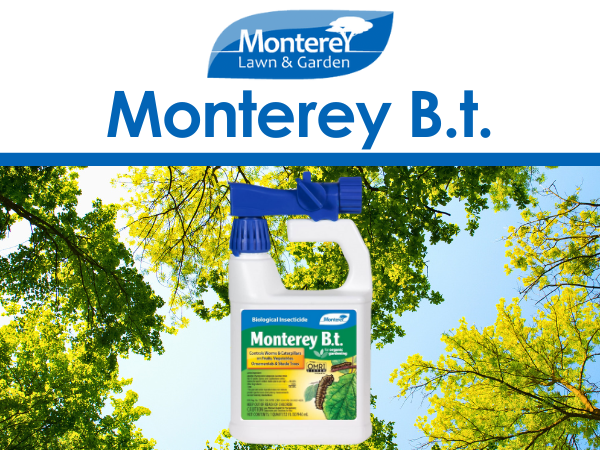
Bt spray is a biological insecticide that kills the larvae by ruining their digestive system.
It has a maximum of 90 percent efficacy in application during 2-3 days of hatch in late May or early June.
What is Bt (Bacillus thuringiensis)
Bt is an organism that is a natural harmless bacterium to humans, pets, and useful insects. It only affects the caterpillars, and it is therefore safe in organic gardening.
Bt Spray Application Protocol
Apply BT immediately after larvae hatch. Place the product in the label and spray the whole canopy and underside of the leaves and repeat every two weeks. It should not be subjected to rain for 24 hours after application.
Why Bt is Preferred by Many Homeowners
Its strengths are that it is safe, and free of residue and approved by the organic community. It has a disadvantage of timing when put too late the effect is reduced to 30-40%.
Best Method #3 – Outdoor Bagworms: Pyrethroid Insecticide (Chemical Control)
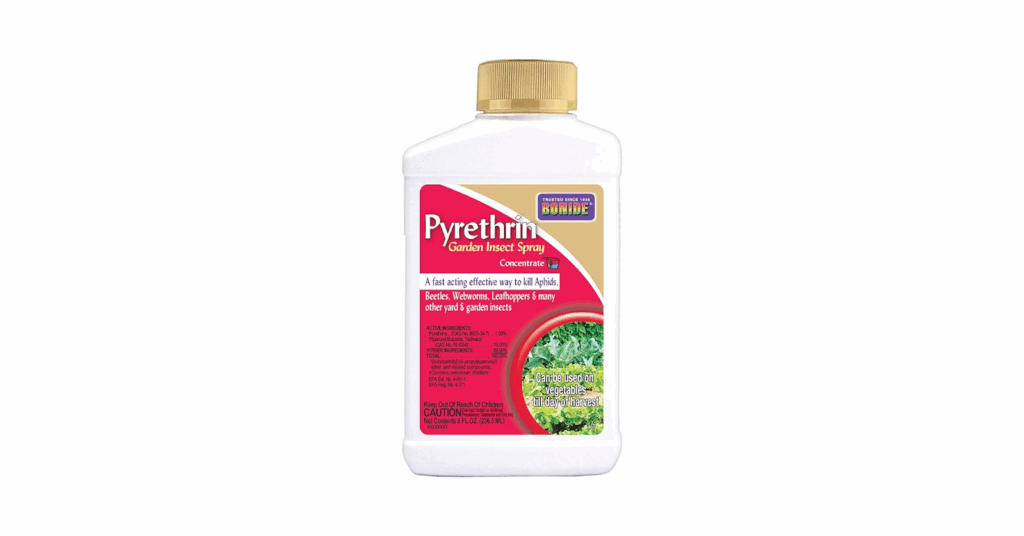
Bonide Pyrethrin Garden Insect Spray Concentrate, 8 oz Ready-to-Mix Fast Acting Insecticide for Outdoor Garden Use
Bifenthrin, cyfluthrin, and permethrin are pyrethroids which are good chemical alternatives with increased timing. Coded from late June to early July they give 70-85% control and give up to three months of residual control.
Pyrethroid vs Bt Comparison
When the Bt windows are missed or in the case of heavy infestations, then Pyrethroids are the best whereas in the case of early infestation of the organic then Bt is safe.
Pyrethroid Product Recommendations
- Bifenthrin 7.9% – most effective; 3-month residual effect.
- Cyfluthrin – professional-grade; slightly higher cost.
- Permethrin – standard consumer option, lower strength.
Application Protocol
Combine as indicated on the label, put on gloves and other protective equipment and spray foliage in still weather. Do not keep people and pets in a wet area (2-4 hours). The most effective results are two to three applications separated by every two weeks.
Indoor Plaster Bagworms – Identification & Habitat
The indoor plaster bagworm or household casebearers are smaller, and inhabit a dust and lint 0.4-0.6-inch silk case.
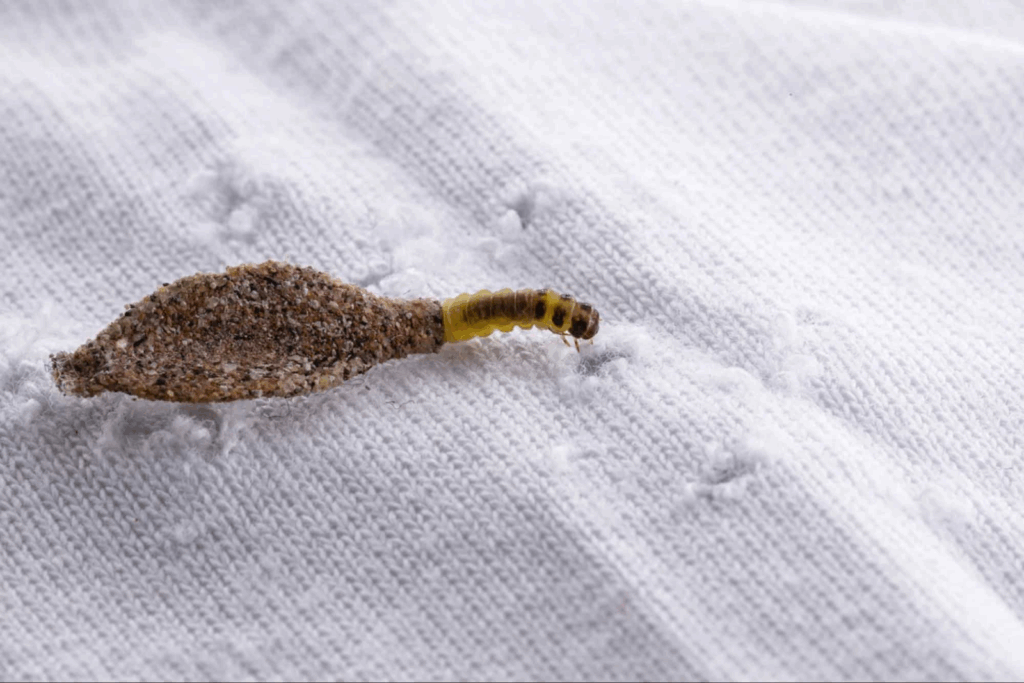
They do not damage buildings but they signify humidity and cleanliness problems.
Visual Identification – Plaster Bagworms
They appear as small gray cases on walls, ceilings, and baseboards. Movement inside may be visible. They are often mistaken for mold spots or debris.
Lifecycle – Differs Dramatically from Outdoor Bagworms
They breed multiple times a year indoors. The female lays eggs with a maximum population of 500 that hatch in a span of days. Larvae take 4-8 weeks to feed on lint and spider webs, pupate and give birth to new adults in approximately three months.
Best Method #1 – Indoor Bagworms: Environmental Control (Primary)
The primary strategy is the control of the indoor environment. Humidity should be below 50 percent and dust and webs should be eliminated to prevent reproduction.
Humidity Control Strategy
Install a dehumidifier for under 100-300 dollars in the basement, closets or the garage. Turn on air conditioning so that the air is kept cool and dry and seal leakages. Aim for 40-50% indoor humidity.
Food Source Elimination
Clean dryer vents, clean up vacuum spider web and dust weekly and do not leave fabrics in cardboard boxes. Eradication of webs denies larvae food.
Fabric/Clothing Protection
Store clothes in sealed containers and use cedar blocks to deter moths. Inspect stored fabrics regularly.
Entry Point Sealing
Block cracks of seals, windows screens and seals around pipes and vents to allow no entry of adult moths.
Best Method #2 – Indoor Bagworms: Vacuuming & Manual Removal
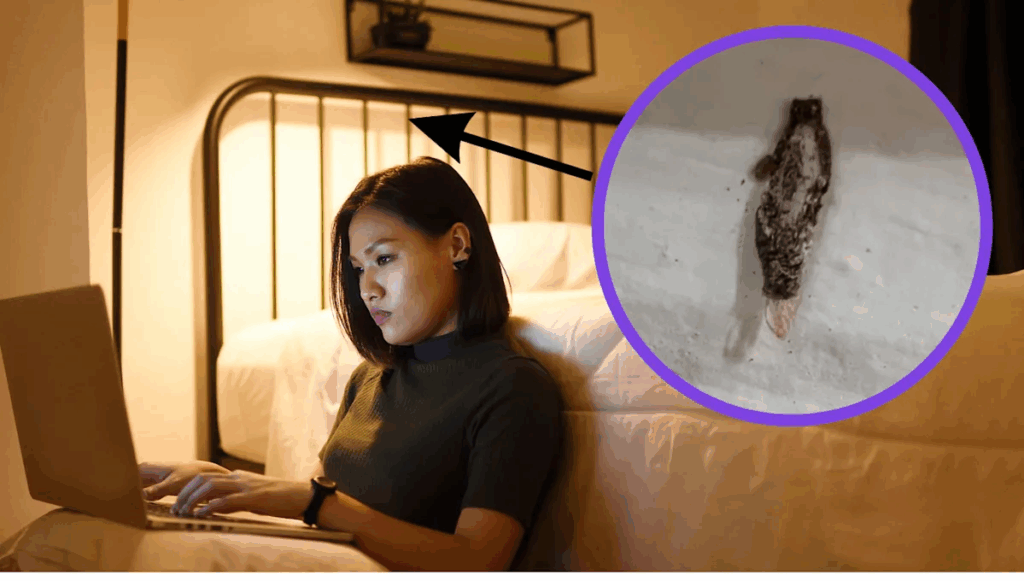
Vacuuming visible cases removes 70-80% of active populations and must be combined with cleaning.
Vacuuming Protocol
Pay attention to corners, closets and joints of the ceilings. Use a shop-vac with a HEPA filter vacuum. Do not leave the vacuum inside the bag and put it out of the house after cleaning.
Manual Case Removal
In the case of small infestations, one should cleanse the walls with a damp cloth and put away the wipe cases in a sealed bag of trash. Restrict the same points once a week.
Best Method #3 – Indoor Bagworms: Targeted Insecticide Treatment
The alternative to humidity and cleaning techniques is chemical treatment which becomes a last resort.
Sticky Trap Strategy
Adult moths can be trapped in sticky traps costing between 5 and 15 dollars to aid the monitoring of population size but it does not influence the larvae within cases.
Indoor Insecticide Sprays (Limited Effectiveness)

Ortho Bug B-Gon Insect Killer for Indoor + Perimeter with Comfort Wand
Home insect sprays only ensure a 40-50 percent success since they are unable to penetrate silk cases. In the case of the spread of infestations into more than one room, professional treatments can be required ($200- 500).
When to Call a Professional for Indoor
Use assistance in case bagworms are observed in the HVAC systems or several rooms, or the environmental control stops functioning after six weeks. Skilled workers perform extensive check-ups, use special chemicals in a non-hazardous manner, and patrol the site later.
Common Mistakes – Outdoor Bagworms
Incorrect measures in treatment are habitually followed by wasted labor, recurrence of infestation, and damage of otherwise healthy trees. The most common causes of failure in the control of outdoor bagworms include negligence of timing, failure to remove a bagworm before it is fully developed, or impractical expectations.
Mistake #1 – Late Season Application
Applying pesticides after July is ineffective mainly because larvae are already sealed inside hardened bags that resist chemical penetration. The success rate drops to about 30%, and money spent on sprays is wasted. Always plan treatment for early June when larvae are newly hatched and most vulnerable.
Mistake #2 – Incomplete Silk Removal
Leaving silk threads attached after hand-picking gradually strangles twigs and prevents future branch growth. The silk acts like a tight band, cutting circulation to the twig over several months. Constantly scrutinize attachment points and scrape them clean immediately after removing the bag to prevent long-term injury.
Mistake #3 – Bt Application Too Late
Bt only works on very young larvae actively feeding on fresh foliage. Applying it in mid-June or later drastically reduces its effectiveness to almost half its potential rate. For maximum results, observe hatch timing in late May and treat immediately while larvae are exposed and feeding.
Mistake #4 – Single Application Expecting Complete Control
One spray seldom eradicates a bagworm population because new larvae may hatch later in the same season. At least two applications spaced 2–3 weeks apart are required for 85–95% control. When Bt is applied at the beginning of June and pyrethroid is applied at the end of June, the Bt yields much greater and efficient inhibition.
Mistake #5 – Treating Severely Damaged Evergreens
After an evergreen has lost over 80 percent of the foliage there is no chance to reclaim it despite the removal of the pests. Plant early in the season when the trees still have reserves of energy, and save efforts and be careful about the protection of the neighboring healthy vegetation.
FAQs – Direct Answers to Common Questions
How do I know if mine are indoor or outdoor bagworms?
The bagworms that live outdoors measure 1.5-2 inches in length and are suspended off tree branches. The indoor plaster bagworms are minute gray cases on the wall or ceiling.
When should I spray bagworms?
Bt propagates well in late May to early June. The best time to use the pyrethroid sprays is towards the end of June or the first week of July.
Can bagworms kill trees?
Yes. Death of evergreens where foliage loss of more than 80 percent occurs is common. Pro Everything is early to be healed.
Are Bt sprays safe?
Completely. Bt causes no residue and it only acts on caterpillars.
How do I stop bagworms in my house?
Reduce humidity, dust and get rid of the webs and also have a vacuum.
How much does professional treatment cost?
The cost of outdoor service is usually 150-400 whereas indoor infestation costs 200-500 per visit.
How long does it take to eliminate bagworms?
Infestations of lights can be eliminated within one year; serious ones can take up to three years with repeated treatments.
Summary and Prevention
The bagworms can be treated by prevention and by timely treatment. In the case of out-of-doors infestations, one should remove bags in the fall and winter, spray Bt later in May, and apply pyrethroids in June or July. In the case of the indoors, control the humidity, clean the surfaces and close openings.
Prevention can be achieved by checking trees every spring, keeping the foliage healthy and checking the humidity in the houses. Most of the infestations can be eradicated in a period of one to two years with a constant approach and the potential of a recurrence can be prevented.