You see a piece of bark taken away from your tree, and your stomach falls. The loss of bark appears dramatic, and it is even urgent since the protective layer of the tree is lost abruptly. The positive side is that most trees survive the damage to the bark, particularly when the damage is addressed in good time.
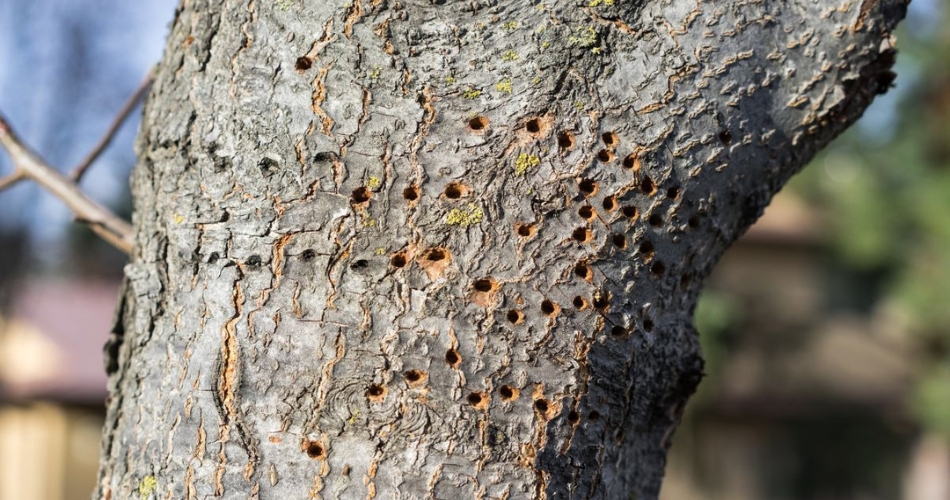
Rows of small round holes created by woodpeckers feeding on the tree’s sap.
This manual describes the functions of the bark, the importance of the damage, and identifies the most typical reasons. You will also be educated on the measures you can take at home and when to seek the services of an expert. It has been found that trees can live despite losing 25% of the amount of their bark and this can be a source of relief even during stressful situations.
Understanding Tree Bark: Why It Matters
What Bark Actually Does
The bark of trees acts as a shield against pests, disease and bodily harm. It has the phloem and cambium layers underneath it which carry leaf nutrients down to the roots. These layers also control moisture and aid in the balance of water in the tree. With the presence of the bark, the whole system works well.
Why Bark Damage Is Serious
The inner layers when stripped of the bark are left exposed. This interferes with the movement of nutrients and paves the way for insects and pathogens. Even minor injuries may interfere with the circulation, and this is why it is important to act as soon as possible.
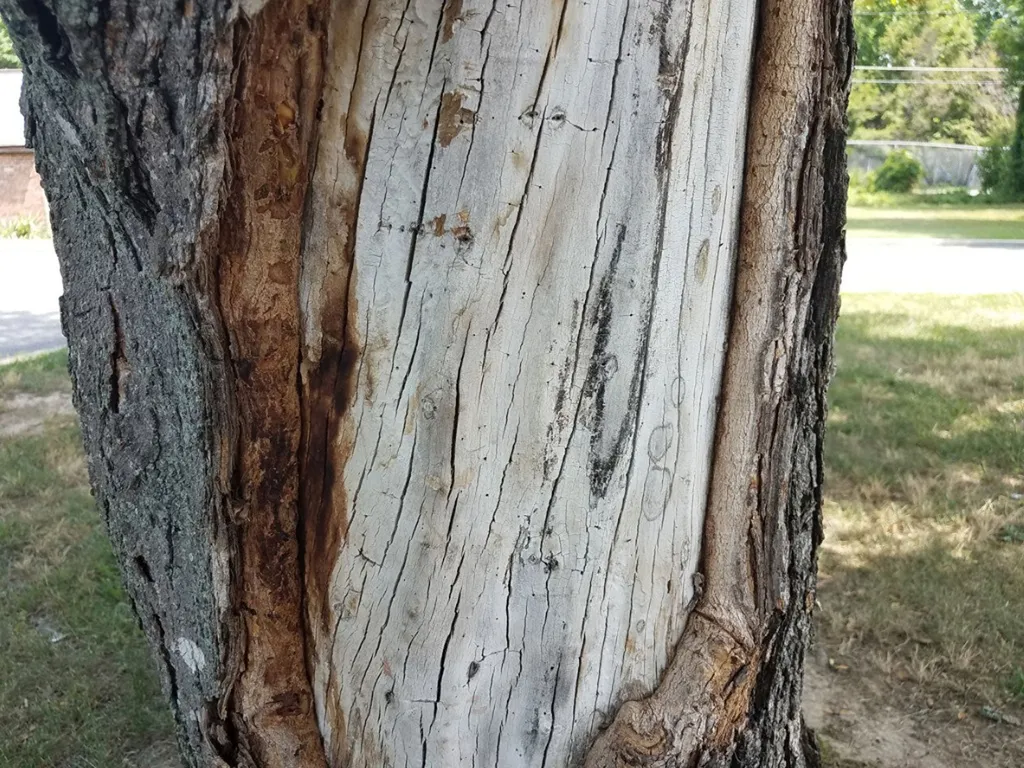
Visible bark damage exposes the inner wood, signaling potential decay and weakening in the tree.
How Trees Heal Bark Loss
Bark does not grow back on the tree as a human being heals the skin. As an alternative, they develop callus tissue, which gradually closes and fills up the wound.
This is a natural process that is also referred to as CODIT and is used to isolate damage and avoid the spread of decay. Depending on the size of the wound, the healing process may take months or even years.
Common Causes of Tree Bark Damage
Animal Damage (Primary Focus)
Deer Damage
Deers frequently rub their antlers on seedlings to strip them of velvet. This produces vertical strips on trunks, most of them ranging between 2 and 6 feet high. Such trees with thin barks, such as birch, redbud and most fruit varieties are particularly susceptible.
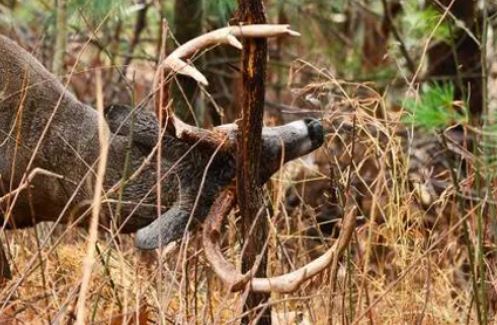
A deer uses its antlers to rub against a tree, causing damage to the bark and potentially harming the tree.
Rabbit Damage
Rabbits feed on bark in the wintertime when they can’t find food. They make velvety cuts of 18-20 inches of the ground. Their bites may entirely encircle a trunk posing a high threat of girdling.
Rodents (Mice, Voles)
The rodents chew through the bark below the mulch or snow and the damage is usually not noticed. They have small and regular bite marks and could also work all around the trunk.
Squirrels
To nest or reach sap, squirrels at times strip the bark away. This normally happens in a branch or a higher point of the trunk and is usually restricted yet can still be felt.
Other Causes of Damage
Mechanical injury is very widespread. Lawn mowers and weed trimmers scrape the bark at the root of the trunk. Better impacts can be made by vehicles or construction equipment.
The weather may also contribute to it and the visible wounds include storms, frost cracks, and sunscald. The man also plays his role when there are ropes, chains, and tree ties that are left around the tree trunks.
Quick Identification Tips
The place of the wound is a great deal of an indication as to the cause. Destruction of the base area is usually directed at rabbits, rodents or equipment.
More severe destruction implies deer or squirrels. The time of year is also a good clue: injuries in winter would be associated to animals or frost, whereas injuries in spring would be due to squirrels or storms.
The form and pattern of the wound, whether shredded and clean-cut, or smooth, may be used to reduce the source fast.
Assessing the Damage: Can Your Tree Be Saved?
How Much Bark Is Missing?
The quantity of the bark lost is crucial to survival. When missing less than 25% the probability of survival with minimum intervention in the tree is high.
The loss of 25-50% is treatable and the tree can recuperate with proper care. In the case when 50-75% is absent, then professional guidance is required to determine survival.
Bridge grafting can be needed in 75%. In case of 100% loss, immediate transplantation will save a life.
Depth of the Wound
One of the significant factors is the depth of the wound. The outer bark is not damaged so severely and can regenerate itself.
Nevertheless, once the damage goes to the layer of the cambium, which moves nutrients, survival becomes more dangerous and it might require professional assistance. In case sapwood has been damaged, then prompt treatment is required to save the life of the tree.
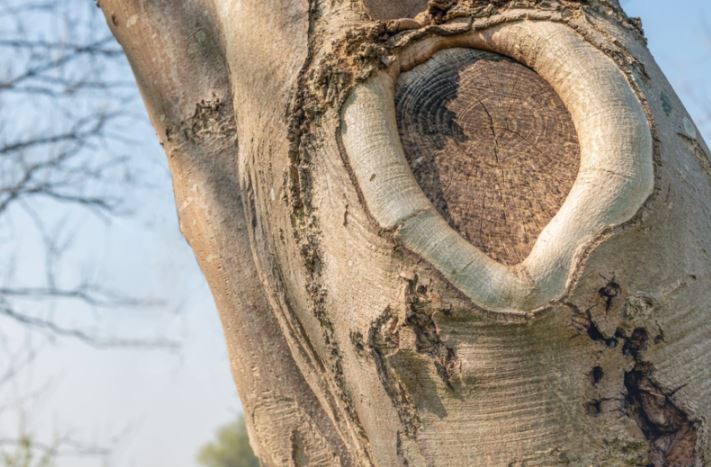
A tree shows a distinctive wound where bark has been stripped, revealing the inner wood.
Location of the Damage
It is also important where the damage is made. The root flare and the trunk base are very important in the stability of the tree and the flow of nutrients.
Injury in this case may have serious implications on recovery. Damage greater on the trunk or to the branches is not so important, yet it needs to be addressed to avoid additional damage and illness.
Tree Species and Health Condition
The recovery can be influenced by the species of the tree and its health. Stressed trees do not survive as well as healthy trees do.
Older trees take longer to heal and young trees are likely to take shorter durations to recover. Birch or fruit trees have thin-barked species; therefore, they are more susceptible to damage and can be in need of additional care.
Time Since Injury
The timing is an issue in recovery assessment. New damage that takes place in a few hours or days has the highest chances of recovery.
Older damage, which took weeks or months, might already be sealed or decayed and have minimal possibility of healing successfully, hence possible professional assistance.
DIY or Call a Professional?
The solution is whether to repair it or not, and this depends on the severity of the damage. For small damages (less than 25% and fresh), one can use DIY repair. Nonetheless, in cases of damage of more than 50, or in cases where the injury is done to sensitive parts such as the trunk base, professional arborists must be involved to ensure that they are well treated.
Basic Bark Repair: Treating Minor to Moderate Damage
Immediate First Aid (First 24–48 Hours)
Start with a safety check. Check around the tree, looking out for such things as power lines or loose branches. Wash the wound with the removal of dirt and debris, without the use of chemicals. It is only necessary to remove loose dead bark on the wound to prevent further injury.
Bark Tracing Technique
Bark tracing is aimed at making the joins of the wound smooth to get it to seal. Round and smooth edges, without sharp angles, should be made with a sharp knife.
Not the wood but the bark only cut. The method is used to ensure that the tree does not tear further and heals appropriately.
Why You Should Not Use Sealants or Wraps
The sealants prevent moisture evaporation, which enhances fungus and decay. They disrupt the natural healing process of the tree known as CODIT which involves open wounds as a way of compartmentalising damage. Leaving the wound open to the air and sun is the optimal way of healing the wound.
Protection After Repair
As a way of safeguarding the tree, animal guards such as mesh or hardware cloth can be used around the tree trunk to avoid future damage.
Mulch rings are used to avoid mower damage though the mulch should be distanced at least 6 inches off the trunk to avoid moisture build-up.
Supporting Tree Recovery
Helping the tree to recuperate by watering tremendously and frequently, particularly during dry seasons. Use light and balanced fertilizer to increase the health of the tree.
Observations of the wound should be conducted frequently to determine whether it is growing or developing a problem. The recovery process is not the same: small wounds can take 1-2 years, whereas bigger wounds can need 3-5 years.
Advanced Repair: Bridge Grafting for Severe Girdling
The most important method of restoring the nutrient flow in trees with serious cases of bark damage is through bridge grafting. It is also known as bypass surgery of the trees, which involves rejoining of the phloem that moves nutrients when 75-100% of the bark is pruned, usually on fresh wounds of otherwise healthy trees. The process assists the tree in recuperating and coming back to normal operation.
The success of timing is important. Early spring when the bark is most readily slipped, should be the time of grafting. Healthy scion wood is to be used in the same tree to make sure that they match. Grafting and removal of nutrients are impossible without proper alignment of the cambium layers (the tissue between the wood and the bark).
Scions, sharp grafting knives, little nails, and grafting wax will be required in the procedure. The scions are to be taken at the dormant time of year of the tree, and cut into a shape of a wedge, lengths of about 3- 4 inches more than the height of the wound. The scions are fixed with the nails and the grafts are bound using grafting wax.
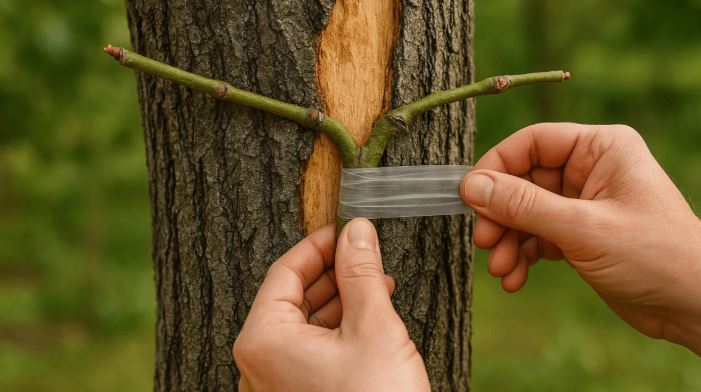
Tree grafting in action, where scions are carefully secured to promote healing and regrowth.
Step-by-Step Bridge Grafting Procedure
To begin with, find healthy scion wood in the dormant period, but the branches of the scion wood used should resemble the thickness of the wound.
Then cut the ends of the scions in the form of wedges. The next step is to do two parallel incisions above and below the wound to form spaces for the scions.
Plant the scions leaving a distance of 3-4 inches apart, making sure that the layers of the cambium are in their right place. Attach scions using little nails and cover the grafts using grafting wax to ensure that they do not dry up.
Aftercare and Monitoring
Aftercare is essential to the healing of grafts. To water the tree often and particularly in dry seasons, and cut off any shoots of the scions in order to concentrate energy on healing.
Monitor the grafts every week to ensure that healing is taking place, e.g. callus formation. Grafts are normally matured after 3-6 weeks although full grafting may endure the entire growing season.
Special Cases: Different Damage Types
Deer destruction leads to torn vertical wounds of bucks rubbing their antlers. To mend, brush the jagged sides and draw on the tracing in the form of bark. Injuries that are less than half can recuperate on their own, whereas in severe cases, grafting may be required.
Complete girdling can be due to rabbit damage, which mostly takes place in winter. Bark tracing works with minor traces of less than 25% and bridge grafting is needed when the tree has damage of more than 50%.
The damage of rodents under mulch may be massive. Clean up the mulch so as to have a complete evaluation of the damage. In case there is an influence on the cambium layer, it should be immediately treated to avoid deterioration.
During extreme temperatures, frost cracks and sunscald can take place. Wipe cracks neatly, do not over-cut. To avoid future problems, wrap the tree during winter with a white tree wrap so that it is not exposed to cold and sunlight.
Old or mended damage must be left to rest. In case the wound has healed, the wound requires no additional treatment, but watch out in case of any emerging complications.
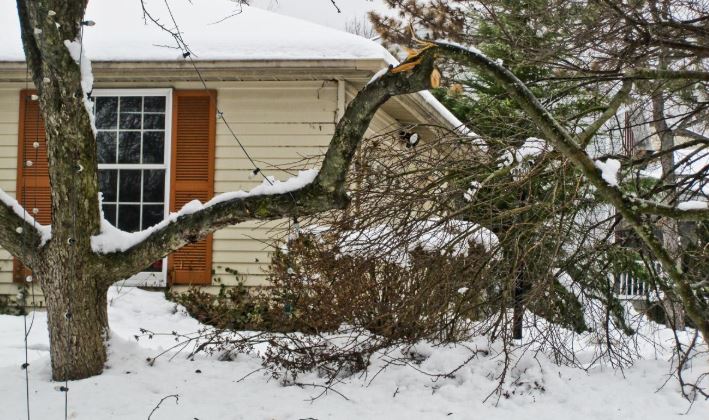
Snow accumulation causes a broken branch on a tree, posing potential hazards to property and safety.
Long-Term Monitoring and Care After Repair
During the initial year of repairs, they should be monitored. The new growth and pests should be checked on the wound on a weekly basis. The foliage and the canopy should be tested every month to determine whether there is any stress or ill health.
The outcome of successful healing is determined by the presence of callus tissue on the wound and a normal leaf flush. Monitor the signs of decline, including dieback, yellowing of the leaves, peeling of the bark, or fungal growth, as this can be an indicator that the tree requires additional maintenance.
It can be taken care of through frequent watering and light fertilization to help it grow. Check on pests, in particular, borers and deal with them as and when they arise. To ensure that the damage is not further, keeping of the animal guards is important.
Prevention: Protecting Trees From Bark Damage
Preventing Animal Damage
Place mesh guards on tree trunks to avoid damage by deer, rabbits and rodents. Larger animals can be scared by fencing and rodents and squirrels can be kept off with commercial repellents.
Though these will need the repellents to be reapplied after it rains. Mulch should be spaced properly at least 6 inches away to avoid any possibility of animal interference and destruction.
Preventing Mechanical Damage
Place mulch rings around trees to avoid damage by mowers and trimmers. Keep trees which are not to be affected by construction guarded by fencing the root zone to avoid being damaged accidentally by the equipment and foot traffic.
Seasonal Winter Protection
During winter, the trees with thin bark are susceptible to frost cracks and sunscald. Put on tree wraps towards the end of fall to protect them against extreme temperatures. Take off the wraps during early spring to prevent the accumulation of moisture, which may further affect or cause diseases.
When to Call a Professional Arborist
Sometimes, professional arborists are essential. As soon as more than half the bark is stripped off, or the tree is girdled, immediate knowledge is called upon. Professional assessment is also required in structural cracks or root-flare injuries and damage to large or high-value trees particularly when they are close to structures or power lines.
Arborist testing finds its use when it is not exactly clear how badly the damage was caused, or when the tree presents some signs of ill health, i.e. dieback or illness. In case several trees are felled, or a grafting of bridges is necessary, it is well to have an expert consulted.
Registered arborists are also capable of providing important skills in survival analysis and repair skills. They offer species-specific services and safe assessment around structures, power lines, and reduce the risk in the process.