The Pacific Northwest staple is Red Alder (Alnus rubra) an ecologically valuable tree that is beautiful. Red Alder is a very rich history with a variety of uses as well as an important tree due to its ability to fix nitrogen and its presence in forests. This paper will give a detailed introduction to all that you need to know about this wonderful species, including identification, care, growth and the ecological value of this species.
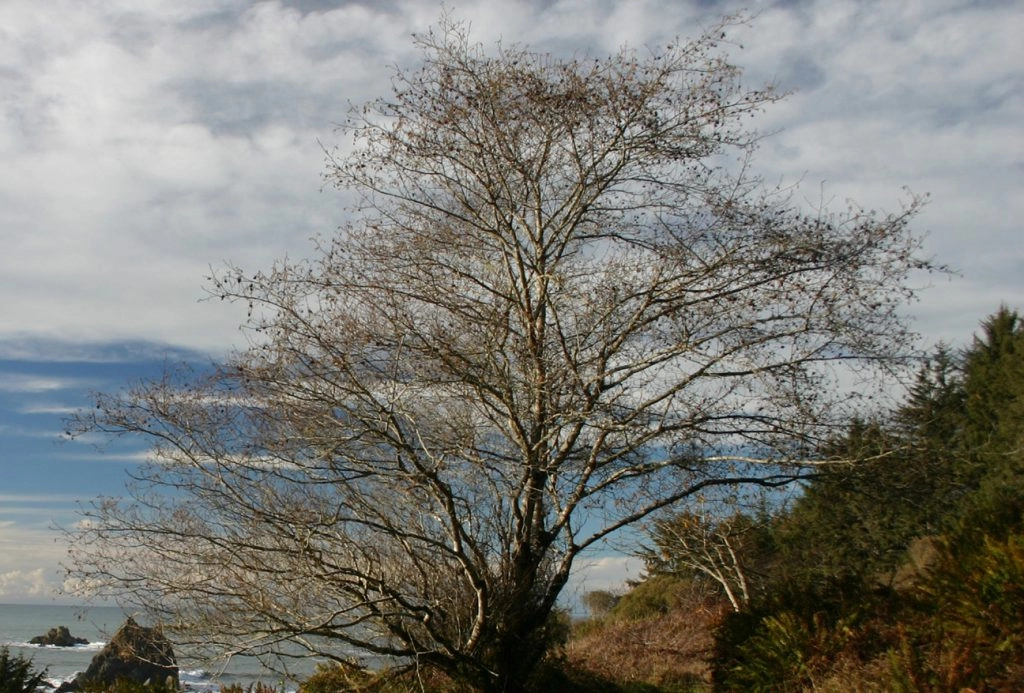
A mature Red Alder tree, showing its distinctive bark and skeletal structure during the dormant season
What Is Red Alder (Alnus rubra)? Species Overview & Identification
Red Alder (also called Oregon Alder, Western Alder or Pacific Coast Alder) is a native, Pacific Northwest, tree aka a deciduous tree. It is a species that grows in wet conditions usually close to rivers, floodplains, and beaches. The Red Alder is named so because the wood is rusty in color when its wood is cut or bruised, unlike other species of alder.
Identification Features
- Leaves: Red Alder leaves are dark green in color and ovate shaped with an underside that is slightly rusty and has hairy leaves. They are short, toothed, sharp at each end, and between 2-6 inches long.
- Bark: The bark is fine, smooth, stippled with ashy -whitish gray to green moss and patches of white lichen.
- Catkins: Red Alder has long male catkins which are reddish-orange or chartreuse-brown, seen before the leaves in early spring. The catkins on the female branch become woody cones which last over the winter season.
- Key Identifier: The most distinguishing characteristic of Red Alder is that the margin of the leaf is revolute in nature – the edges curve under, which is not characteristic of other species of alder.
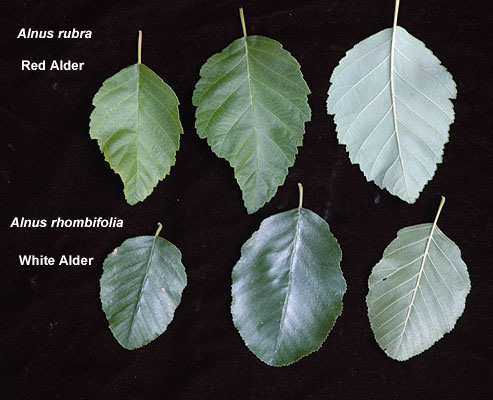
Comparison of Red Alder (Alnus rubra) and White Alder (Alnus rhombifolia) leaves, highlighting key differences in shape and texture.
Red Alder is normally used to a height of 40-80 feet and under the best of conditions trees can grow up to 130 feet tall. The diameter of the trunk may be 10-34 inches. Red Alder possesses a typical leaf margin to other species of alder and usually occurs in the coastal areas, unlike White Alder and Sitka Alder.
Red Alder Growth Rate & Lifespan: How Fast It Grows and How Long It Lives
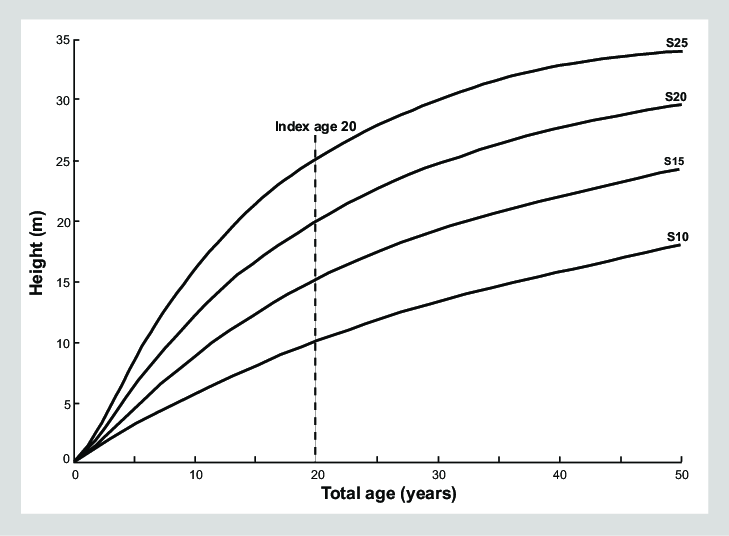
Red Alder height-growth curves illustrating growth patterns based on site quality and age, relevant for planting and care guidelines.
Red Alder is a hardwood tree that grows very fast thus it is an ideal choice in restoration and land management projects in North America. The trees of Young Red Alder can attain a height of 65 feet in their second year of growth and the tree can attain the height of 3 feet during the first year of plantation.
Growth Rate
- Seedlings: Around 3 feet in the first year.
- Saplings (2–5 years): Can grow 10+ feet per year.
The following growth chart is a chart of Red Alder in Puget Sound according to the data of USDA:
| Age (Years) | Height (Feet) |
| 5 | 18 |
| 10 | 40 |
| 20 | 65 |
| 30 | 82 |
| 50 | 98 |
| 60 | 105 |
Lifespan
Red Alder has a typical life span of about 60-100 years although its growth reduces after 20-25 years.
Rot of the heart (Phellinus igniarius) is the primary cause of any shortening of life, but occurs in a major way after the ages of 50-60.
The Red Alder is a pioneer species; it grows rapidly to cover a disrupted region and provide nutrients to the soil and eventually yield to other species like the Western Hemlock and Sitka Spruce near the end of their lifespan.
Red Alder Range & Natural Habitat: Where It Grows and Why
Alnus rubra is a native of the Pacific Northwest, growing in the west coast of North America, beginning at Southeast Alaska to central California. It is located in coastal areas particularly the wet forests, riparian and floodplains where it exploits the perpetual moisture and the well-draining soils.
Preferred Habitat
Soil: Red Alder likes well-drained soils of light texture although it can withstand temporary wet conditions.
Moisture: This species of plant should have the frequency of moisture per day and therefore it cannot be suitably grown in dry or drought prone areas.
Height: Red Alder grows at sea level up to about 3,000 feet (900 meters) though it does not do well particularly above 1,100 meters.
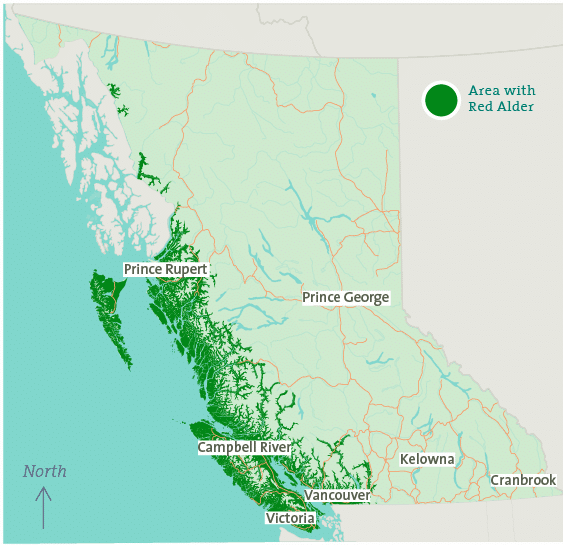
Geographic distribution of Red Alder (Alnus rubra) in the Pacific Northwest, highlighting key areas where it thrives.
Red Alder is very important in the enrichment of soils as it fixes nitrogen that is present in the atmosphere; it has this in common with legumes. It is among the few commercial-scale tree species in the Pacific Northwest, which is able to fix nitrogen.
This ability can be used to increase the fertility of soil particularly in disturbed soils like those in logging, flood and landslides areas. Through enhancing soil fertility, Red Alder provides a better environment, in which future growth of plants and forests will flourish, especially conifers which will develop later after Red Alder.
This fixation of nitrogen also contributes to the ecological reconstruction of the damaged places and Red Alder is a useful species in restoring the forests.
Red Alder Nitrogen Fixation: How It Works and Why It Matters
Among the most outstanding characteristics of Red Alder (Alnus rubra) is the fact that it is able to fix atmospheric nitrogen by developing a symbiotic association with Frankia bacteria. The process is very crucial in soil enrichment of the soil and Red Alder is therefore a much needed species in ecological restoration.
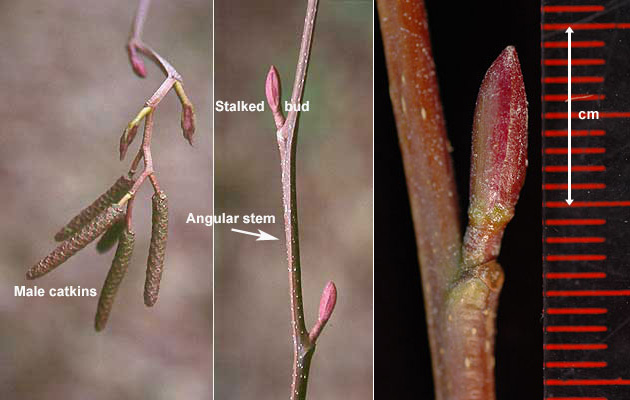
Close-up of Red Alder’s male catkins, angular stem, and stalked buds, showcasing key identification features for accurate species recognition.
The Nitrogen Fixation Process
The Frankia bacteria inhabit the root nodules of Red Alder, where they fix atmospheric nitrogen (N₂) into nitrogen compounds that the tree utilizes to grow. This is referred to as nitrogen fixation and has great ecologic advantages. It also makes the surrounding soil rich in nitrogen and thus gives it a better chance to grow other plants.
The nitrogen-fixation capacity of RedAlder finds application in regeneration of forests especially. The death of Red Alder trees leaves the enriched soil to sustain the new plant growth and is beneficial in the long run to the plant communities of the future and increases biodiversity. This is particularly essential in disturbed regions, where Red Alder assists in rebuilding the ecosystem to make the soil ready to grow the future generation of trees and plants.
Red Alder Diseases: Heart Rot, Canker, and Phytophthora
Although Red Alder is not very vulnerable to numerous illnesses, there are a few diseases that it can be vulnerable to especially in old trees. Of these the most prominent is heart rot, which is brought about by the fungus species Phellinus igniarius, and which undermines the tree, as it were, internally.
Common Diseases
Red Alder (Alnus rubra) is also prone to a number of diseases especially when it is old. Here are the most common:
- Heart Rot (Phellinus igniarius): This fungus causes the most structural failures in trees of Red Alder which are mature. It kills the heartwood making the internal structure of the tree weak and prone to wind and storm damages. As time goes by the rot gets further and the chances of collapsing or breaking becomes higher, particularly on the older trees.
- Canker Diseases: Fungi caused like Didymosphaeria oregonensis are targeted at the tree stem resulting in sunken or cracked bark which in turn can result in structural weakness. The cankers are eventually able to girdle the branches, limiting nutrient flow and undermining the overall health of the tree and in most cases may cause dieback in the affected regions.
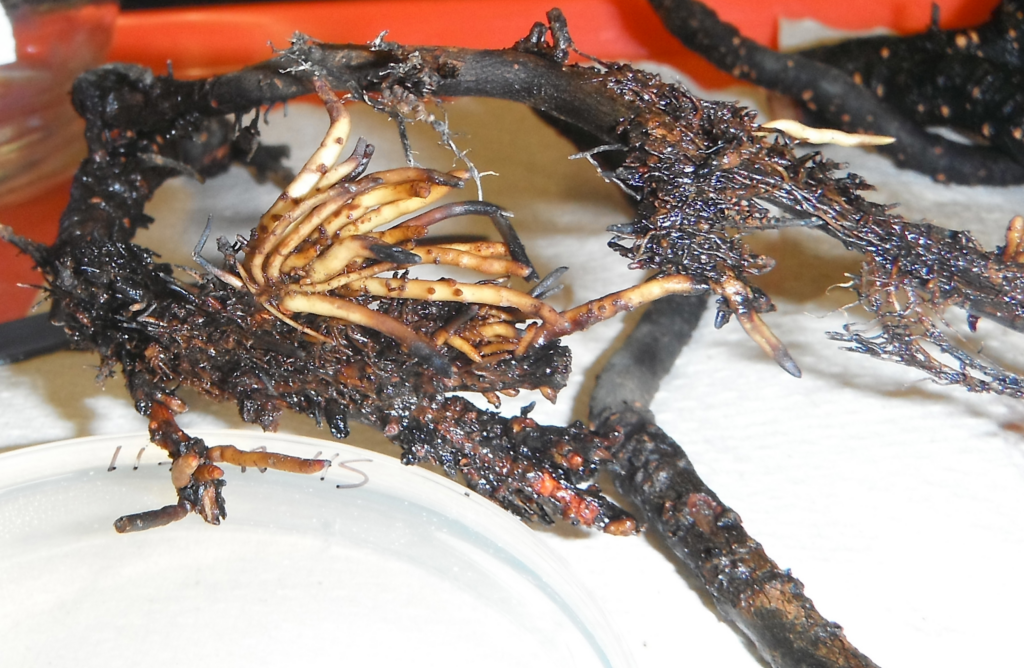
Phytophthora root rot in Red Alder, showing necrotic, dark-coloured roots infected by the pathogen, leading to crown decline and dieback.
Phytophthora Root Rot: It is a soil borne organism that causes decline in crowns, root withering and the death of trees. It is also gaining or becoming more because of the changing climatic conditions, especially in regions that are more humid and warmer. The pathogen destroys the roots and limits the uptake of water and nutrients and ultimately causes the decline of the tree.
It is also necessary to detect these diseases at the earliest stage possible. Property owners and forest managers can be made to take positive measures to save the Red Alder trees and ensure that they are well taken care of and that they are not lost. When the intervention is done very early, it will be possible to prevent the serious damage and prolong the life of the tree.
Red Alder Pests & Insects: What Attacks It and What Doesn’t
In spite of the relatively high pest resistance of Red Alder, some insects and pests may inflict some damage to it. Most of these pests however do not do much damage to healthy trees and the impact of most of them is cosmetic.
Common Pests
Red Alder (Alnus rubra) as a rule is not susceptible to pests, but some insects may cause harm, but it is hardly fatal.
- Tent Caterpillars ( Malacosoma spp.): These are caterpillars that defoliate Red Alder trees especially during spring. They could bear defoliation but the damage is hardly serious and within the same growing season trees normally regenerate.
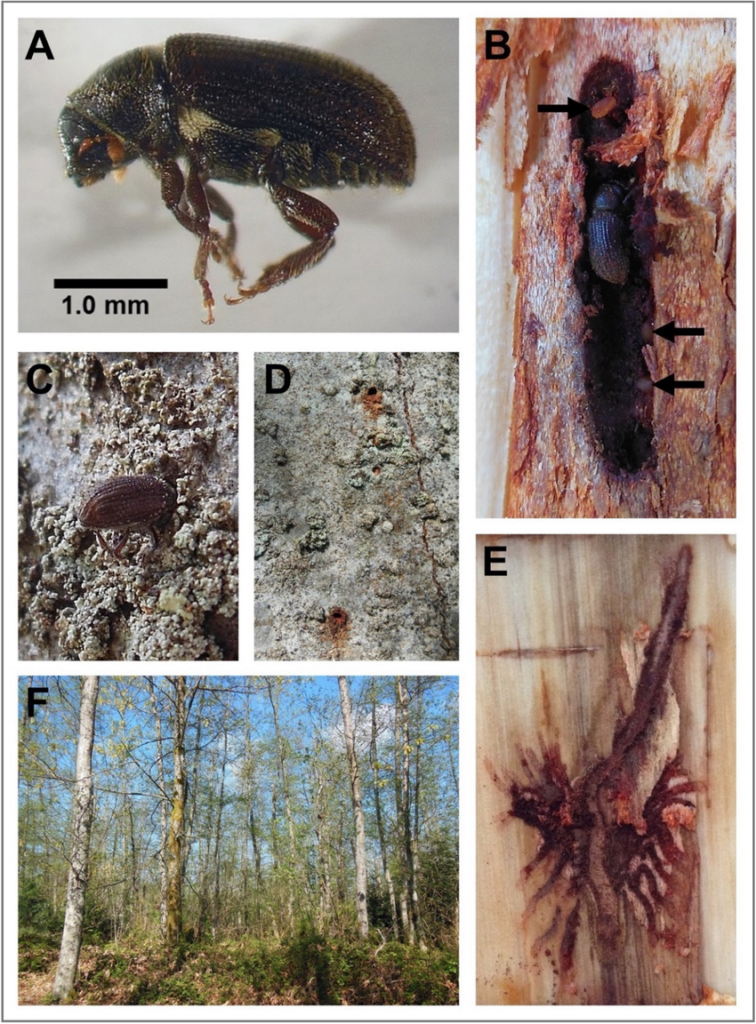
Alder Bark Beetle showcasing the beetle itself (A), its damage on the bark (B, D, E), and the resulting injury marks on Red Alder trees (C, F).
- Alder Bark Beetles: These are beetles that attack trees with weakened bark or damaged trees and feed on their bark and leave a distinctive frass. They do not have much effect, but in case the tree is already stressed, their effect can be quite significant.
- Alder Flea Beetle: This species of beetles leave small holes on the leaves, which aesthetically damage it but do not cause permanent damage to the tree.
- Woolly Alder Aphid: These aphids secrete honeydew and this attracts sooty mould. Although they are not pleasant to the eye, they do not usually cause much harm to the health of the tree.
Red Alder Wildlife Value: Birds, Mammals, and Insects It Supports
Red Alder is a very vital component of the ecosystem with a broad support of numerous wildlife species. The tree gives shelter, food and a home to various creatures, such as birds to mammals.
Wildlife Benefits
One of the trees that is significant in the forest ecosystems is the Red Alder ( Alnus rubra ).
- Birds: Red Alder seeds and catkins are an important food source to most of the bird species, such as redpoll and siskins, and mallards. These birds are dependants on the seeds of the tree especially during winter when there is a shortage of food.
- Cavity Nester: This is because the Red Alder is a critical habitat of woodpeckers, owls, and other cavity nesting birds as the tree grows old. The heart rot which frequently forms in the elder trees provides the most ideal nesting places which are resorted to by all kinds of birds to nest in and rear up their young.
- Beavers: Red Alder Beavers are major consumers and construction material. Beavers also use the tree as a source of food (bark) as well as the dams and lodges on waterways so they also benefit the ecosystem by forming wetlands.
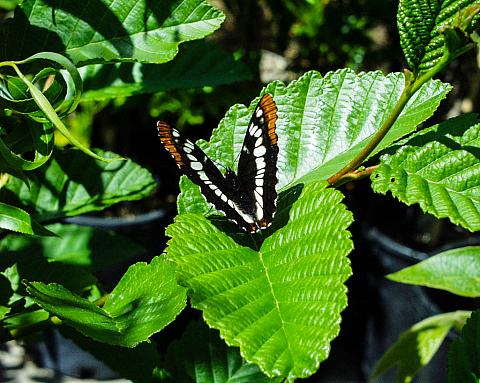
Red Alder with a butterfly perched on its leaves, highlighting the tree’s role in sustaining biodiversity
Insects: Red Alder is the habitat of a high diversity of caterpillar species, which form an important source of food to insectivorous birds. The tree has some 255 species of caterpillars recorded, which is significant to support the whole insectivorous bird food web.
With these very important roles, Red Alder is capable of sustaining the health and stability of the larger ecosystem, which sustains a large number of wildlife.
Red Alder Wood: Properties, Uses, and Why It’s the PNW’s Most Important Hardwood
The wood of the Red Alder is of a good kind, and there is a great variety of application to which it is applied. The wood has very specific characteristics that are special in furniture, musical instruments, and various other industries.
Wood Properties:
Alnus rubra, also known as Red Alder, is a wood material that has unique wood qualities and is thus used in numerous applications.
Look A young cut of the wood is a rich rusty red, but dries off to a light tan. This color alteration makes it have a distinctive appearance particularly in the works of woodworking.
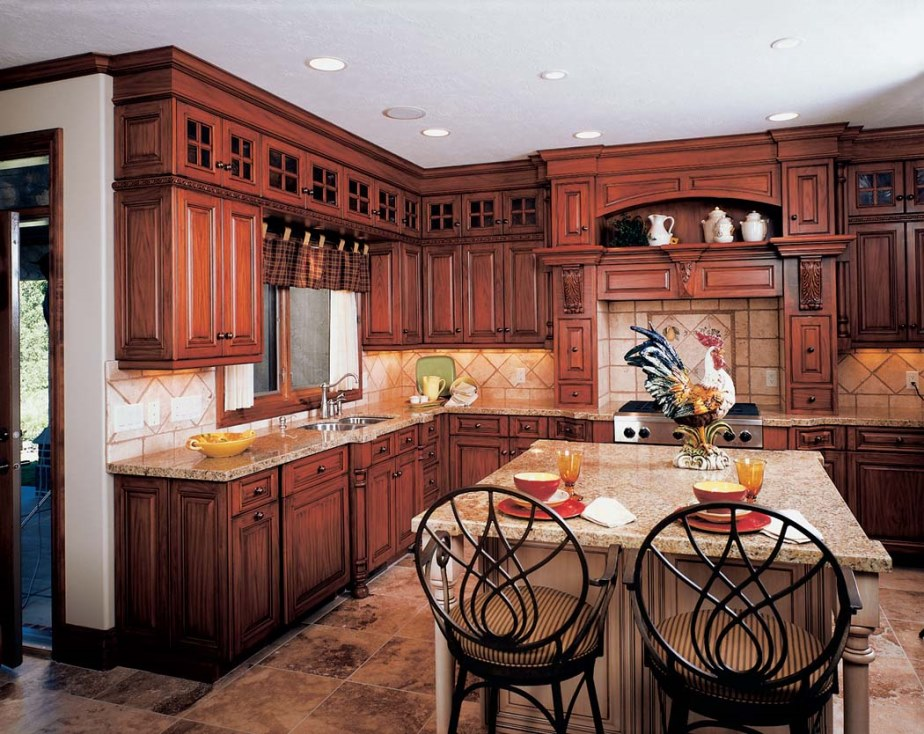
Red Alder wood used in high-end cabinetry and casegoods showcasing its aesthetic appeal and versatility in furniture making.
- Physical Properties: Red Alder has a Janka hardness of 590 lbf which is lower than harder wood such as maple and walnut and yet is firm enough to work with. It is fi, even grain; thee, even grain, thou hast made it easy to work with, and get smooth finishes.
- Applications: Red Alder is normally utilized in furniture manufacture, cabinet work, mill work and plywood. The choice of Fender Stratocaster and Telecaster guitars as the preferred type of wood is also notable as a result of its excellent tonal qualities.
- Other Uses: The wood has a strong demand as a smoking material to pacific salmon in which it offers a light, oily smoke that enriches the taste of the fish and chicken.
Red Alder is a useful hard wood that can be used in the food industry as well as in commercial purposes.
Planting & Growing Red Alder: Soil, Site, and Care Requirements
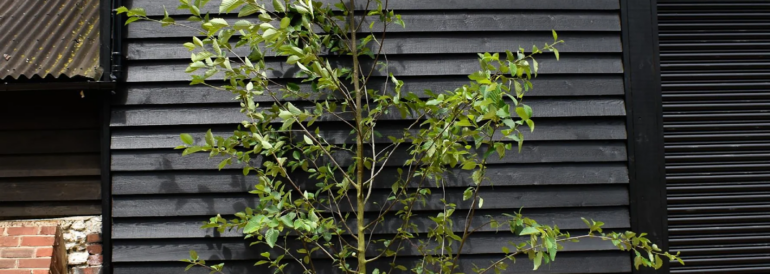
In case you are planning to plant Red Alder, you should be familiar with the growing conditions of this plant. This tree is used in damp soils which are well-drained and it requires complete sunshine to grow well.
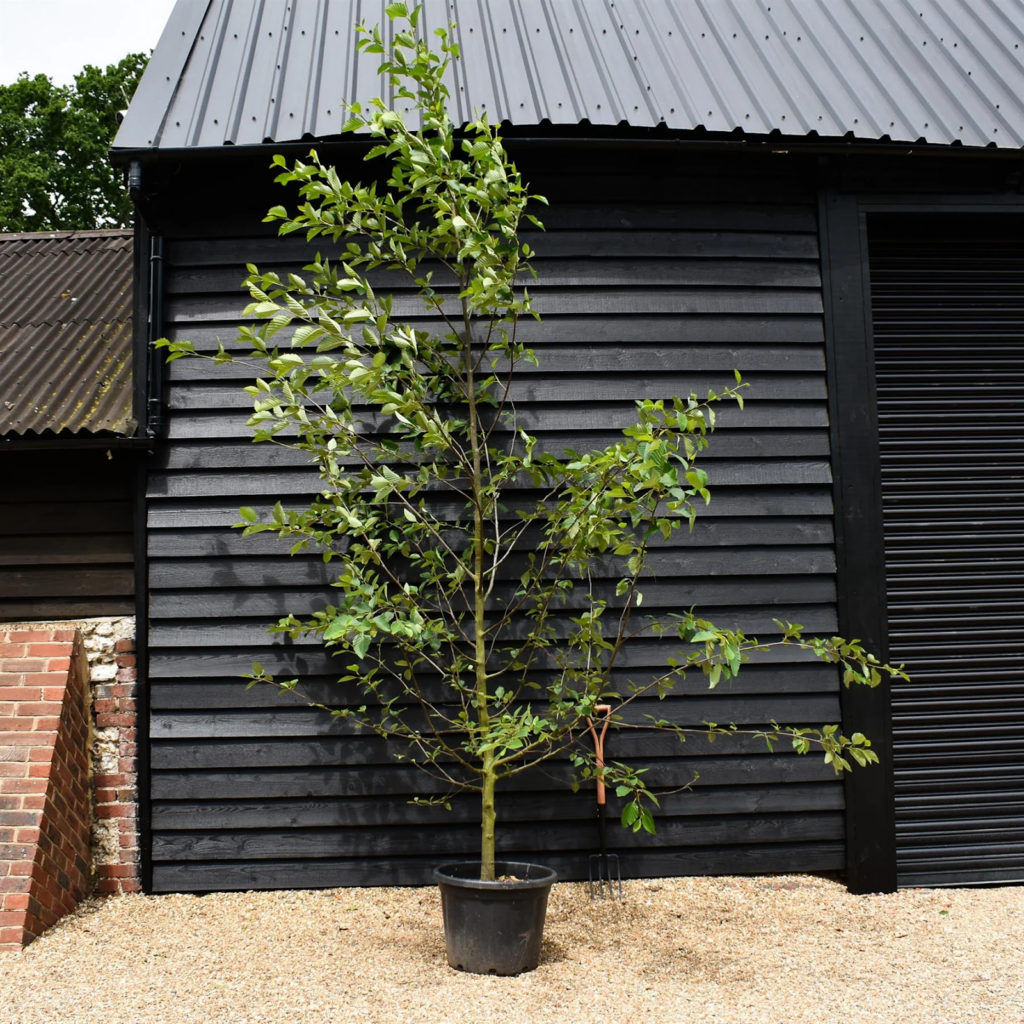
Red Alder sapling, showcasing its early growth stage in a pot, ready for planting in suitable environments
Planting Tips
Red Alder (Alnus rubra) grows in light soils which are well drained though it can survive poor drainage temporarily. It needs full sunlight which means it should obtain at least 6 hours of direct sunlight a day in order to grow well. The moisture should be constant particularly within the first 1-2 years of development,h to ensure good roots.
Red Alder serves a variety of purposes, that is, in erosion control, restoration and riparian planting, because it grows fast and enhances soil quality. It has great potential in restoring disturbed sites and enhancing the growth of plants in the future because it has the capacity to fix nitrogen.
Conclusion
The Alnus rubra or Red Alder is an extraordinary tree that is very crucial to the ecosystems of the Pacific Northwest. Be it to discover it, to know about its growth, or to know its ecological and commercial applications, Red Alder presents untold values. This tree is a natural wonder since it supports wildlife, enhances soil quality, and serves as the source of wood products which are important.