You have noticed something different about one of your trees. The leaves dropped too early. The bark looks wrong.
A branch that was full last year is bare this season. When you begin to seek evidence of the death of the tree in Seattle, it always means that you are already in the yard and are standing up and looking at the tree and hoping it is not so serious.
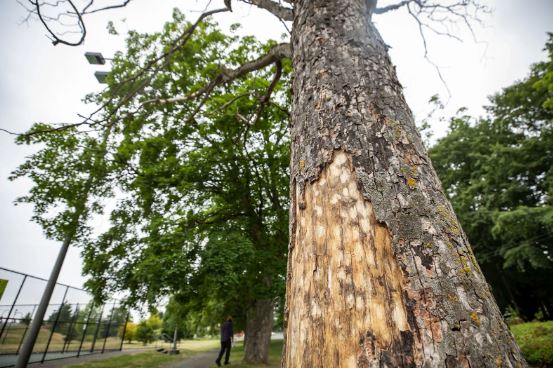
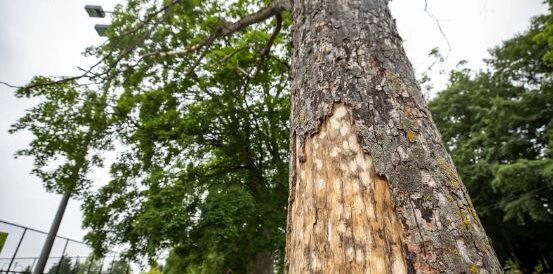
Severe bark loss exposing inner wood on urban tree trunk
The tree decline diagnosis is not always clear in the Pacific Northwest. Mild, wet winters can hide disease for years. Seattle’s dry July and August stretch, often just 1 to 2 inches of rainfall combined, stresses trees in ways homeowners rarely see until the damage is advanced.
If you are asking, “is my tree dying Pacific Northwest,” this guide will walk you through the most common warning signs, species specific clues for Douglas Fir and Western Red Cedar, and exactly when to call an ISA-Certified Arborist.
Why Trees Die in Seattle: The Most Common Causes
It is good to know the reasons behind the decline of the trees in Seattle even before the identification of symptoms.
The climatic conditions of Seattle provide a special pressure cycle. The wet winters promote fungal pathogens, which include Armillaria root disease and other decay fungi that live in damp soils.
Then summer arrives. July and August bring prolonged dry periods that create drought stress in trees Seattle homeowners assume are adapted to rain. The result is a slow, cumulative pattern of tree decline.
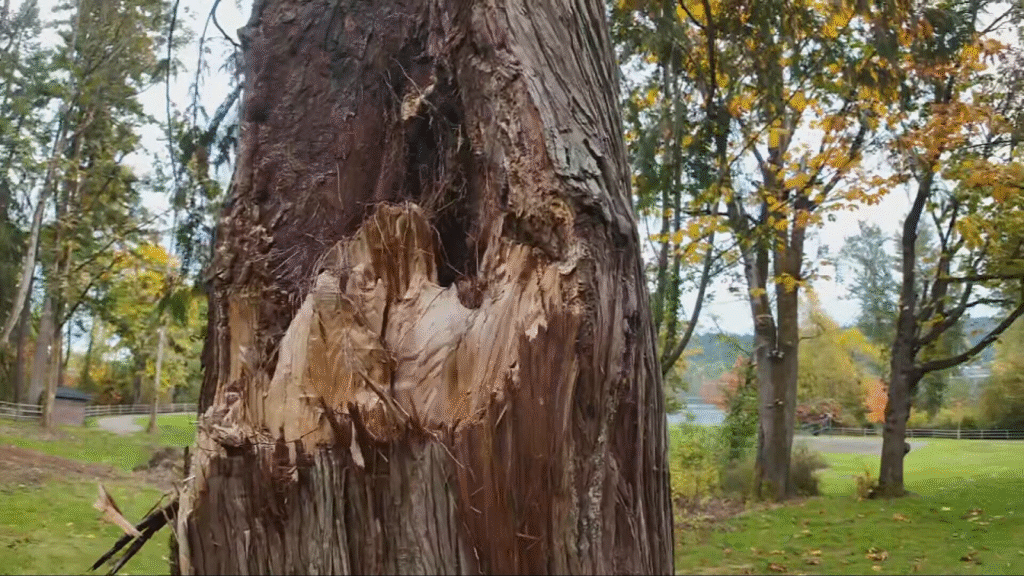
Severe trunk splitting and decay indicating high structural failure risk
Windstorms are another overlooked factor. A tree lean after storm events may not cause immediate failure. Rather, internal damage and root plate movement may cause structural weakening that occurs slowly (gradually) over a number of years.
Soil compaction is common in the city. Foot traffic, construction and parked vehicles compress root zones so the uptake of oxygen and water is reduced.
Large wounds of topping or flush cut history allow decay fungi to proliferate in Seattle in its wet environment. Many mature trees across the city are also entering natural senescence. An 80 to 150 year old tree behaves differently than a young ornamental planting.
- Understanding these causes makes the warning signs clearer and less mysterious.
8 Warning Signs Your Tree Is Dying in Seattle
1. Significant Deadwood Throughout the Upper Canopy
A few dead twigs are normal. Extensive deadwood in tree canopies, especially in the upper crown, signals systemic stress. In Douglas Fir, crown dieback often begins at the top and progresses downward.
The dieback in the outer canopy propagates inwards with time in Big Leaf Maple. When several of the large branches are killed over the top canopy, instead of being limited to a single limb, it is a typical tree decline and not localized injury.
2. Unusual or Off-Season Leaf Drop
Deciduous trees dropping leaves in May or June are not following a normal cycle. Early leaf drop in late August can reflect drought stress trees Seattle commonly experience.
But spring or early summer drop usually indicates disease or root problems. For conifers, interior needle drop in autumn is normal seasonal shedding.
Browning and needle loss at outer branch tips is not. That distinction matters when evaluating signs tree is dying Seattle properties often show.
3. Bark That Is Peeling, Cracking, or Falling Away
The bark covers the layer of the tree called the cambium which is the tissue that transports water and nutrients.
In cases where the trees show symptoms of peeling their barks leaving them with bare wood beneath, it is an indication of a structural or an ailment problem. In the moist climates, cankers are sunken and discoloured spots of dead bark that are prevalent.
They indicate active infection. Natural exfoliating bark on Paper Birch differs from disease driven bark loss. If bark is missing in irregular patches or cracking vertically, further assessment is warranted.
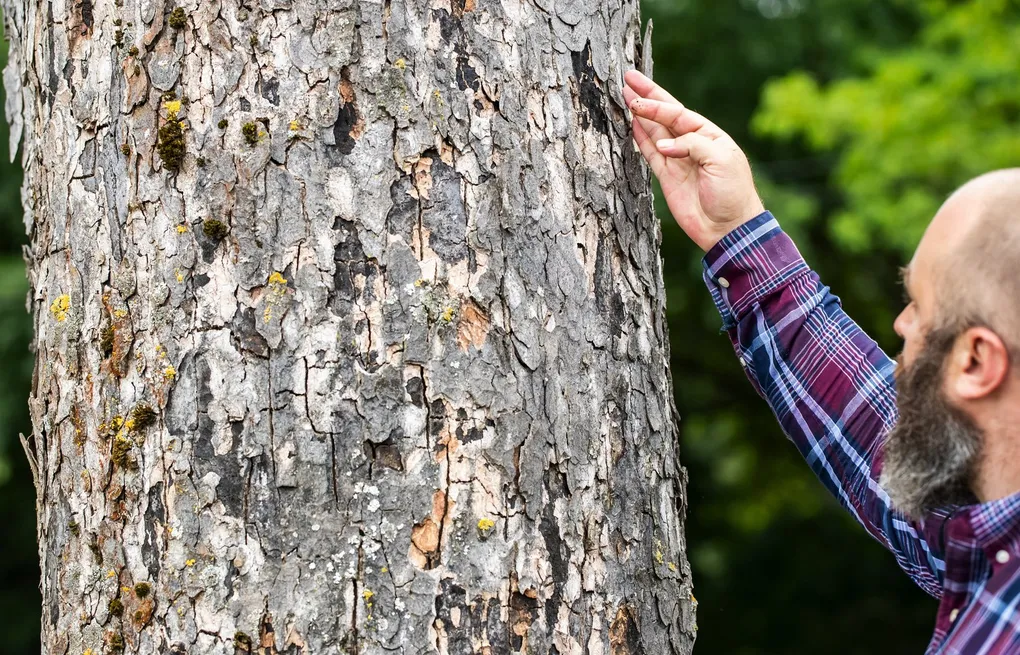
Arborist examining bark damage linked to drought related fungal decline
4. Fungal Growth on the Trunk or at the Base
Among the most dangerous warning signs are conks of fungi on the surface of tree trunks or mushrooms at the bottom.
Armillaria root disease, which is a common diagnosis in Seattle arborists in the Pacific Northwest, may cause hollow structural wood many years before a canopy symptom is evident.
A tree, which is covered with shelf fungi, might appear healthy at a distance. Internal decay reduces load bearing capacity and increases tree failure risk. This is not a wait and see situation. It requires professional evaluation.
5. A Lean That Has Changed or Developed Recently
Trees that had been growing all along at a slow angle are not necessarily dangerous. It is different in a tree bending after the storm events particularly when the angle has just altered.
The soils are saturated clay that is prevalent at West Seattle, Queen Anne, and Beacon Hill, which loosen the root systems when they are hit by winter windstorms.
Root failure may be progressing on one side only when there is heaveage of soil or the root is exposed to daylight. New or progressive lean ought to be inspected as soon as possible.
6. Sparse or Discolored Foliage Across the Whole Tree
An early but dependable indicator of stress is a canopy that is seen to be thinner, paler or uneven than it was before previous seasons. The thinning of the crowns in the whole tree indicates root or vascular issues as opposed to damage of branches.
Small shoots out of the trunk or large branches are referred to as Epicormic shoots or the tree is trying to make an emergency recovery. This can be traced back in Seattle to drought stress, root rot, Pacific Northwest pathogens or compacted soils.
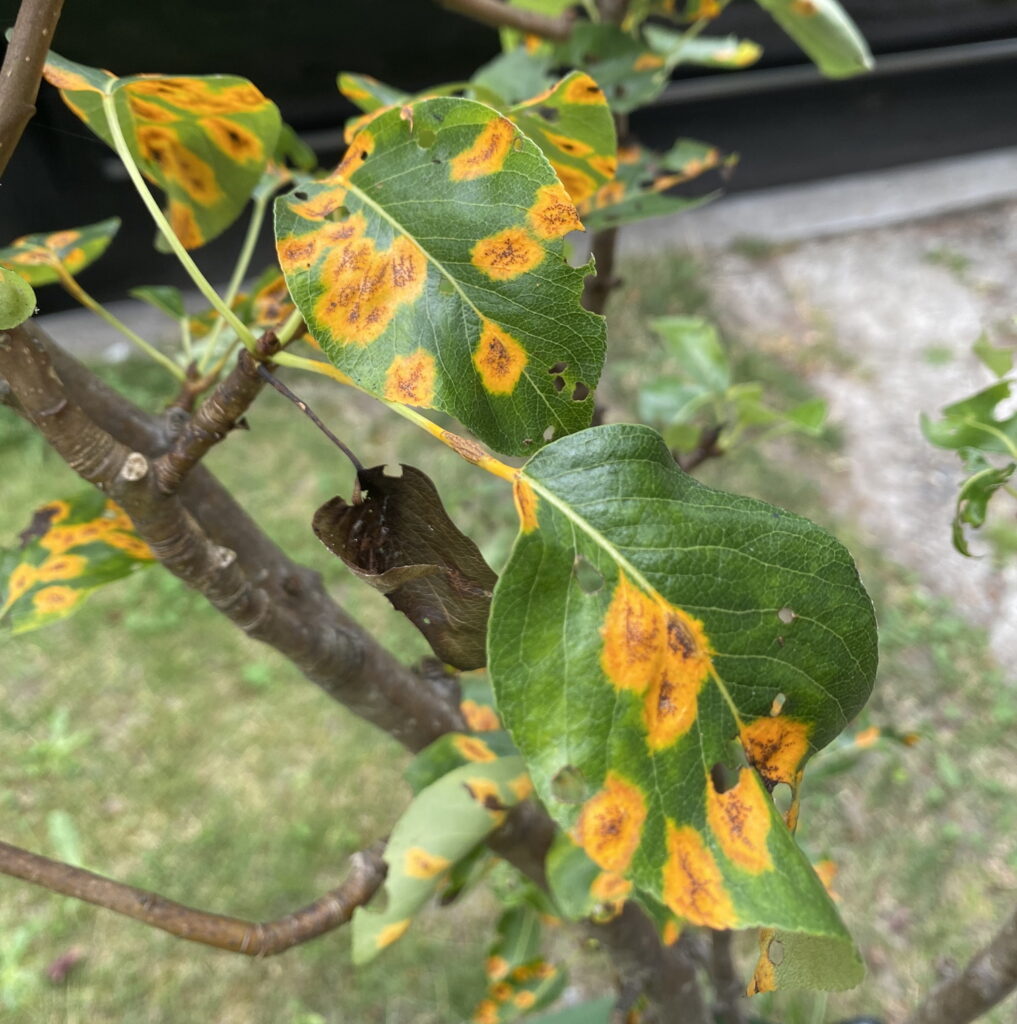
Yellow spotted leaves indicating widespread canopy stress and decline
7. Visible Cracks or Splits in the Main Trunk or Major Branches
The vertical cracks along the trunk or even splits at the major branch unions enhance the structural risk. Stems are also prone to attack when there are high winds, those that are co-dominant with included bark, i.e. two primary trunks growing upwards with the compressed bark in between.
If there are cracks near a structure, the driveway, or walkway, an assessment should be conducted immediately. Structural failure is not gradual. It can be sudden.
8. No New Growth in Spring
By late April or May, deciduous trees in Seattle should show bud break. If no new leaves emerge, serious decline is likely. For Douglas Fir, absent or stunted candle growth in spring can indicate vascular or root system failure.
A simple comparison helps. Look at similar trees of the same species nearby. If yours lags significantly behind, it is a meaningful red flag rather than seasonal variation.
Species-Specific Warning Signs for Seattle’s Most Common Trees
Douglas Fir
The Douglas Fir needles are healthy, are deep green in color and are evenly spaced. The onset of yellow-green or reddish-brown color at the inner end of the branches and advancing to the outer may be an indication of the Swiss Needle Cast, which is caused by Nothophaeocryptopus gaeumannii, a fungal disease commonly found in the Pacific Northwest.
Root rot may be indicated by thinning of the upper canopy, resin bleeding at the base or mushrooms in the root zone. Douglas Fir dying Seattle homeowners often worry about often show subtle canopy thinning before any dramatic failure.
Western Red Cedar
Interior foliage browning in autumn is normal. Browning at outer branch tips during summer indicates drought stress. WSU research continues to examine widespread Western Red Cedar dying Seattle area properties have experienced during prolonged dry summers.
Flagging, entire branches dying off, and resin bleeding at the base are warning signs. Deep watering during July and August can significantly reduce stress on urban specimens.
Big Leaf Maple
Maple Decline affects Big Leaf Maple across the Pacific Northwest. Some of the symptoms are progressive dieback of the canopy, lesions of the bark and a drop in leaves before they are really old.
The wilting may suddenly appear in summer in Verticillium wilt. Dark staining beneath bark when a branch is cut indicates vascular disease. Surface root systems may cause soil heave. When root zones are compacted, decline accelerates.
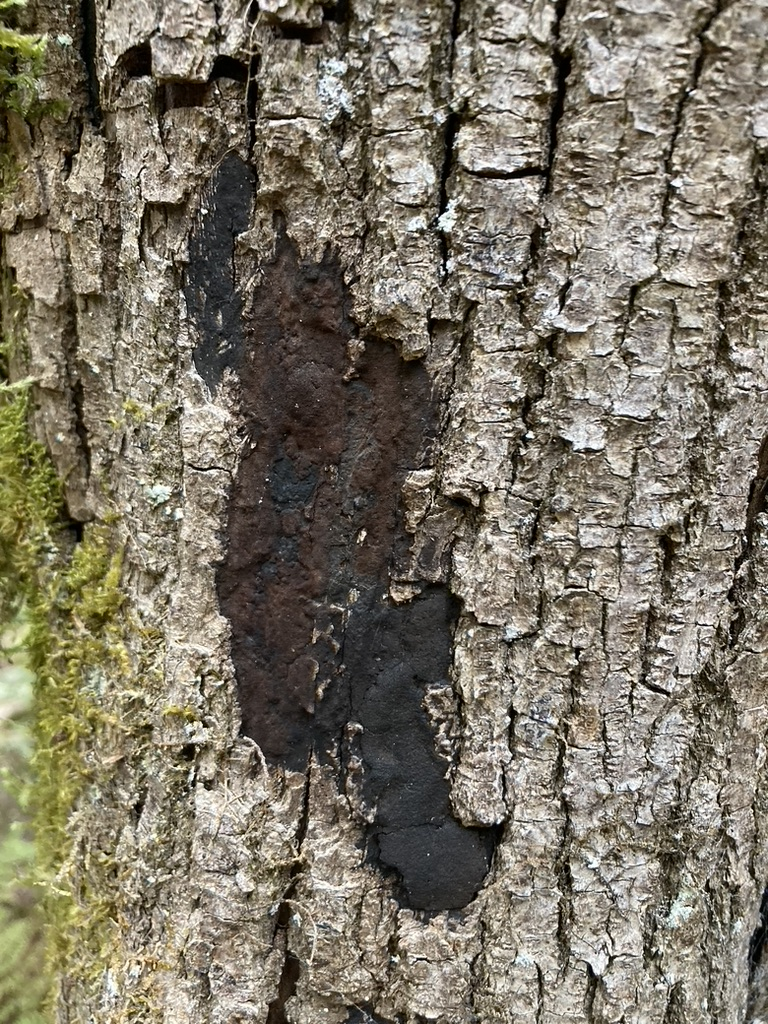
Dark sooty bark lesion consistent with maple fungal infection
Japanese Maple
Japanese Maple is also susceptible to root rot in wet clay soils. Scorch of leaves during summer despite sufficient water application is also usually an indicator of weakened roots.
Progressive branch dieback and blackening of small twigs indicate systemic stress. Frost damage affects new growth first. Root driven decline appears more broadly across the canopy and worsens over time.
Dying Tree Seattle: When to Call an Arborist vs. When You Can Wait
- If you are searching “dying tree Seattle what to do,” the answer depends on urgency.
Call an ISA-Certified Arborist immediately if the tree has developed a new lean, visible trunk cracks, fungal conks at the base, or large dead branches hanging over structures. A tree that has already dropped a large limb unexpectedly is a high risk candidate for formal tree risk assessment TRAQ evaluation.
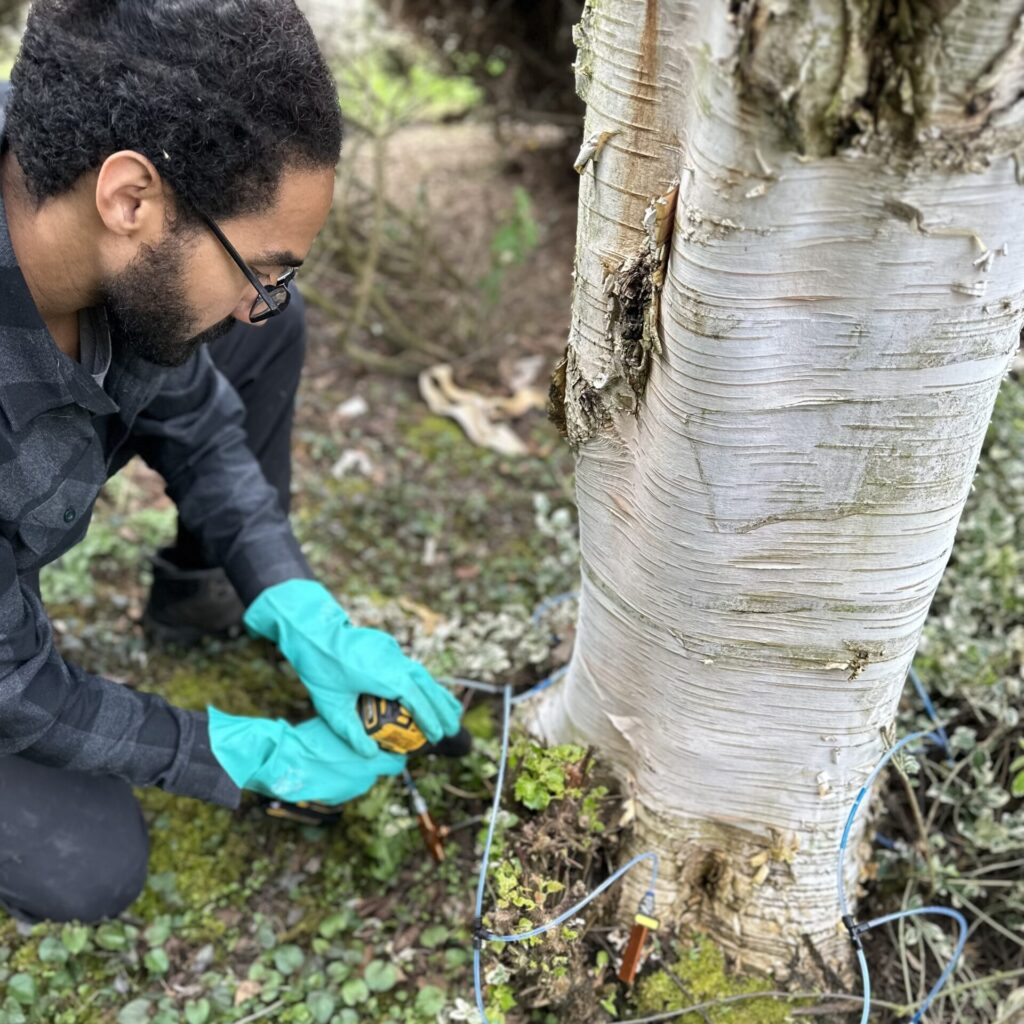
Arborist inspecting bark damage to assess tree health risk
Schedule a tree health assessment Seattle homeowners trust within the next few weeks if two or more warning signs are present but no immediate structural threat exists. Trees in early decline may respond to a structured care plan through our Tree & Plant Care Program.
Keep track in the meantime whether the drop of the internal needles only takes place in the autumn or whether a single branch is dead and the canopy alive.
In uncertain situations, a decisive answer can be provided by an ISA-Certified Arborist in just one visit to the site and peace of mind is worth a call delayed.
Conclusion
Pacific Northwest trees do not always announce decline dramatically. Subtle canopy thinning, bark changes, or off season leaf drop are often the earliest signs tree is dying Seattle homeowners overlook. Catching issues early can mean the difference between recovery and removal.
If any of the warning signs in this guide look familiar, the clearest next step is a professional evaluation rather than more searching. Our ISA-Certified Arborists and TRAQ-qualified risk assessors have served Seattle properties for over 18 years.
If you are worried about a tree on your Seattle property, the next safest thing is a free consultation. Two options are available to explore our Tree and Plant Care Program regarding trees that can be rescued or explore our services to remove trees in case structural deterioration has gone too far. Book your free estimate today.
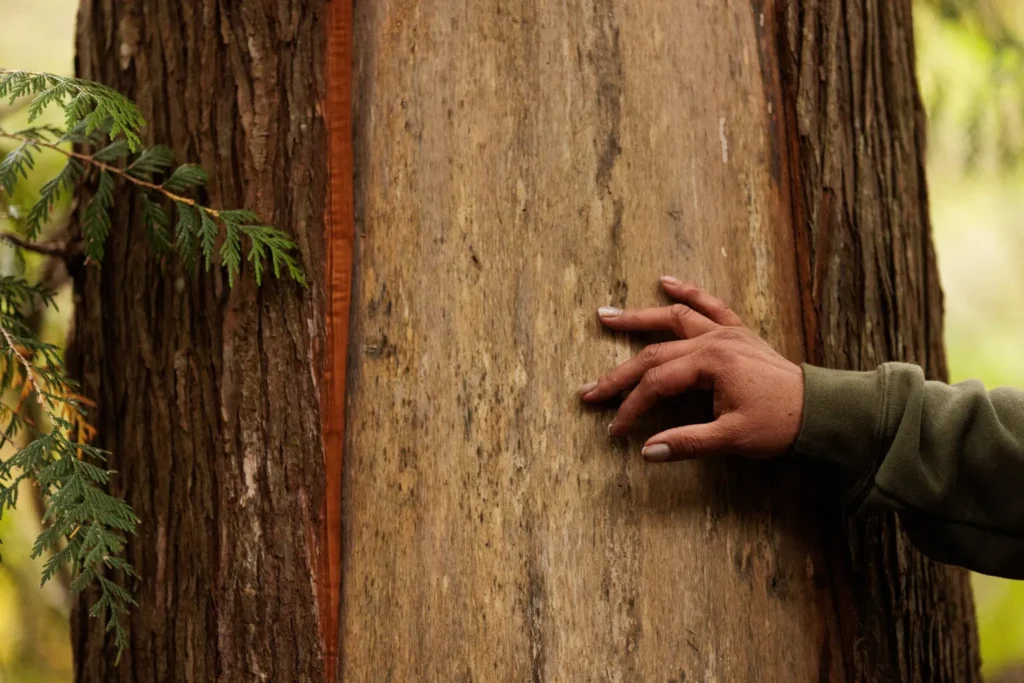
Examining exposed bark on a mature Pacific Northwest cedar
Frequently Asked Questions
How do I know if my tree is dead or just dormant?
Use the scratch test. Lightly scratch a small branch. Green and moist tissue beneath indicates life. Brown and dry tissue suggests death. Check several branches. If uncertainty remains, a quick professional inspection provides clarity.
Can a dying tree be saved in Seattle?
Sometimes. Drought stress, compaction or nutrient imbalance may cause early decline of trees but it can be reversible. Advanced internal decay or root system failure is rarely recoverable. A professional arborist consultation Seattle homeowners request often prevents unnecessary removal or delays inevitable action.
Is a dying tree dangerous?
A hazardous tree in Seattle property owners ignore can create liability. Decline alone does not guarantee failure. Location and structural condition matter. Trees near structures or high traffic areas with multiple warning signs should be assessed promptly.
My tree looks fine but foliage seems sparse. Is it dying?
Sparse growth across two consecutive seasons is a meaningful indicator of stress. One off season may reflect environmental conditions. Persistent crown thinning warrants evaluation.
What happens if I do nothing about a dying tree?
Decline progresses. Deadwood becomes heavier. Root failure may occur during a windstorm. In addition to safety issues, removal may necessitate adherence to the regulations of the Seattle tree permits. In case of removal, professional tree removals will give safe and compliant work.