When to remove a tree is usually the first question a worried homeowner asks after a heavy winter windstorm. We get calls every November from people who want a perfectly healthy Douglas fir cut down just because it sways. Most trees you think need to go can actually be saved. But the ones that genuinely must come down give clear, physical warning signals.
Understanding the difference between a stressed plant and a dangerous liability takes a trained eye. You don’t want to overreact and lose a valuable shade tree, nor do you want to ignore a rotting trunk leaning over your bedroom. Here is how we evaluate your yard and decide if a tree actually has to go.
When should a tree be removed?
If a tree is dead, structurally unsound, inoperable, or is a hazard that cannot be addressed with pruning and cabling, it should be removed. Everything else is a candidate for treatment first. We only recommend complete extraction when the risk of property damage outweighs the plant’s health.
Many poor choices are made in tree care, based on fear. When you see a giant western red cedar you may be overwhelmed by the size. Trees are not necessarily dangerous when they are tall. The mechanical structure of the wood and the integrity of the root system determine safety. Looking for permanent faults. Fungal rot can cause the main trunk to be hollowed out, weakening the tree’s structure. From there on, it’s physics, and nothing will save it from fertilizer.
We view removal as the absolute last resort. A mature tree provides a tremendous addition to property value, storm water control and temperature control in Seattle’s hot summers.The only way to get rid of a tree is to cut it down.
What are the signs a tree needs to be removed?
Inspect the structure of a tree and determine if there are any dead wood or other structural issues. Deep splits in the trunk, fungal decay at the base, extensive canopy dieback, and root-plate changes after a storm indicate the tree should be removed.
In particular, you will find these seven physical indicators:
- Large dead branches or a dead top (“widow-makers”)
- A sudden or worsening lean with heaving soil
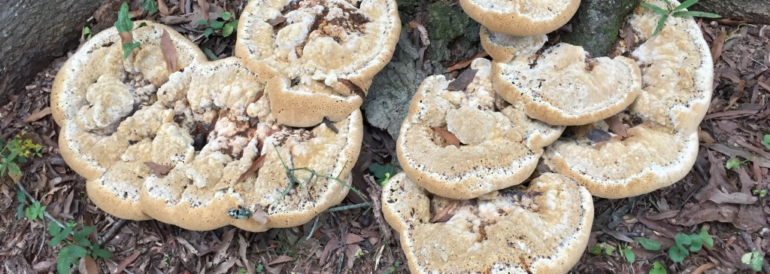
- Fungal conks or mushrooms at the root flare
- A hollow, soft, or cracked trunk
- More than 30% to 50% of the canopy dead
- Damage to roots from construction or trenching.
- In the area of the split trunk into major limbs (included bark)
The Arbor Day Foundation has guidelines about tree retention and the 50% rule is a general guideline. If the tree has been injured by 50% (some leaves or branches) it will probably not be able to recover after the injury and should be removed.
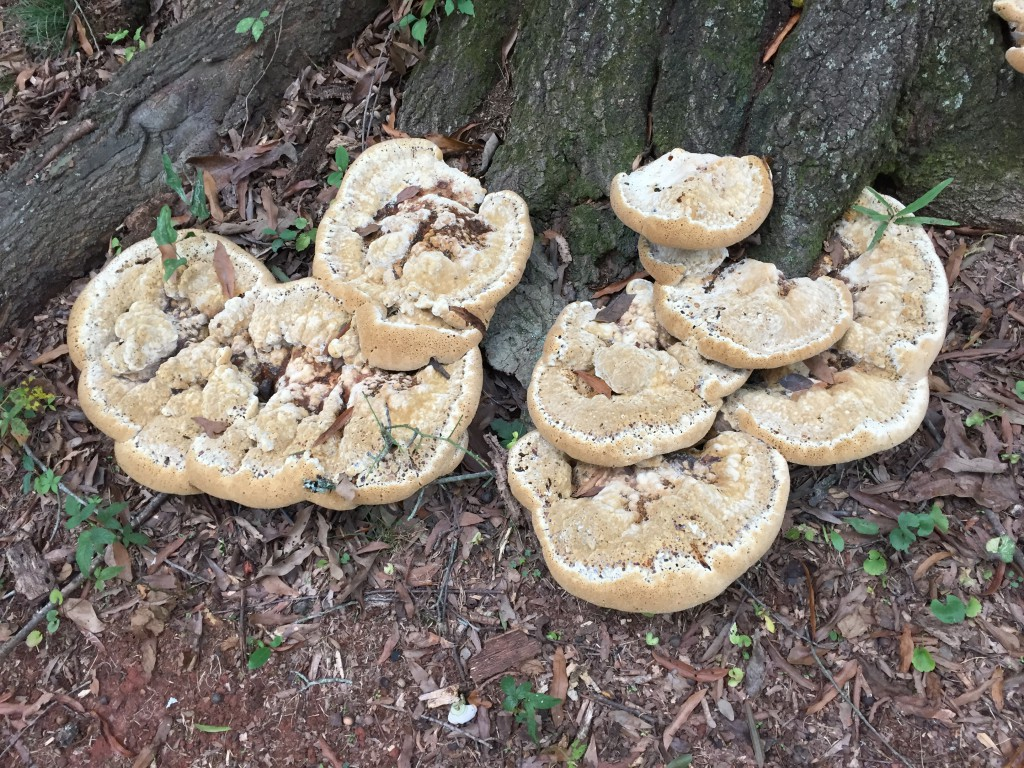
A fungus stem rot on a tree is easily identified by the presence of fungal conks at the base of the tree and poor structural integrity of the tree.
Another big red flag of fungal growth. If you see conks growing out of the wood then the inside of the tree is already decaying. These are just a few of the symptoms that are covered in more detail in our guides to general symptoms of tree disease, mushrooms on trees or our tree checklist on how to know if a tree is dead.
- We recently inspected a massive bigleaf maple in West Seattle. The homeowner wanted routine pruning because the canopy was completely green and full. When we pulled back some heavy ivy at the base, we found a huge fruiting body of brittle cinder fungus hiding at the root flare. The structural wood underneath felt exactly like wet cardboard. The leaves looked perfect, but the tree had almost no root anchorage left. Since it leaned heavily toward the master bedroom, we immediately upgraded the job to an emergency removal.
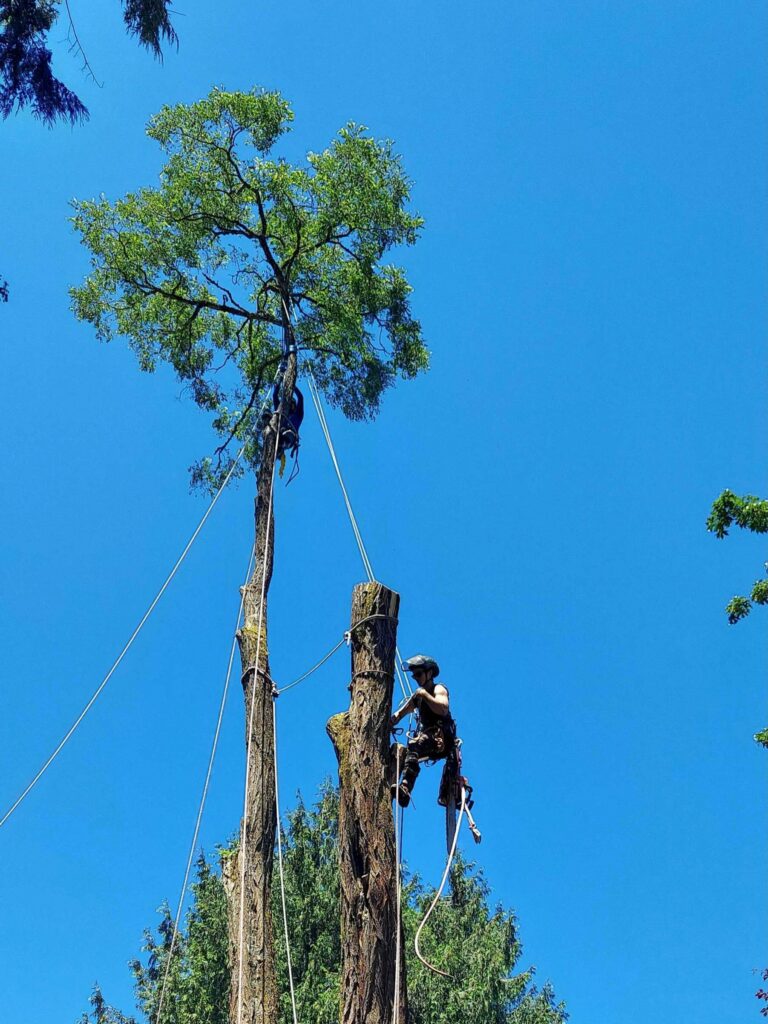
When you DON’T need to remove a tree
Don’t remove trees simply because they have some dead limbs or are slightly towards the sun or shed a large amount of leaves. A professional arborist can almost always rehabilitate a tree by providing structural support and/or selective pruning, if the trunk is firm and all the roots are in place.
The tree care industry has its share of problems with honesty here. A lot of companies will gladly take your money to cut down a tree that just needed a little help. We prefer to keep trees standing.
If a large limb has a weak attachment point, we don’t automatically cut the whole tree down. We install high-strength steel cables to support the weight. You can learn exactly how this works in our guide covering tree cabling and bracing and when you need it, or check out our tree cabling service page for the technical details.
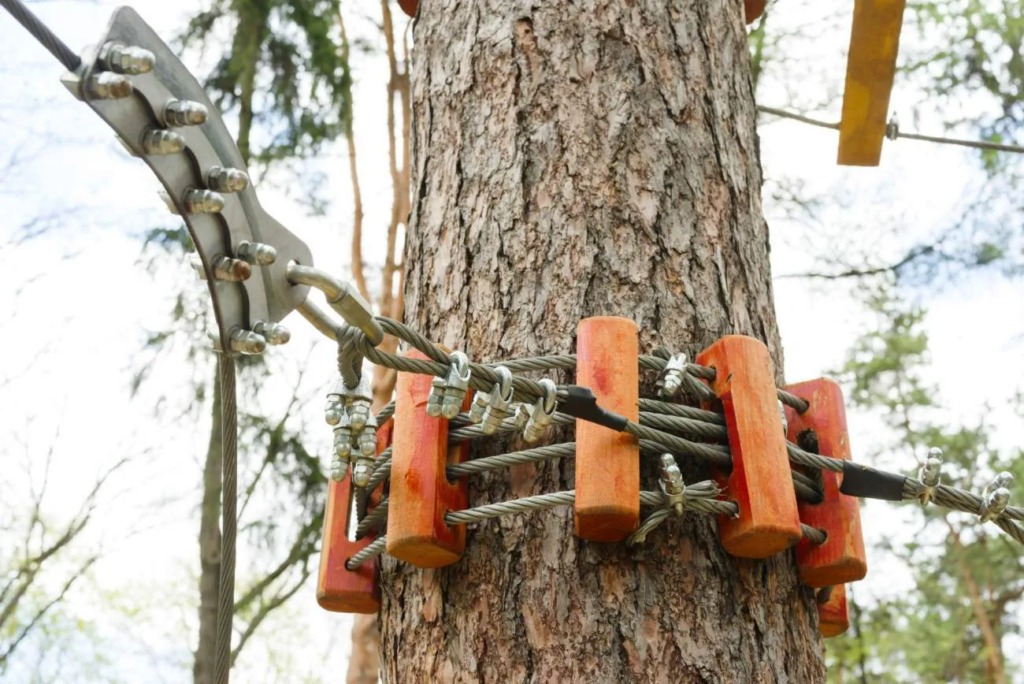
Arborists should not resort to removal, but can now install high-strength steel cables to safely support weighty limbs with poor attachment points.
Similarly, if a tree is getting too tall for your comfort, we can use a technique called crown reduction. This will safely reduce the height without compromising the plant. A tree may appear to be ill for no other reason than it is deprived of water or nutrients. A deep soil drench or a series of targeted feeding can help a tree become vigorous again. We always evaluate treatment options before we fire up a chainsaw.
What is a tree risk assessment?
A tree risk assessment is a formal evaluation by a TRAQ-qualified arborist that rates the likelihood of failure, the likelihood of impact, and the consequences of that failure to produce a standardized risk rating. It determines exactly how dangerous a tree actually is.
TRAQ is an acronym for Tree Risk Assessment Qualification. The ISA (International Society of Arboriculture) designation is awarded to an arborist that has been trained in a specialized field of wood biomechanics and failure analysis. Don’t simply assume that a tree will fall. We use a specific formula.
First, we look at the likelihood of failure. Is the trunk hollow? Are the roots severed? We sound the trunk with a mallet to listen for cavities and inspect the root collar for decay. Secondly, we consider the chance of impact. When the tree topples will it land on a house, a filled sidewalk or just a vacant area of lawn? Lastly, we evaluate the implications. A small dogwood falling on a fence is a low consequence. While a 90-foot Douglas fir falling on a roof is a serious consequence.
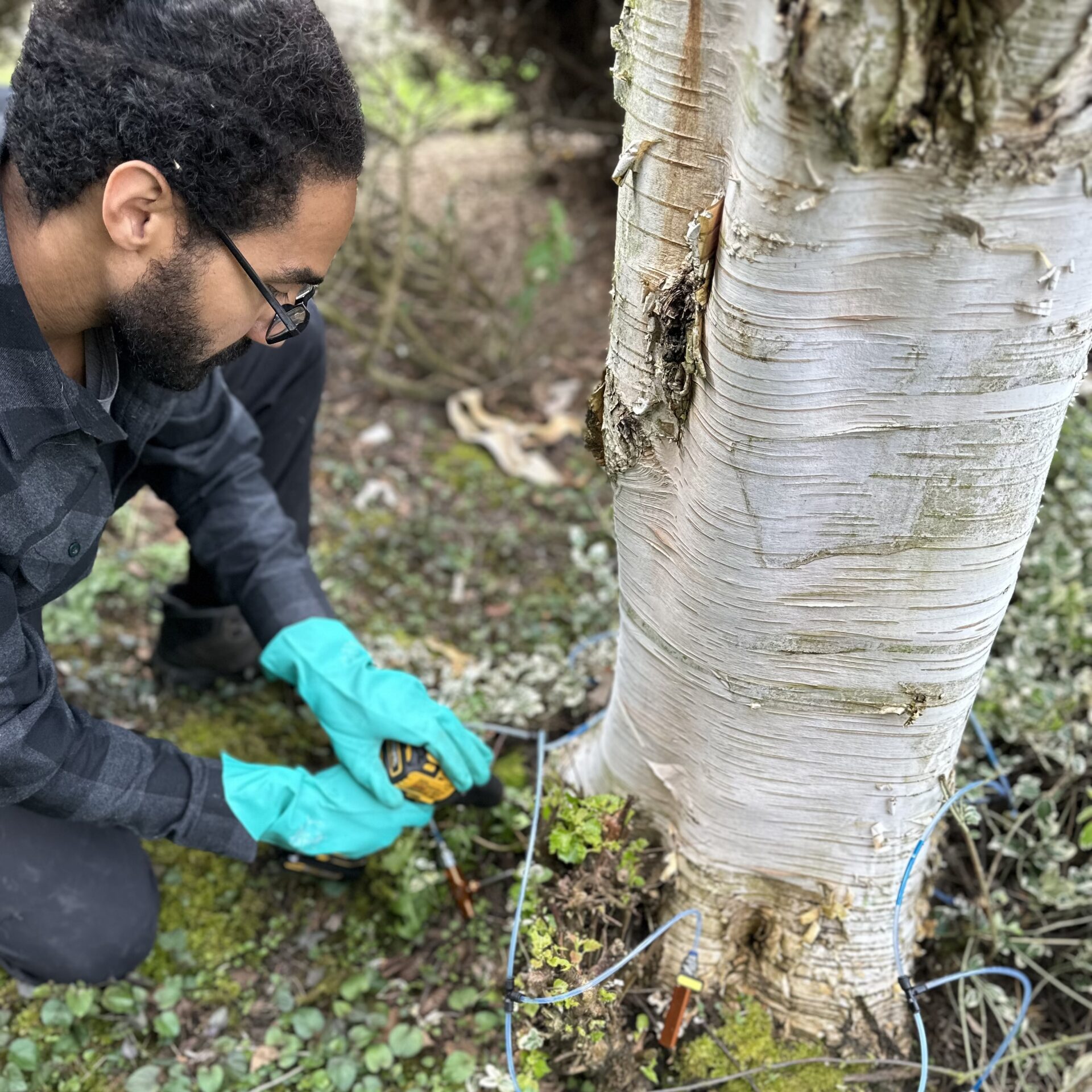
A TRAQ trained Blooma Tree arborist (Ricky Santa-Silverio) is able to assess hidden cavities and wood strength, and will be able to determine how dangerous a tree is.
All these factors are taken together, we have a risk rating of low, moderate, high or extreme. If the rating is high or extreme, we consider removing the tree if we can’t lower the rating through pruning. This is a scientific approach devoid of emotions.
Do you need a permit to remove a tree in Seattle?
Yes, Seattle requires a permit to remove most street trees and private “exceptional” trees. However, the Seattle Department of Construction and Inspections (SDCI) provides a specific exemption path for genuine hazard trees or dead trees, provided you submit proper arborist documentation first.
Seattle’s tree protection ordinances are extremely stringent. You are not allowed to simply remove a large tree for no other reason than you don’t like it. But the city does not want dangerous wood hanging over houses either. If our TRAQ assessment determines your tree is hazardous, we generate a formal report. You submit this report to the SDCI to get an expedited hazard removal permit.
Do not skip this step. The fines for illegal tree removal in King County can run into the tens of thousands of dollars. We handle the paperwork for our clients regularly and we hold a tree work permit in seattle.
What does hazard tree removal cost?
The cost of removing trees for hazard depends entirely on their location, size and brittleness of their wood. A dead tree that is not stable is a tree of considerable expense because of the need to use cranes or bucket trucks to tie into rotten trees.
An emerald ash borer-killed ash tree is structurally unsafe in just a few months (to learn more about the structural threat of emerald ash borer, check out our emerald ash borer guide). For more detailed information about tree removal costs and what insurance may cover, see our in-depth article on the cost of tree removal. For direct help, visit our tree removal service page.
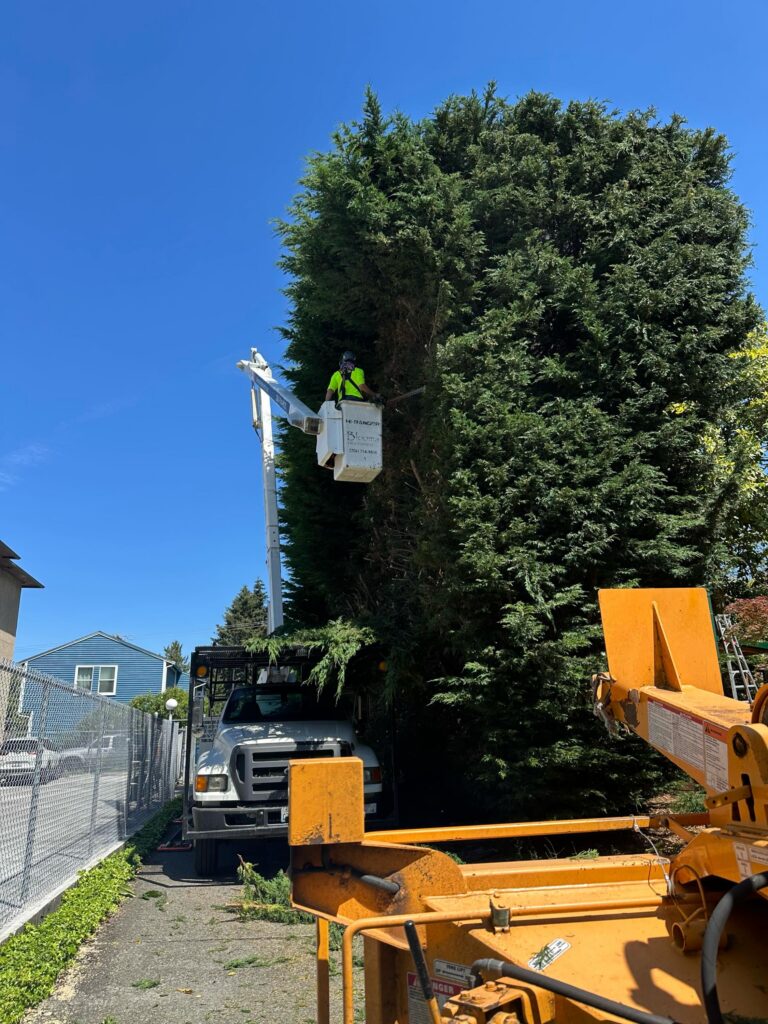
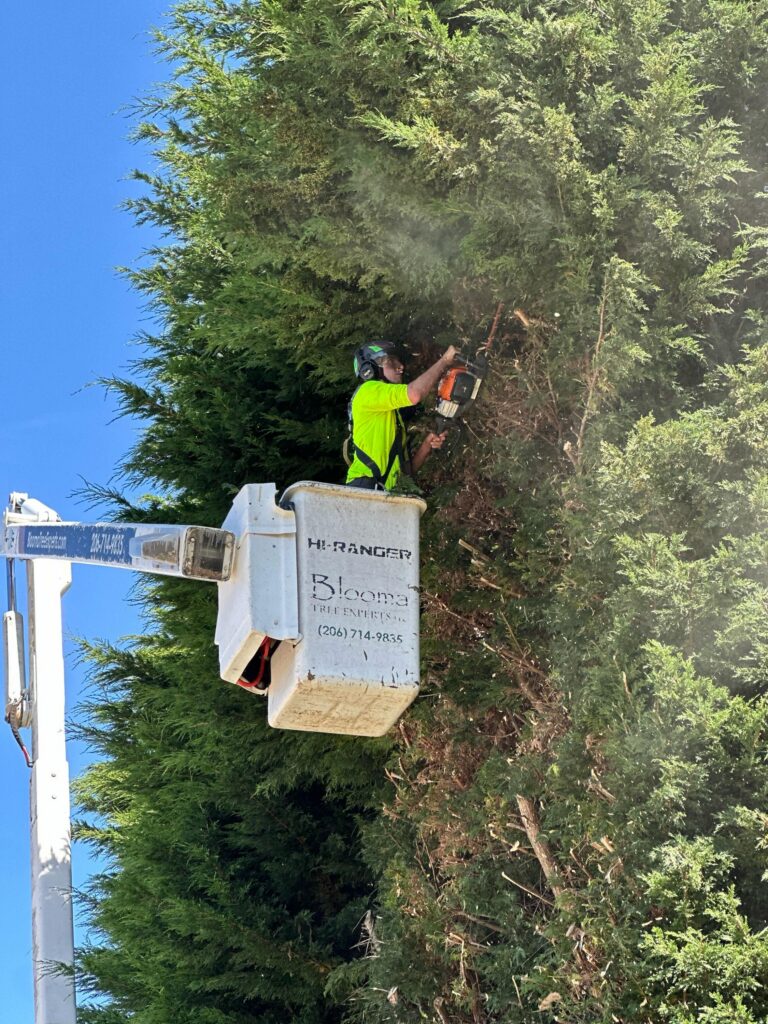
If a hazard tree is dead and unstable, it may need special equipment such as cranes or bucket trucks to remove the tree safely.
Frequently Asked Questions
How do I know if my tree is dying or just stressed?
When a tree is stressed, its leaves will droop or yellow first, and twigs will still be pliable and green. Dead wood in the canopy, peeling bark around the trunk and fungal conks on the soil surface are signs of dying trees with snapping twigs.
Is a leaning tree always dangerous?
A leaning tree is not always dangerous. Trees that naturally grow at an angle toward sunlight develop reactive wood to support their weight and are completely safe. If a tree has suddenly acquired a new lean, particularly if the soil is cracking opposite the lean, then it is actively failing.
What happens if my tree falls on my neighbor’s property?
If a healthy tree blows over in Washington, probably because of an “act of God” (a severe windstorm), your neighbour’s homeowner’s insurance will pay for the damage. If the tree is known as a hazard to trees or documented as dead or hazardous, however, and it is ignored, then you could be held legally liable.
May I ask a Certified Arborist if my tree is safe?
Yes, an ISA Certified Arborist, one who has a Tree Risk Assessment Qualification (TRAQ) is qualified to assess the structural integrity of a tree. They utilize standardized approaches to detect hidden decay, poor branch attachments and root problems, giving a formal safety rating and a mitigation plan.
Does a dead tree have to be removed immediately?
If it is in a forested area where a dead tree may not be a hazard to anything, it does not need to be removed immediately. If it is located close to a house, driveway, or power line, however, it needs to be removed promptly. Dead wood releases moisture and turns into highly unpredictable and brittle.