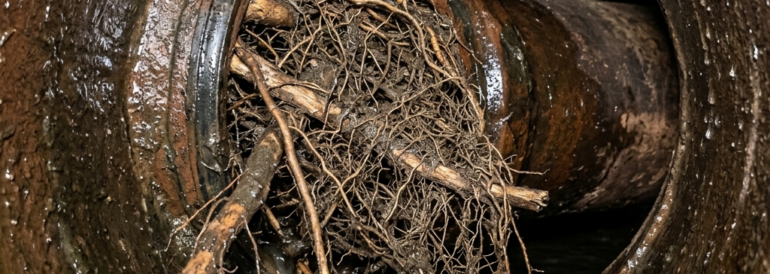
It’s a clear Seattle morning, and you notice there’s a new, jagged crack in the concrete of your driveway. Maybe it’s in your house and you’re getting an “oooooooo” noise from the basement tub and a sluggish, threatening backup in the tub drain. Any backyard that has a tree and underground utilities, and a structural concrete, and they meet, the anxiety goes up immediately. Homeowners facing these issues are usually dealing with an expensive, stressful emergency, and they need objective, mathematically sound biological answers rather than a generic promotional sales pitch.
Dealing with tree roots in sewer line infrastructure, buckling foundations, or compromised hardscapes is a classic urban challenge in the Pacific Northwest, where our older housing stock sits right alongside magnificent, deep-seated canopies. But only a sustainable solution to structural injury addresses the biological phenomenon of tree/property interaction. This guide explains the actual physical mechanisms of root intrusion, signs to look for, what you have really got to work with to minimize root intrusion, and the reality of whether or not you will solve the problem by cutting the tree down.
Why Tree Roots Cause Damage and What They’re Actually Looking For
To find a permanent fix for structural conflicts, you must first throw out the myth that trees maliciously target human engineering. Roots are biological opportunists that follow a simple path of least resistance in their hunt for three critical resources: water, dissolved oxygen, and macro-nutrients.
The Mechanisms of Subterranean Intrusion
- Tree Roots and Solid, sound pipes: Tree Roots cannot mechanically bore through a solid, sound pipe. Rather, micro-cracks or loose joints develop in older clay, cast iron, or orangeburg lines as a result of structural shifts, soil settling or age. This moisture and nutrient salts are liberated in the surrounding soil as vapour through these micro fractures, creating a very concentrated volatilised plume in the surrounding soil. Foraging root tips detect this plume, grow directly toward the source, and slip inside the crack. Once inside, the roots find a perfect tropical environment and expand rapidly, eventually filling and completely blocking the internal diameter of the line.
- Foundations: Healthy roots rarely push directly through a sound, intact poured-concrete foundation wall. Instead, damage to a foundation due to tree root is more likely to be caused by changes in soil water. In dry conditions in clay soils, large trees use tremendous amounts of water. This creates an uneven soil settlement (subsidence) under the footings, which results in damage to buildings and other structures. On the other hand, the abrupt removal of a large tree in close proximity to a house can induce the rehydration of the clay in a short time, leading to heaving (swelling) of the clay and enormous forces being generated, causing the masonry foundation to crack from below.
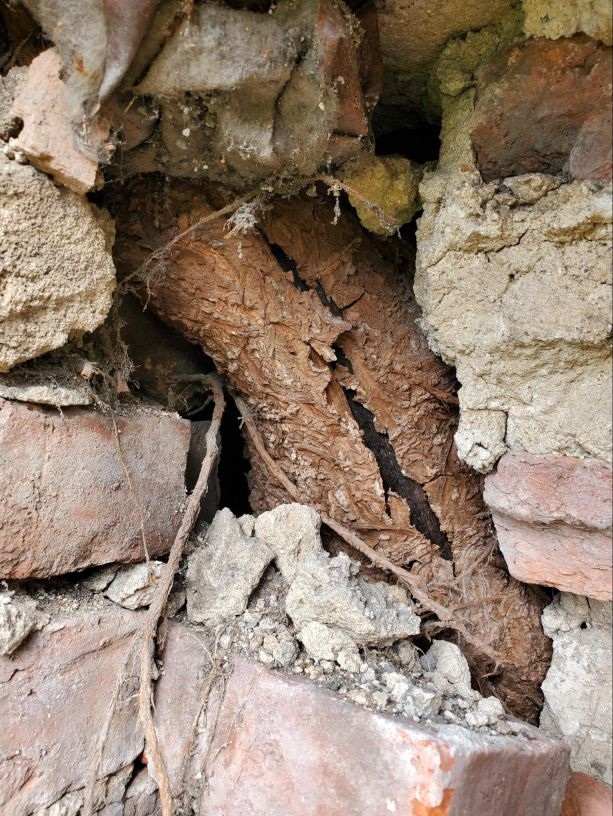
- Sidewalks and Driveways: This is where direct, mechanical force happens. Primary laterals on trees tend to naturally get wider as they get older. When these structural roots sit directly under a hard concrete slab they are like a slow moving hydraulic jack, exerting constant upward forces that cause the slab to buckle, upheave and crack.
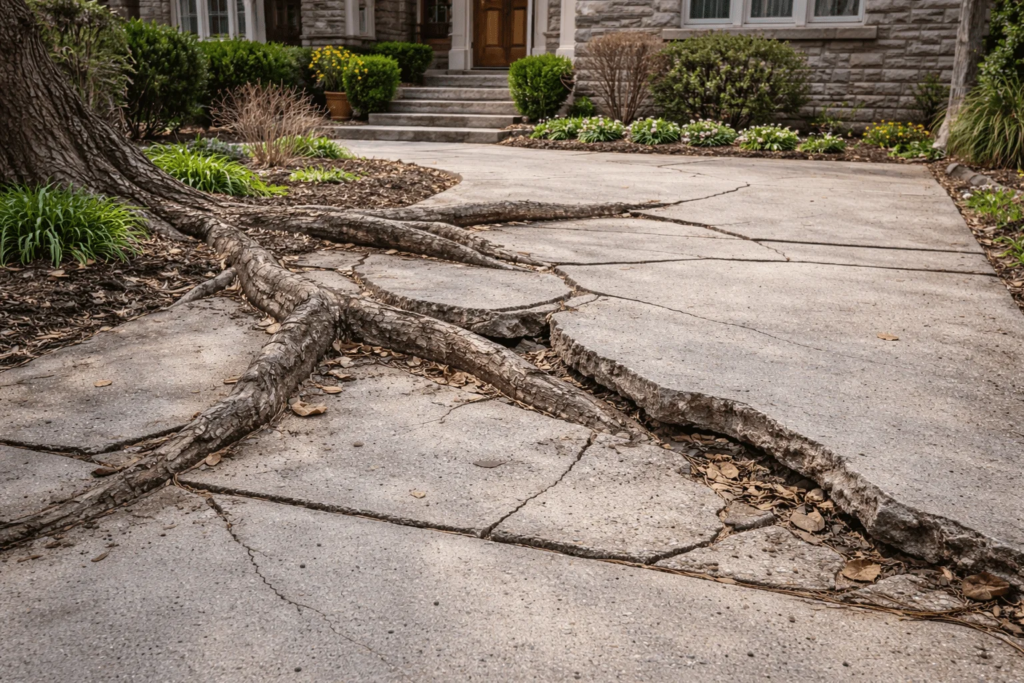
Figure 1: Thicker lateral surface roots applying direct upward mechanical force to concrete slabs.
A critical nuance to remember is that the vast majority of a tree’s feeder roots reside entirely within the top 60 centimeters of the soil profile, and they naturally extend horizontally well past the visible drip-line of the canopy, often stretching two to three times the radius of the outer branches. This extensive growth footprint is explored thoroughly in our foundational explainer detailing exactly how tree root systems work.
Tree Roots in Your Sewer Line: Signs, Risks, and What to Do
Among all property conflicts, root intrusion into wastewater infrastructure carries the highest risk of immediate property damage. Because these lines are buried deep underground, the initial stages of a backup are easily misdiagnosed as simple grease blockages.
Signs of Tree Roots in Your Sewer Line
Owners need to keep an eye out for these warning signs that their plumbing is clogged:
- Slow Drains and Backups: Sinks, tubs and toilets on the lowest floors of your house drain very slowly or back up regularly even with the use of normal plumbing snakes.
- Gurgling Toilet: If the toilet grumples or “gurgling” sound during the washing machine discharge or when the shower is running, the main line is filled with air.
- Ongoing Sewage Odors: Bad odors coming up from outside yard drains or areas of low ground in your lawn.
- Unusually Lush Patches of Grass: Unusually green patches of grass that are very localized, located directly over the sewer lateral and are growing much faster than the grass around them, which is a sign of an underground leak.
- Sudden Sinkholes or Wet Zones: Soil along the path of the utility line subsidences, and becomes muddy or saturated even during dry weather.
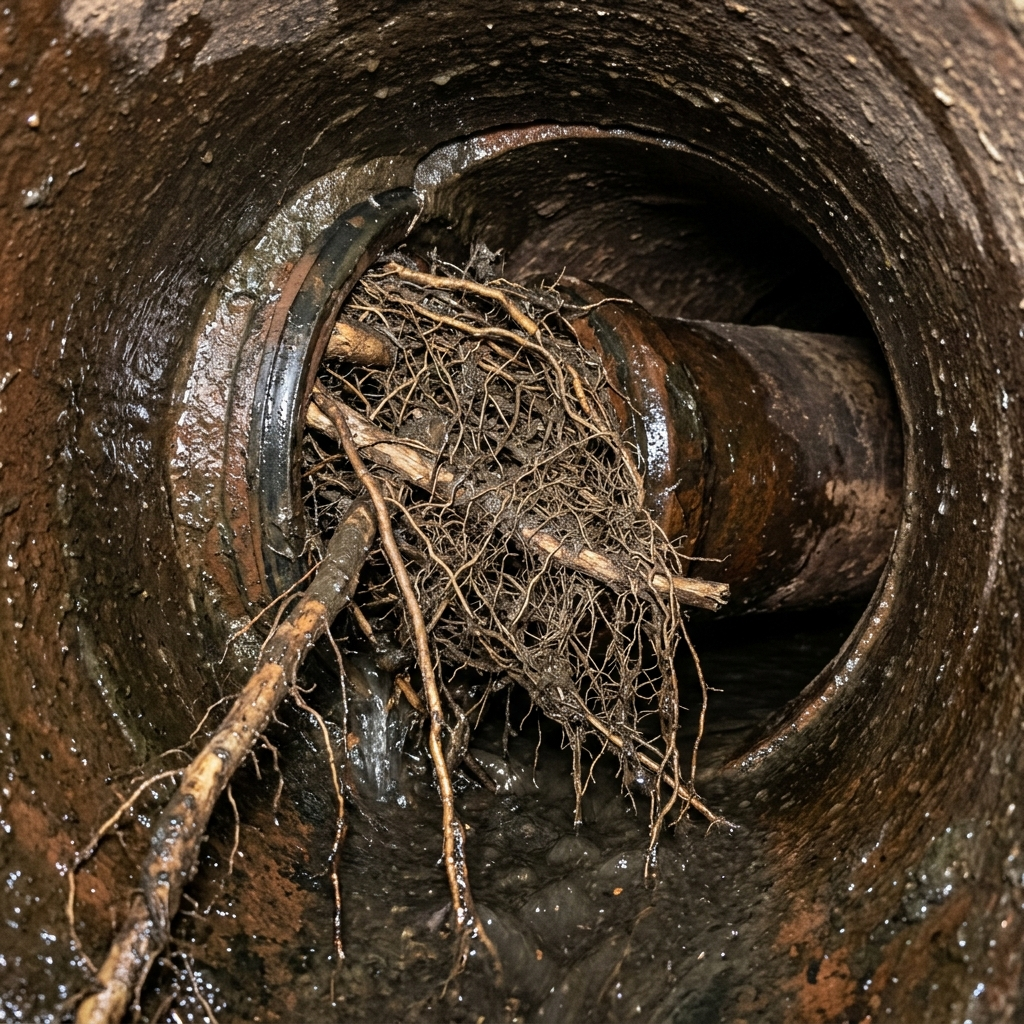
Figure 2: An internal plumbing camera view showing fine roots entering through a loose pipe joint.
The Diagnostic and Resolution Process
If you see these red flags do not assume because. Get a professional drain cleaner to use a high-definition diagnostic camera to inspect the cleanout line. With this camera, the exact location of the root intrusion and severity will be determined.
To resolve the issue, you must coordinate both infrastructure repairs and biological management. A plumber can immediately cut away the root mass in the pipe by using mechanical augering or hydro-jetting, then can use the chemical foaming treatments to slow regrowth. However these are only bandages and will always be there again until the physical fracture is sealed.
Long-term resolution requires structural pipe relining or excavation and replacement. On the plant side, an ISA certified arborist needs to assess the tree to determine whether root barriers or selective pruning can be used to safely retain the tree or if the tree needs to be completely removed from the landscape.
Tree Roots and Your Foundation: Separating Myth From Reality
There’s a lot of worry about a rogue tree root, but it’s not as common as the engineering fact. Roots are incapable of breaking through poured concrete. Rather they exploit existing settlement cracks, grow in them and slowly widen the cracks over several years.
A mature tree canopy with a foundation crack that has formed and deepened because of the changing moisture of the soil.
The primary structural risk is actually moisture-driven soil movement. Hundreds of litres of water can be lost from very large mature trees with big canopies per day. This water affinity of clay soils can cause differential shrinkage of soils under house foundations causing cracks, stuck doors and sloping floors.
To resolve foundation problems, you’ll need the services of a structural engineer to examine the concrete as well as an arborist to study the root zone of the tree. Mismanaging this balance by cutting down a mature tree too quickly can cause the surrounding soil to swell with water, potentially worsening the foundation damage. For properties dealing with complex root environments, our comprehensive Tree and Plant Care Programme provides continuous diagnostic tracking to protect both your landscape and your home’s structural stability.
Tree Roots Lifting Your Sidewalk or Driveway: Causes and Solutions
Foundation problems are generally concealed and sidewalk buckling is readily noticeable and presents immediate structural and legal problems. As shallow lateral roots grow, they apply direct mechanical force that lifts heavy concrete slabs.
Hardscape Repairs and Liability Risks
In many Pacific Northwest municipalities, it is the legal duty of the property owner to keep public sidewalks safely adjacent to their property. One root lifted slab can become an actual trip hazard and potential liability problem if a pedestrian slips and falls in it.

If a homeowner is dealing with a lifted concrete, they’ll have to take care to balance both structural repairs and tree stability. Quick and temporary solutions such as removing the raised concrete edge with a rasp are inexpensive, but won’t prevent root growth from the underlying problem. Long term solutions involve replacing the broken slab with a reinforced concrete ramp or a more flexible paving system, which will move with the tree.
This is often attempted by cutting the offending root with an axe prior to pouring new concrete. But any severing of large structural roots can be easily enough to unload the tree, and cause it to tip over in winter wind storms. You should always assess any root cutting by a professional using these signs and stability measurements, to make sure your home remains safe from storm damage.
Your Options for Dealing With Invasive Tree Roots: A Side-by-Side Comparison
Controlling invasive roots depends on the type of root problem you have. The table below details the most common structural and biological solutions used to handle root conflicts:
Solutions for Invasive Tree Roots
| Mitigation Strategy | Best Suited For | Short-Term Effectiveness | Impact on Long-Term Tree Health | Relative Installation Cost | Is the Fix Permanent? |
| Mechanical Clearing (Auger / Hydro-Jetting) | Immediate relief from urgent sewer line blockages. | High operational turnaround; quickly restores pipe flow. | None. The work is performed entirely inside the pipe. | Low upfront cost. | No. Roots will grow back into the line within 12 to 24 months. |
| Chemical Root Blockers (Foaming copper sulfate) | Inhibiting root regrowth inside cleared sewer lines. | Moderate; effectively slows down new root growth. | Low. The chemical action stays contained within the pipe. | Low cost. | No. Requires routine applications every year. |
| Root Pruning (Performed by an arborist) | Clearing specific high spots under sidewalks and driveways. | Immediate physical clearance for new concrete pours. | Moderate to High. Can cause tree instability if major roots are cut. | Moderate cost. | Variable. Roots can grow back unless paired with a barrier. |
| Root Barrier Installation | Deflecting future root growth away from foundations and paths. | High preventative capability for lines and structures. | Low to Moderate, provided it is installed by a professional. | Moderate cost. | Yes. Offers long-term protection of infrastructure. |
| Pipe Relining (Trenchless epoxy sleeve) | Permanently sealing cracked sewer pipes against roots. | High. Eliminates the gaps that attract roots. | None. The work is focused completely on structural plumbing. | High initial investment. | Yes. Fully seals out roots on the plumbing side. |
| Slab Grinding or Ramping | Fixing minor sidewalk trip hazards quickly. | High for improving pedestrian safety. | None. The root system underneath is left untouched. | Low to moderate cost. | No. Over time, the root will grow more and raise the slab up. |
| Tree Removal and Stump Grinding | High-risk trees causing severe and recurrent structural injury. | Absolute termination of future root growth. | Fatal. The tree is completely removed from the landscape. | Moderate to high cost. | Yes, provided the stump and main roots are fully ground down. |
Will Removing the Tree Stop the Root Damage? The Honest Answer
A common question that homeowners have when damage is known on their property is: If the tree is removed, will root damage be avoided? It might appear to be an obvious solution, but it’s not quite as simple as it sounds. Removal of the tree will stop further growth, but will not necessarily remedy any damage right away.
What Happens Underwater and Underground
With Sewer Lines: Cutting down the tree prevents the tree roots from spreading, but the actual crack or leak in your pipe is still there. The nutrient laden moisture will still seep into the soil, and eventually roots from other trees, hedges or shrubs will locate the entry point. However, even then, the pipe may still need to be repaired and/or relined, to prevent future blockages.
Sidewalks and Driveways: By removing the top growth layer, the lifting force will be taken away, however, the wood below the concrete will not disappear instantly. The large structural roots will take years to decompose. Pouring flat concrete over old roots may cause the slab to crack again because the wood rots and the soil settles under the slab. Full stump removal and stump grinding is required to secure the site prior to reconstruction.
A big thirsty tree, if removed close to a house on clay soil, may lead to further cracking of foundations as the soil swells up as it absorbs the water brought by the rain.
How to Prevent Tree Root Damage in the First Place
The best way to avoid root problems is to plan ahead and select trees that are appropriate for their location.
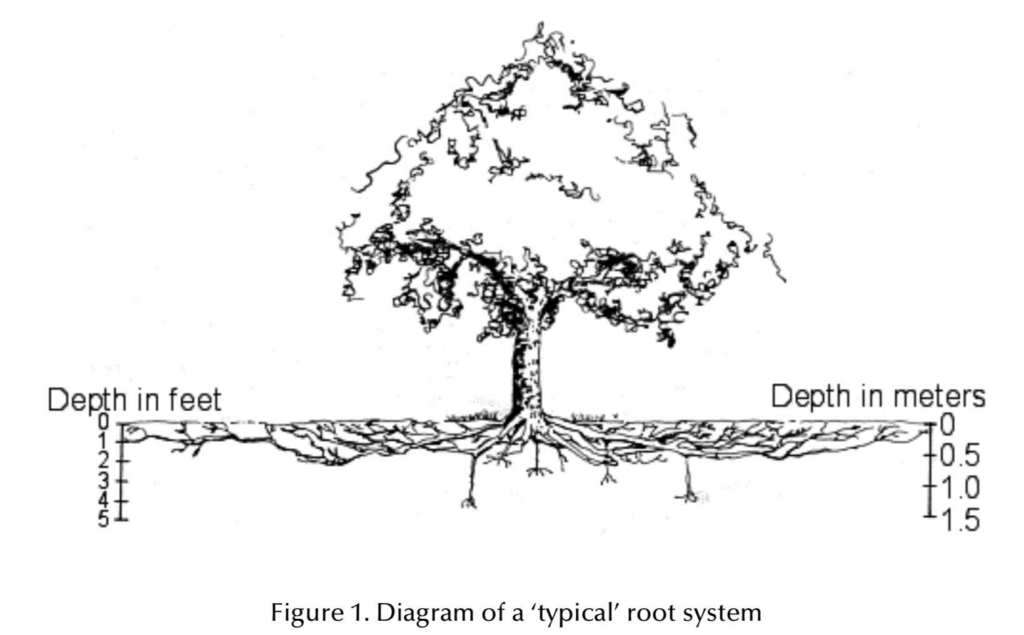
Proactive root layout measuring to optimize plant viability and adjacent hardscapes
- Right Tree, Right Place: Do not plant species with very invasive, moisture-loving roots (e.g. Willows, Poplars and some big Maples) near underground lines or foundations. Rather, select trees with non-invasive roots, designed for smaller urban lots.
- Keep Proper Clearance: Set out large shade trees not in the direct path of your home’s main canopy. A good rule of thumb is to plant them at the same distance apart as they will grow to be.
- Use Protective Root Barriers: If a tree is being planted next to a sidewalk or foundation, place a tree root barrier. These hard cemented panels force roots to grow downward instead of shallow in concrete.
- Promote Deep Root Zones: Water regularly, but not near the trunk, in deep watering zones under the outer edge of the canopy. This promotes root growth deeper into the soil to minimize shallow destructive root growth.
Fact Check: Tree Root Damage Myths Verified
Claim 1: “Tree roots can punch directly through solid, uncracked foundation walls.”
- Verdict: MOSTLY FALSE. Undamaged concrete serves as a good physical barrier. Roots can only penetrate structures through existing structural cracks, gaps around utilities and expansion joints.
Claim 2: “Pouring rock salt or chemicals down the drain fixes sewer line root issues permanently.”
- Verdict: FALSE. Chemical flush treatments only burn back the fine root tips inside the pipe. They do not fix the structural break that let the roots in, and they can sometimes harm downstream water ecosystems.
Claim 3: “You can cut any roots lifting a sidewalk without hurting the tree.”
- Verdict: FALSE AND DANGEROUS. Too short of anchor roots will leave the tree without its anchoring mechanism and the tree will become unstable, posing a significant risk on extreme weather days. Every cut of a tree root that causes damage needs to be evaluated by a professional to assure stability and storm safety of the tree.
Dealing With Tree Root Damage? Get Expert Eyes on the Tree.
When you find tree roots invading your sewer line, foundation or sidewalk, it can be stressful and expensive. This problem has to be addressed in a coordinated way: a specialist contractor to work on the pipe or concrete part of the site, and an arborist to handle the tree part.
Bloomatree’s arborists are ISA certified and are experts at understanding root zone conflicts. We offer impartial information on whether root pruning, a sub-barrier or tree removal is the most effective and secure solution for your property. We work to protect your home and maintain our urban canopy where we can.
Call Bloomatree today at 206-714-9835 or connect with us online to book your free on-site estimate.